

*2 mins read
How to Count on a Full-sheet Cake Box Dimensions?
Publish Date
February 25, 2026
Written by
Emily Chris Kieran
Have you ever noticed what factors determine cake box dimensions? Yes, Sheet cakes are used to serve a crowd as they are baked as a single layer. This makes them easy to transport and offers a perfect space for edible decoration. However, choosing the right size for sheet cake for your event can be quite challenging.
When people ask about full sheet cake box size or dimensions, it means they are bakers or packaging buyers who want to know the exact size of a box.
They just want clarity. Their main concerns include whether the cake will sit safely in the box and whether the lid will close without ruining the cake's frosting.
Sheet cakes don’t follow the universal size requirements. Therefore, sheet cake sizes matter a lot when it’s time to order packaging.
That is the reason why understanding measurements of full sheet cake is important. Choosing the right dimensions means you get stability, reliability, and a clean presentation. Packaging should match the required dimensions. This helps streamline delivery experience and ensure that the cake doesn't shift during delivery.
This guide will explain sheet cake size, how long is a sheet cake, and the number of serving per sheet cake.
Understanding the Difference Between Full, Half, and Quarter Sheet Cake Dimensions
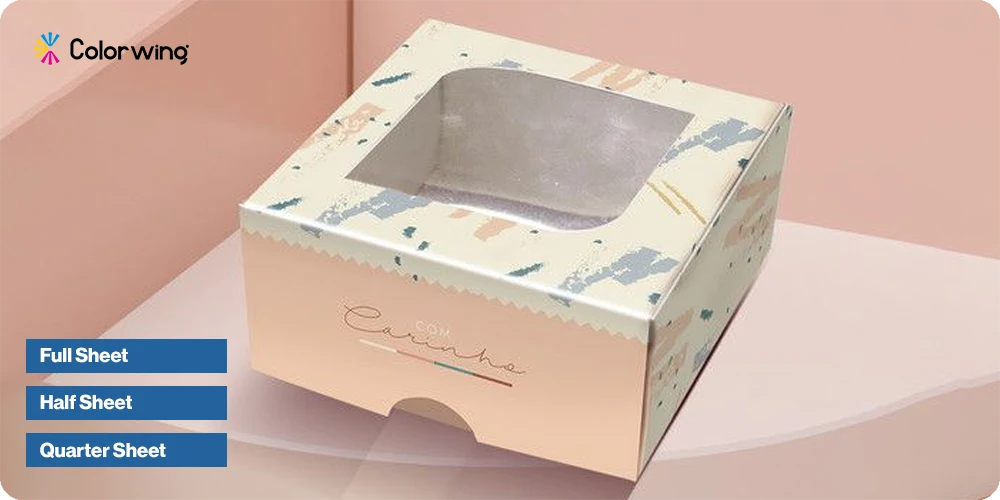
Understanding the size of the sheet cake is very important. Sheet cakes are large, rectangular cakes that are often baked in a 2 inch deep pan. The number of servings decides the size of the sheet cake. The box must fit the exact size of the cake to ensure the frosting remains intact. Let’s first look at the standard size sheet cake:
Full Sheet Cake Size in Inches
You must be searching how big is a full sheet cake. Well, a full sheet cake is normally around 16 to 18 inches. They have a width of 24 to 26 inches and height around 2 to 3 inches. They go for big events and larger orders, such as large weddings cakes.
Half Sheet Cake Size
Cake half sheet dimensions are around:
Length: 12 to 18 inches
Width: 13 to 18 inches
Height: 1 to 3 Inches
They are easier to carry and popular for medium sized gatherings. So if you were wondering what 1/2 sheet cake size is. It is a standard size for half sheet cake. Its an ideal cake size for birthday parties.
Quarter Sheet Cake Size
If you want to know how big is a 1/4 sheet cake, 9″ × 13″ is the standard size for it. It is considered perfect for smaller family celebrations. The length is followed by the height from 1 to 3 inches.
So now you know what the measurement of a full sheet cake and others are too. These are just the standard dimensions for the sheet cakes. Bakers can alter these sizes according to their specific requirements and oven capacity. If you are struggling to find out how big is a quarter sheet cake or how big is a 1 4 slab cake. It mostly measures around 9 by 13 inches.
Many bakers often compare 1/4 sheet cake vs 1/2 sheet cake. The only difference is that half sheet cakes need a large box as the quarter sheet cakes.
Bakery owners in the USA want to know what the dimensions are for a half sheet cake. The answer is very simple. A half sheet cake is usually measured around 11″ × 15″ or 12″ × 18″.
Whether you are looking for 1 4 sheet cake size, half sheet cake dimensions, or 1 2 sheet cake size, ColorWing has all the right answers for you. The sheet cake pan size also varies according to different cake sizes.
Why Are Cake Box Dimensions So Important?

It is very important to select the accurate cake box measurements to ensure the cakes arrive picture perfect without any dents or shifted bases. Using the correct size preserves the designs and enhances customer satisfaction.
A sheet cake that arrives looking this good instantly strengthens your brand image. Along with cake boxes at ColorWing, we also make custom pastry boxes made to perfection.
Here’s why cake box dimensions matter:
Prevents Physical Damage: Cake boxes serve an important purpose, which is to protect your delicate cake. The box is too small or tight for the cake, which can crush the frosting, edges, or decorations. A box too big can cause the cake to slide around during delivery.
Professional Presentation: The perfect dimensions of a sheet cake ensure that the cake remains intact and looks visually appealing upon arrival. The ideal cake box measurements make sure the cake remains safe from damage and looks professional.
Offer Stability and Support: Correct cake box sizes ensure that it and the cake board (typically 2 inches larger than the cake itself) fit perfectly without touching the sides or lid. A full sheet cake box and board work together to ensure cake safety and steady delivery.
A full sheet cake can be surprisingly heavy, so it is very important for brands to choose dimensions more carefully. The right dimension of a full sheet cake spreads the weight evenly on all sides. This helps avoid strain when carrying the box.
It’s a generic rule to always choose a cake box that is two inches larger than the cake board. Plus, it should be tall enough to ensure all layers or decorations remain intact.
“Packaging is the real deal. According to research, the global cake box market was valued at $1.2 billion in 2024 and is projected to reach $2.1 billion by 2033, with a CAGR of 6.5% (Strategic Packaging Insights).”
This market stat shows the importance of an accurately sized cake box. Bakeries heavily rely on professional presentation. Thus, choosing the right cake box dimensions helps protect brand image by professionally presenting their cakes to customers.
Packaging plays an important role in keeping those delicate cakes looking fresh and visually appealing, so make your decision wisely.
How Many Servings Can a Sheet Cake Provide?
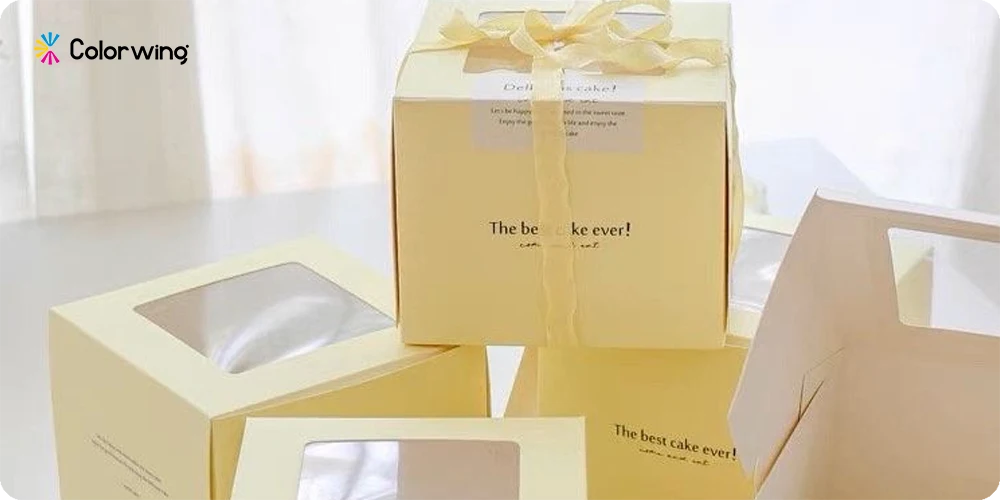
Understanding the serving count is simply a foundational metric of different cake sheet sizes. The more cake slices there are, the larger the cake becomes.
This means it is important to choose the box accordingly. Another guide on how tall is a box of cereal? Also reigns supreme in helping businesses choose accurate choices.
To determine the number of servings you can get from a sheet cake, it is important to decide how large you want each piece to be.
A 2” x 2” or 2” x 3” piece is an ideal for each portion. Divide the sheet pan area by the size of each serving. This will help you determine how many servings you can from a sheet cake.
Follow this formula below to determine sheet cake servings:
Number of servings = Pan area ÷ Cake Serving Size Area
Why don’t we calculate the number of servings for an 18 × 26 inches sheet cake with 2 × 2 inch cake slices.
Pan Area = Pan length × Pan Width = 18 × 26 = 468 square inch pan area
Cake Serving Size Area = Slice length × Slice width = 2 × 2 = 4 square inch pan area
Number of servings = 468 ÷ 4 = 117 servings
Why Do Box Dimensions Depend on That Cake Serving Numbers?
Serving size helps determine how big the cake has to be and whether it needs extra space for decorations. A box made for a cake meant to serve 40 can’t handle the weight and size requirements of a cake meant to serve 80.
More servings demand a larger box and more storage space for safe cake delivery. To maintain the exact proportions of the cake, deeper layers are required, and more tiers are added. This increases the height of the cake.
All these things influence the box dimensions. If you want to ensure safe cake delivery, you need to consider all these things and ensure you choose the right dimensions for your cake boxes.
Typical Serving Standards in the USA:
Most of the bakeries work with two slice sizes:
Event Slice: 1 x 2 inches
Party Slice: 2 x 2 inches
That’s how bakers find out how large the cake surface should be. It is important to note that if the surface area grows, the inside space of the box must grow too, for the cake to comfortably sit inside the box.
The table below highlights serving count and the accurate box dimensions each sheet cake requires:
Cake Size | Typical Cake Dimensions (L × W) | Approx. Servings (2″×2″) | Approx. Servings (1″×2″) | Recommended Internal Box Dimensions | Notes for Packaging |
Full Sheet | 18″ × 24″ to 18″ × 26″ | 70 to 117 servings | 120 to 192 servings | 20″ × 28″ × 4″ (depth) | Extra clearance prevents frosting smudges; a stronger board is required. |
Half Sheet | 11″ × 15″ to 12″ × 18″ | 30 to 54 servings | 60 to 108 servings | 14″ × 19″ × 4″ (depth) | Ideal for medium events; leave space for borders and cake boards. |
Quarter Sheet | 9″ × 13″ | 16 to 30 servings | 32 to 54 servings | 10″ × 14″ × 4″ (depth) | Compact, easy to transport; works well for everyday orders. |
Why Cake Height Matters in Box Measurements
Many of you ask “how do I choose the right size cake box?” but the most important to figure out first is why cake height matters in box measurements.
The height of the sheet cake is one of the most important parts of packaging. A single-layer sheet cake needs a shallow box. But when you add layers to it, the cake needs a deeper box. Tall cakes are heavier, so it is important to make sure the board underneath is thicker. This means the box should have enough space for both cake and support. We manufacture resplendent custom cake boxes with exact measurements.
The Complete Cake Box Size Chart
It is important that you have the right dimensions for your box. If you are planning to create extra tall cakes, it is important to compare your box height with a tall cake serving chart. That way, you can ensure your box supports the cake’s height and ensure safe delivery. We have added a complete cake box size chart so you can easily find the accurate dimensions. Let’s have a look:
Type of Cake | Approx. Cake Dimensions | Box Size That Fits Best |
Single Mini Cake or Cupcake | About 4″ (round or square) | Around 6″ × 6″ × 3″ |
Standard Celebration Cake | 8″ or 9″ round | Roughly 10″ × 10″ × 5″ |
Medium Two Tier Cake | 10″ base tier | Close to 14″ × 14″ × 10″ |
Large Three Tier Cake | 14″ base tier | About 18″ × 18″ × 12″ |
Quarter Sheet Cake | Nearly 9″ × 13″ | Approx. 14″ × 10″ × 4″ |
Half Sheet Cake | Around 11″ × 15″ | Near 18″ × 13″ × 4″ |
Full Sheet Cake | Roughly 18″ × 24″ | Best fit: 26″ × 18″ × 5″ |
How Do You Calculate the Weight of A Full Sheet Cake Box Made Of Cardboard?
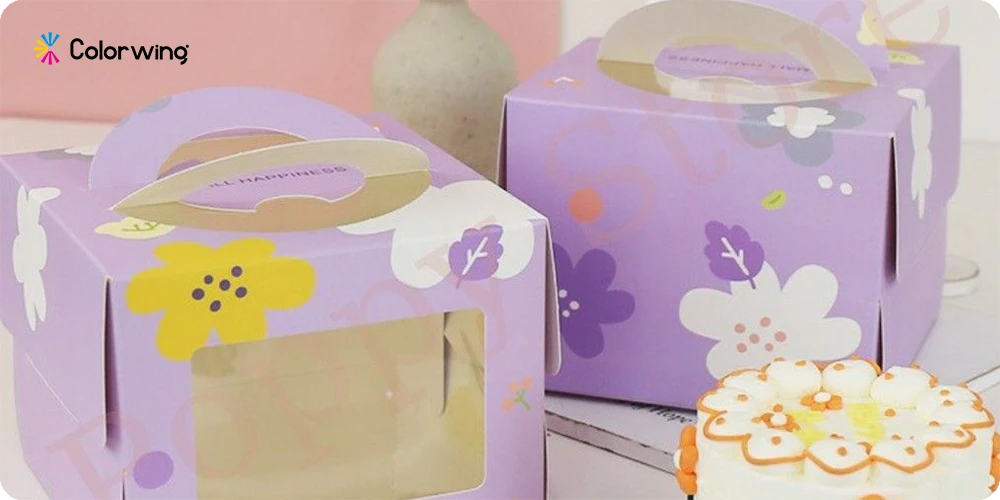
Wondering how much a full sheet cardboard cake box weighs. The important thing is learning the actual weight of the box with a cake and the empty cardboard box weight. Full sheet cakes are heavy, given their size. Therefore, it is very important to create a box that can handle their weight without collapsing or bending during transport.
We have also written a guide on milk carton dimensions that explains the measurements from regular-sized to larger packs.
The type of cardboard helps you determine the weight of an empty box. Cardboard is available in different thicknesses, which are known as flutes. They come in flutes like the E-flute and B flute. E-flute is thinner, while B-flute is thicker and stronger. The weight of the cardboard varies according to GSM. The higher the GSM, the thicker and more durable the cardboard will be. For a full sheet size box (around 20″ × 28″ × 5″), the cardboard area is 1920 sq in. The empty box weighs 0.5 to 1.3 lb.
Calculating the Box Weight
Cardboard Area: 1920 sq in, which equals 1.239 m².
To measure the cardboard mass, you can use this formula:
Cardboard mass = area x GSM
200 g/m²: 1.239 m² x 200 g/m² = 248 g = 0.55 lb
300 g/m²: 1.239 m² × 300 g/m² = 372 g = 0.82 lb
500 g/m²: 1.239 m² × 500 g/m² = 619 g = 1.36 lb
Final Thoughts
Nothing can match the joy and excitement of customers who open the box to find the cake looking exactly how they imagined it to be. Choosing the accurate cake box measurements makes your delicious cakes look professional and boosts customer experience.
Choose the right dimension for a full sheet, half sheet, or quarter sheet cakes and show your brand while making your customers happy.
A perfectly sized cake box keeps the visual presentation at the top to ensure customers revive their packaged cake looking worth every penny they spend on it. Use this guide to create the perfect full sheet cake box that helps your bakery business grow and impress customers at first glance. Now that you know what are the dimensions of a full sheet cake, it's time that you start ordering your cake box.

Emily Chris Kieran
Meet Emily Chris Kieran, a seasoned packaging industry writer with 7+ years of experience in the printing and packaging sector based in Texas. With a keen eye for color and a passion for data-driven insights, Emily crafts compelling content strategies that explore the intricacies of packaging and printing. She possesses in-depth knowledge of the industry's dynamics, staying up-to-date on the latest trends and technologies. When she's not delving into industry trends, you can find her unwinding on the golf course, where she finds inspiration and clarity. With a love for polo and a knack for storytelling, Emily brings a unique perspective to the world of packaging, illuminating fascinating facts and trends that inform and engage.