


*2 mins read
An Expert Guide to Flutes in Corrugated Boxes
Publish Date
January 19, 2026
Written by
Emily Chris Kieran
The corrugated boxes are the backbone of modern yet protective packaging. They secure merchandise on the move, present merchandise fashionably, and keep costs down. But how come these boxes are strong and yet light? The solution is in the corrugated flute. It is a wavy sheet in between flat sheets of paperboard. It provides the box with strength, cushioning, and a little bit of insulation.
Corrugated flute is your packaging secret engine. The different types of flutes affect the performance of a box. Some handle heavy loads. Others print sharp graphics. More trap air to control temperature. This guide breaks it all down. You will also know the types of flutes, sizes, and get a guideline in choosing the right one. At the very end, you will make a better decision about your business corrugated shipping boxes.
What Is Corrugated Flute?
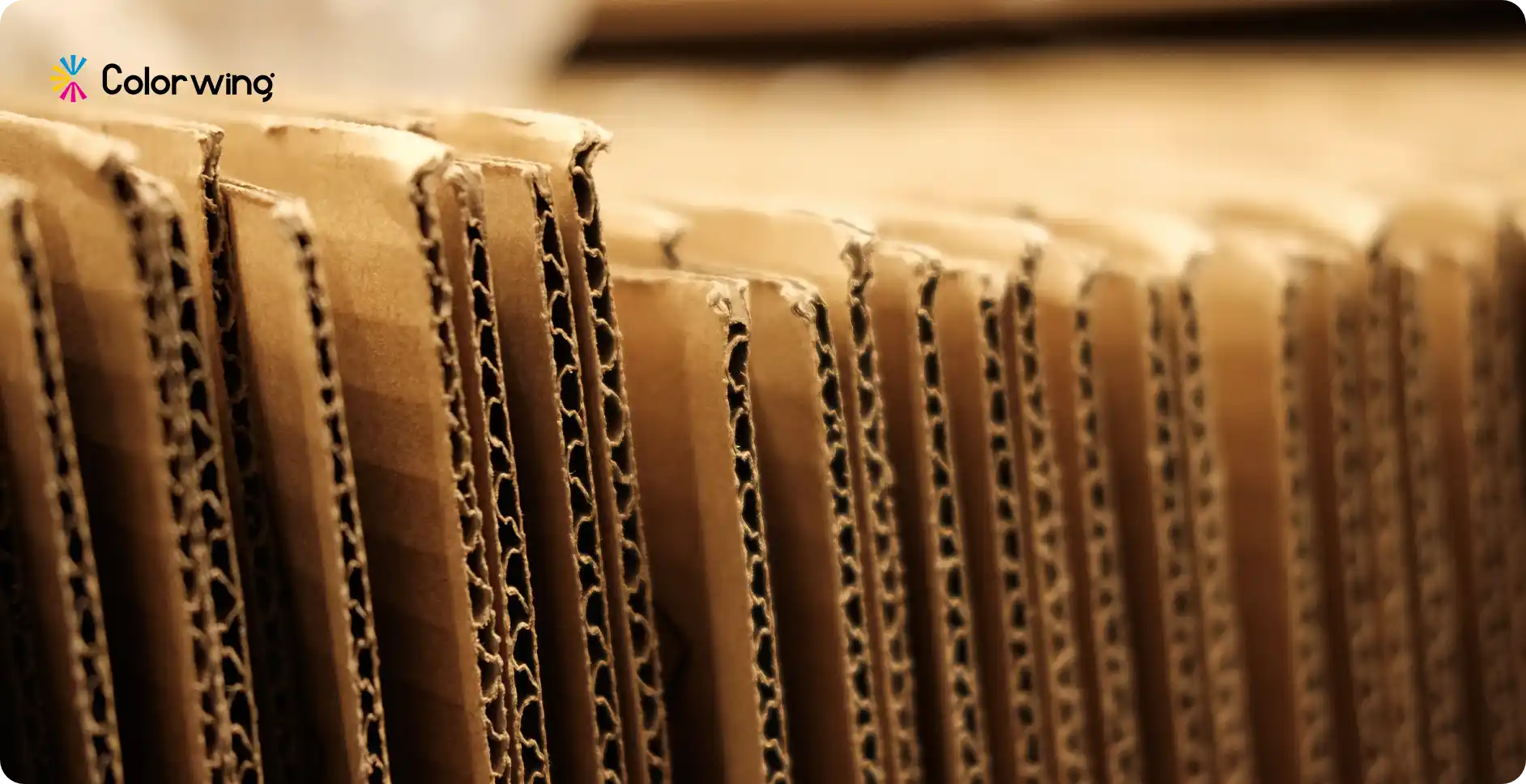
Corrugated flute is the rippling between the layers of corrugated cardboard. It is sandwiched between two flat linerboards. The flute shapes air cavities that enhance strength and also add a little bit of weight. This design will not be crushed, bent, or hit.
Corrugated cardboard flutes are set based. The letter names of every size, such as A, B or E flute, are assigned.
The letter displays flute height and waves/per foot. Fatter flutes pad. Thinner ones print cleaner. The flute is glued to liners by the manufacturers under pressure and heat. The result? A sheet ready for box making.
Why does this matter? The right flute option saves on shipping expenses and claims. It is also compatible with your brand's appearance. Normal box weight is based on flute size. An empty basic single-wall box with B flute could weigh 1-2 pounds. Add components, and it ascends within a short period.
Types and Profiles Corrugated Cardboard Flutes
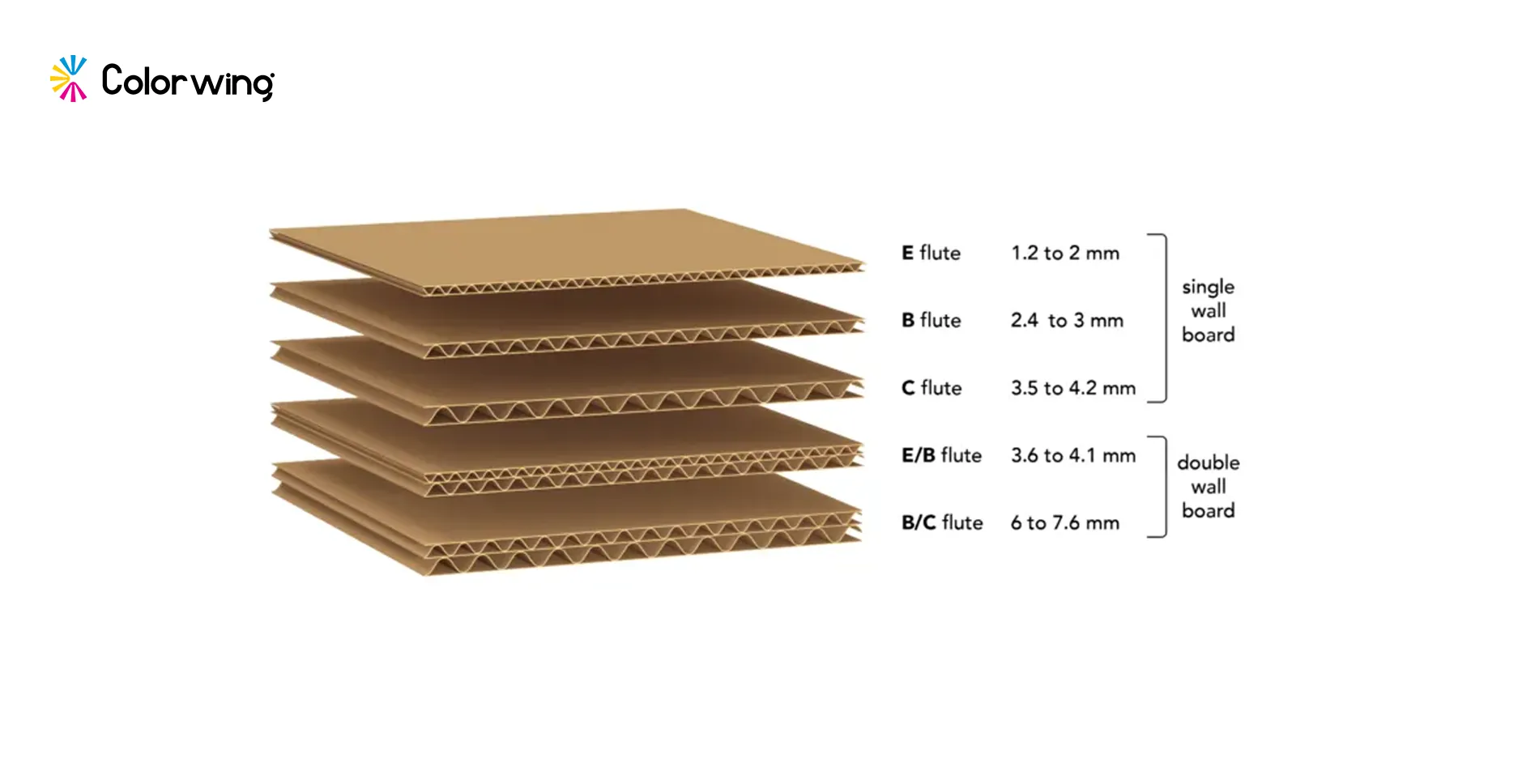
Not all flutes work the same. Each type serves set roles. This is the entire list, starting with the thickest one and ending with the thinnest.
A Flute is the tallest with a thickness of approximately 1/4 inch. It packs 36 flutes per foot. This is a monster that is good at shock absorption. Install it with items that are heavy or fragile and are bouncing in the trucks. The thick profile captures much air to give it the best cushioning.
B Flute cuts down to 1/8 inch or so. B thickness of the flute reaches approximately 3.2 mm. It twists in 42-50 flutes per foot. This ensures it is crush-resistant and also easy to fold. Sea medium-weight freight. It has good stacking in warehouses as well.
C Flute The middle at the 11/64 inch [4.4 mm] thickness fits 39-43 flutes per foot. It is the workhorse of shipping. Tilter, stability, and print integrity. It is used in most regular slotted containers.
D Flute gets less common. D flute corrugated is thinner than C, approximately 2-3mm. It is located in specialty boxes where space is a concern. Consider narrow stacks or made-to-fit.
E Flute is reduced to 1/16 inch, approximately 1.6 mm. E flute is crowded with 90-100 waves per foot. Its glossy face is crisply printed. Ideal as retail stands or branded boxes. Less cushion, but sharp looks.
F Flute packs 120+ flutes/ft F flute corrugated board, f flute corrugated cardboard pack 1/32 inch or 0.8 mm. Folding carton boxes or high-level packaging Ideal. It resembles solid board yet it is light.
BC Flute is a mix of B and C with the board being double-walled. This giant piles authority. Apply it when carrying extra-heavy loads or long hauls.
Each flute shifts box traits:
Thicker ones add weight. Thinner save material. Match them to your needs.
Corrugated Cardboard Flute Chart: Sizes in a Glance
Numbers help decisions. This flute cardboard corrugated chart is an addition to important specs. It is a quick guide to corrugated board flute sizes.
Flute Type | Typical Flute Thickness | Flutes per Foot | Stack Height (inches) | Best For |
A Flute | 1/4" (6.4 mm) | 36 | High | Cushioning, insulation |
B Flute | 1/8" (3.2 mm) | 42-50 | Medium | Crushing resistance, folding |
C Flute | 11/64" (4.4 mm) | 39-43 | Medium-High | General shipping |
D Flute | ~3/32" (2.4 mm) | 40-48 | Medium | Specialty, compact |
E Flute | 1/16" (1.6 mm) | 90-98 | Low | Printing, displays |
F Flute | 1/32" (0.8 mm) | 120+ | Very Low | Detail cartons |
BC Flute | Double-wall (7.6 mm+) | Varies | Very High | Heavy duty |
This chart represents the normal thickness of flutes of corrugated materials. Figures differ according to their manufacturers, yet trends are constant. Here, a corrugated flute board guide begins. Write it down to take it with your next order.
Effects of Flutes on Box Strength and Weight
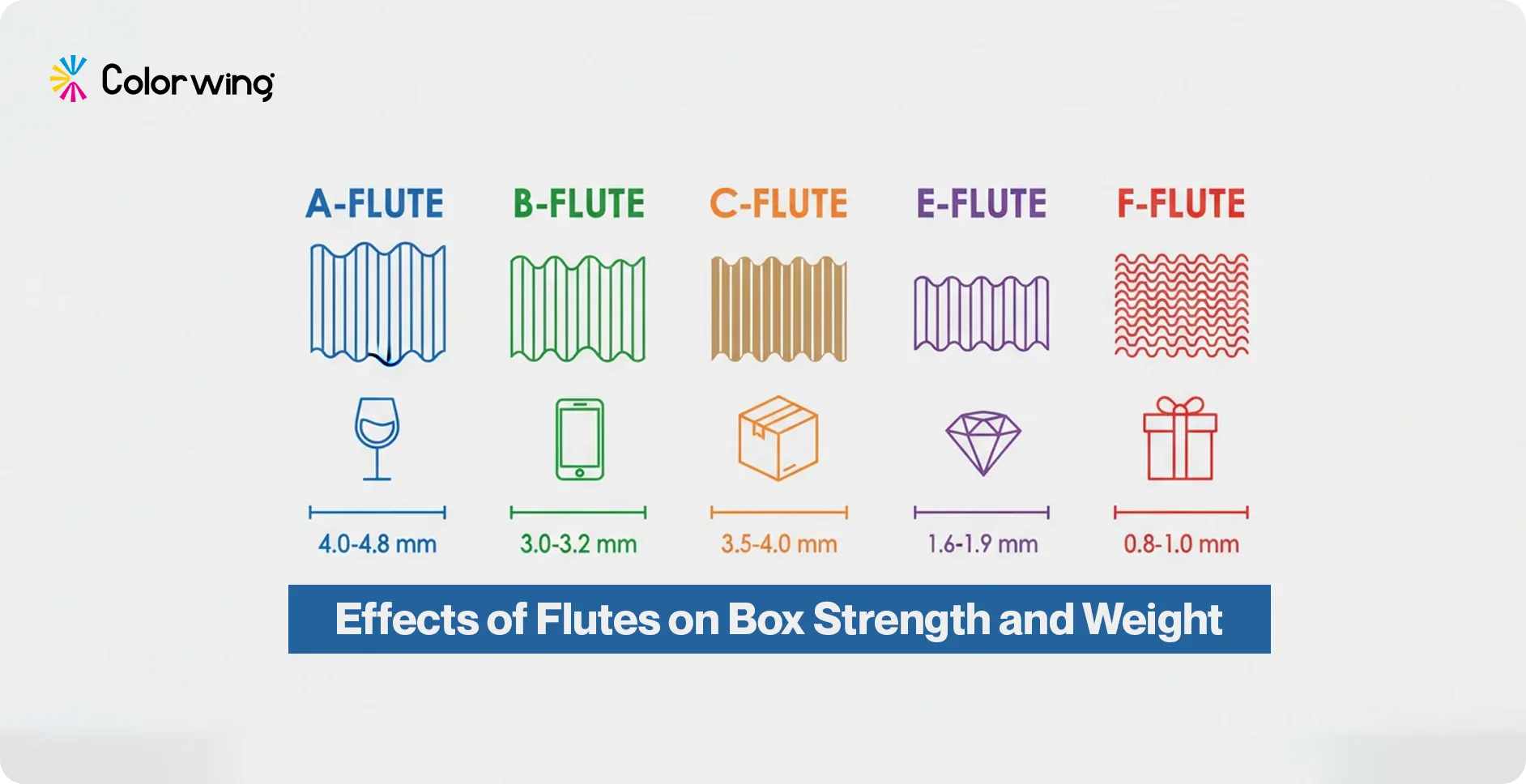
Flute size rules box power. It is measured in the Edge Crush Test (ECT). The increase in ECT enhances stacking. Over 23ECT B are contained in a 32ECT C flute box.
A boost A thicker flute boosts through air traps. They flex under impact Flutes B and C have a smaller crushing when piled. E and F are more printable and bendable.
Common corrugated box weight? Single-wall C flute box with dimensions of 12x12x12 inches has a weight of 0.8-1.2 pounds when it is empty. BC doubles to 1.8lbs. Contents add up quick. Shippers are charged by the overall weight, thus light flutes save money.
Box size matters too. ECT drops in big boxes. A 32ECT holds 30-40 pounds max. Go 44ECT for 50+. Balance protection and cost.
Corrugated Cardboard Insulation: Flutes as Thermal Shields
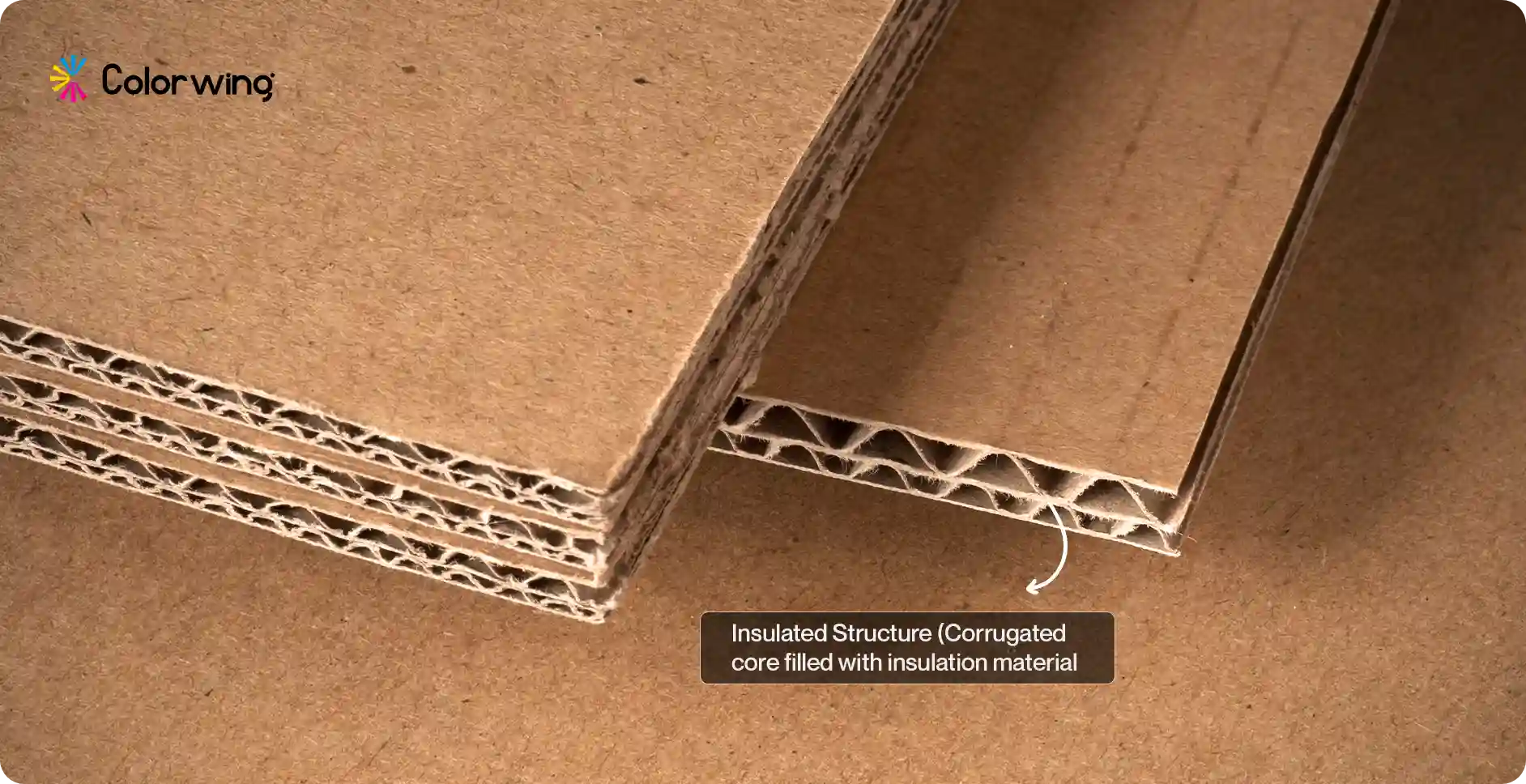
Corrugated fluting is used as insulation. The waves are blocked by air which prevents cold and heat. Thicker flutes trap more air. A flute is most apt in this, foaming.
Wrap food, medications or electronics in corrugated cardboard insulation. Ship chocolate in summer? C flute keeps it cool longer. Tests reveal that A flute reduces temp swings by 30 percent as compared to flat board.
F flute is insulating and piles up small for store. BC is best insulated with a double wall. It is applicable to cold chain logistics. Better than plastic foam also.
The Choice of the Ideal Corrugated Fluting
Match flute to product. Heavy tools? Go BC or C. Fragile glass? A or double-wall. Branded retail? E flute.
Consider these steps:
Weigh your item. Under 10 lbs? B or E works.
Check fragility. Drops common? Thicker flute.
Print needs? E or F for logos.
Shipping distance? More cushion for long hauls.
Budget? Thinner saves 15-20%.
Test samples first. Crush one. Stack others. Feel the difference. Corrugated fluting is less profitable in returns.
Sustainability counts. Fine flutes consume less paper. They cut carbon footprints. Combined with recycled liners it is green.
The Markets Innovative Designs in Flute
The flute boundaries are challenged by industry research. In 2024, packaging labs discovered that the micro-flutes increase strength 25 percent using 15 percent of the material. Nano-coating of E flute is more water repellent.
The flutes are mixed by engineers such as BE double-wall. It types sharp and cushions soft. Modern boards recycled at 95 percent. In one trial, F flute cartons were found to increase the shelf life of perishables by excluding the humidity.
These developments imply intelligent packaging. Less waste, more protection. Shipment savings of 10-15 percent are realized by brands that implement them. Stay ahead--test new profiles.
Double-Wall and Triple-Wall: Single is Never Enough
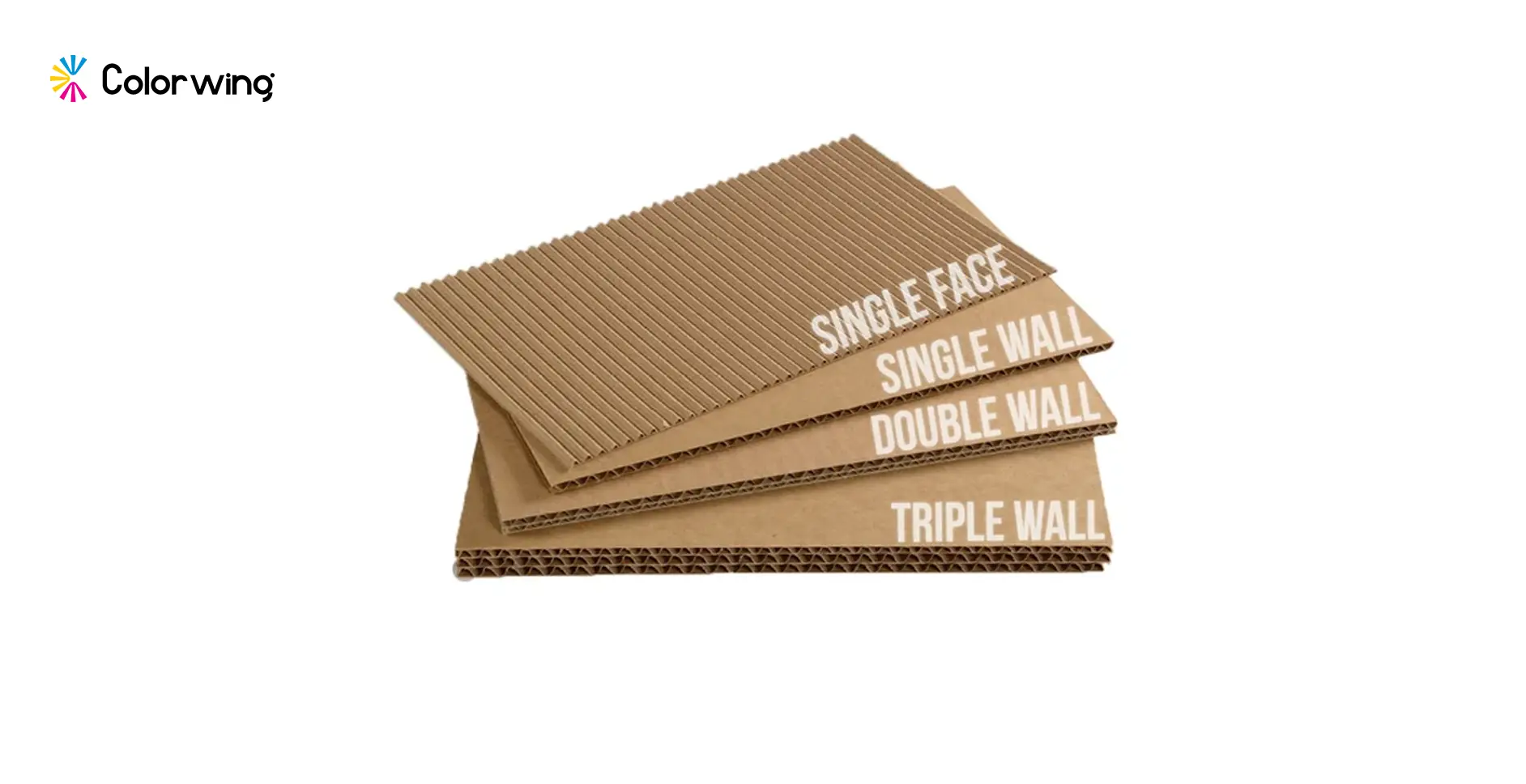
Single-wall suits most. But extremes need more. Double-wall glues two sheets. BC flute pairs B inside, C out. Total thickness nears 1/2 inch. ECT soars to 55+.
Triple-wall stacks three. ABC combo handles 100+ pounds. Use for machinery or pallets. Safety increases, along with the weight.
These are e-commerce booms. With right multi-wall, returns are reduced by 40%.
Silkscreening and Embossing on Fluted Surfaces
Flutes affect ink. Thick ones like C show ridges. E flute is flat in cases of photoreal prints. Flexo or digital works best.
Prep artwork. Vector files scale clean. Spot colors are used on white liners. Kraft should be treated of brown colors.
Branded boxes build loyalty
E flute retail packs scream high-end. F flute is folded into shelf-ready units.
The Flutes and Your Bottom Line
. A flute costs 20% more than E. But it saves on damage claims. Run numbers:
1000 C flute boxes: $0.50 each.
Switch to B: Save $0.05/unit.
Damage fix? $5 per claim.
Volume discounts kick in at 5,000+. Rush jobs add 30%. Factor inbound freight too.
Applications in the real world in industries.
Food packs use C for produce. B flute fits apparel. E flute dazzles cosmetics.
Electronic lean drop BC. Pharma picks A of temp control.
Custom runs shine
Die-cut E flute is one that uses heads in trade shows
Storage and Maintenance Fluted Boxes
Stack flat. Avoid moisture. Humidity warps flutes. Store under 70% RH.
Reuse when possible
Flatten for recycling. They are the subject of most curbside programs.
Future of Corrugated Flutes
Smart flutes embed sensors:
Plant cut bios used to make the plastics into bio-flutes. Look for leaner, hard bodies.
Launch Flute Success with Experts
Learning flutes revolutionizes packaging. At ColorWing, we ensure decisions. Send specs. Get samples. Ship fast. Will you upgrade your corrugated cardboard boxes that are corrugated? We are aware that the shipping boxes should be heavily constructed of strong materials to ensure your goods are secured. Your boxes are fit to have the finest flute.
Conquering Every Corrugated Flute
The corrugated flute board guide, each of them matters to packaging experts. Begin with the corrugated flute that bridges the power of core wavy corrugated cardboard flutes. Fine details: Flute e (or e flute): The smooth 1/16-inch miracle with 90+ waves per foot, the ideal choice of crisp retail prints.
Compare b flute thickness (c. 1/8 inch) with c flute corrugated cardboard (11/64 inch thick) with normal flute thickness of corrugated being the best. Our corrugated board flute chart scales the sizes of corrugated board flute accurately, between towering A to micro f flute corrugated board and f flute corrugated cardboard (1/32 inch, 120+ flutes/foot). not forget about D flute corrugated niche compact fits, or power house bc flute in double-wall constructions. Corrugated fluting is not just structure, but its air traps provide insulation to the corrugated cardboard that protects perishables against fluctuations in temperature.
What Does a Common Corrugated Box Weigh?

Typical is 12x12x12 C-flute single-wall tips with 0.8-1.2 pounds empty, which depend on the flute selection. The corrugated fluting mastery allows you to spec boxes that both sink costs and amp protection and impress customers- and it is thought of as a step further in building the ColorWing advantage of producing custom, unbeatable packaging solutions. Our remarkable materials and types of boxes ensure you get exquisite boxes.

Emily Chris Kieran
Meet Emily Chris Kieran, a seasoned packaging industry writer with 7+ years of experience in the printing and packaging sector based in Texas. With a keen eye for color and a passion for data-driven insights, Emily crafts compelling content strategies that explore the intricacies of packaging and printing. She possesses in-depth knowledge of the industry's dynamics, staying up-to-date on the latest trends and technologies. When she's not delving into industry trends, you can find her unwinding on the golf course, where she finds inspiration and clarity. With a love for polo and a knack for storytelling, Emily brings a unique perspective to the world of packaging, illuminating fascinating facts and trends that inform and engage.