

*2 mins read
How to Measure Shoe Box Dimensions?
Publish Date
January 27, 2026
Written by
Emily Chris Kieran
At first glance shoe box dimensions are simple. Three numbers - length, width and height. But those numbers determine how good your footwear will travel, how well it will stack and how much it will cost to ship. When the box is too large, you lose space and money. When it is too tight, you destroy heels, uppers or branding long before a customer has the chance to try the shoes on. We have gathered standard shoe box measurements to extend a safe hallmark for your customers.
For brands selling into the US market, box sizing is now touching logistics, e-Commerce and retail presentation all at once. A box that fits the shelves in a store might not work for parcel carriers. A cheaply shipped box may seem flimsy in the hands of the customer. The aim is to find dimensions that are protective, present and still make financial sense. ColorWing fills that void as a packaging partner. The idea is not to make the boxes a rough guess but to make your shoe sizes into exact box sizes.
Why Accurate Shoe Box Dimensions Matter
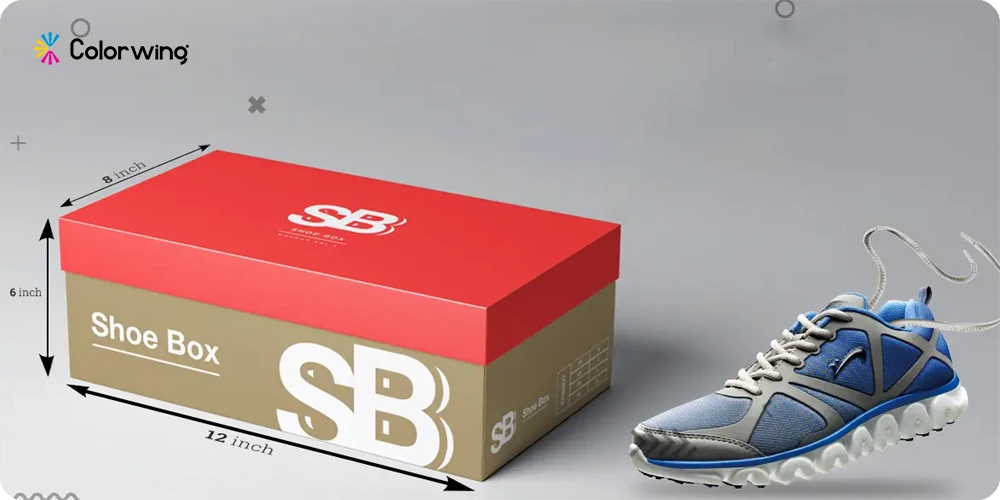
Getting shoe box dimensions right is a safeguard to the products stored inside. It helps to protect your margin, your reputation and your future repeat sales. Every additional inch of packaging and air in the box adds weight and volume. Carriers often charge for shipments by dimensional weight, not actual weight. Oversized boxes erode profit on every order, especially if you interstate ship or do national campaigns.
On the other side, a box that fits too closely to the shoes poses its own risks. Toe boxes can be deformed by the pressure of the lid. High heels can be rubbed through tissue and scuff. Tall boots may squeeze against corners and break weaker seams. Customers interpret all of this as a lack of care. Clean, well-sized boxes communicate to them that you understand footwear and respect the products you sell. For warehouse teams, consistent dimensions mean life is easier. Boxes stack better, pick paths are smoother and counting the inventory takes less time.
The Basics: Length x Width x Height
In packaging, the dimensions follow one simple order: length x width x height. For shoe boxes, length is the longest side on the base. This is normally from heel to toe with the shoes in place as a pair. The width is the shorter side of the pair. Height goes from inside bottom panel to the inside of closed lid. And always think in terms of interior space. That is where the shoe is in fact living and making an impression.
Measuring from the outside can be misleading. Board thickness consumes real room, especially if corrugated cardboard or rigid constructions are used. If you only quote outer numbers, you could end up with prototypes that arrive looking good but pinch collars, tongues or heels. One more rule will help you keep teams in line: Always write dimensions in the same order. When everyone in your team as well as your supplier reads length x width x height the same way, you eliminate guesswork. This is how ColorWing treats the drawings, quotes and production specs for consistent communication.
Step-by-Step: How to Measure a Shoe Box
Start with a built box on a flat and level surface. Close the lid as a customer would, without slamming the lid down or leaving it loose. This is the actual height that you are going to work with. To measure length, lay your ruler or tape inside the box on the longest base edge. Read from inner wall to inner wall Keep the tool straight so you do not steal distance by angling the tool. With the perfectly chosen cardboard shoe boxes your brand gets a win-win and you will be representing your shoe brand in a peculiar way.
Next, rotate the tool over the base to read the width. Again measure from inner wall to inner wall. Be sure not to bend the tape up the sides and round to "nice" numbers too early. Small differences add up over the lifetime of a shoe size run. For height, stand the ruler within a front corner away from the floor of the box to the inner top of the lid. This tells you how much vertical clearance you have for uppers, padding and any inserts. Write all three in a notebook or sheet of paper as L x W x H, and the important shoe size or style the box is intended for. Over the course of time, this notes file constitutes your private size library.
How Much Does A Shoe Box Weigh?
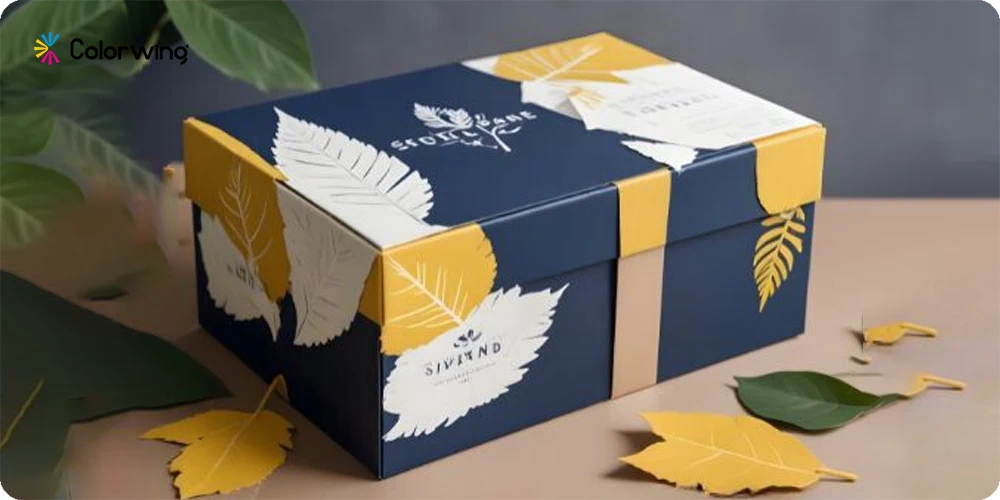
An empty shoe box weighs on average between 100 to 400 grams (that's about 3.5 ounces to 14 ounces), depending on the size and material.
The exact weight may vary depending on a number of different factors including the type of shoe intended to be worn and the construction material of the box.
Generally, in lbs the standard shoe box weight is in the range of 0.4 to 0.5 pounds which is totaled up to 200 to 250 grams. The weight of a standard shoe box differs from women, toddlers, children and men.
Typical Empty Shoe Box Weights
Depending on the type of shoe it's made to hold, a shoe box will vary in weight:
Children's Boxes: Generally the lightest and weighing about 100 to 150 grammes (approx. 3.5 to 5.3 ounces).
Men's & Women's Boxes: These are standard sized boxes usually weighing from 200 to 250 grams (approx. 7 to 8.8 ounces).
Boot Boxes: Larger in size and sturdier, these can weigh in at 300 to 400 grams (approx. 10.6 to 14.1 ounces)
Standard Shoe Box Sizes in the U.S
There is no one law to determine one "official" shoe box size per brand. Still, the U.S. market has settled down in practical ranges that are workable for most pairs and most carriers. For adult footwear, the average box will be somewhere around 13 to 14 inches in length, 7 to 8 inches in width, and 4 to 5 inches in height. These proportions are for the everyday sneakers, casual, and many dress styles.
Men's boxes are slightly longer and wider. Women's versions are a little slimmer and lighter. Kids' shoe boxes shrink further (typically in the 8 to 10 inch length band with lesser heights). These benchmarks are starting points but not cages. They make it easier to plan when designing shelving, shippers, and storage bays. ColorWing uses these ranges as a base and then performs adjustments using your actual size run and style mix; you do not have to guess!
How Standard Sizes Help Day-to-Day Operations
Standardized shoe box dimensions are helpful not only for the packaging team. From warehouse people to retail merchandisers, they make life easier for everybody. When your boxes are in obvious size families, staff can put together stable stacks in no time without having to search for "almost" matches or improvise fillers. Pallet patterns become predictable. Master cartons can be designed once and used for many SKUs. Packing stations can have the correct shippers in the correct amounts on hand. Our standard shoe box sizes and types of boxes have been pertinent so that your shoe packaging project is tackled with care. The standard dimensions for shoes is 14 x 7.5 x 5.5 inches for men.
For e-commerce brands, the standardized sizes help reduce surprises at the checkout stage because dimensional weight is the same across a large number of orders. Customers also benefit. These get cartons of familiar scale and shape, and make returns and storage at home easier. ColorWing relies on standard-size logic to make operations run smoothly, but always ensures that the dimensions selected still honor the personality and support requirements of each style of shoe.
Custom Shoe Box Dimensions for Brand Fit
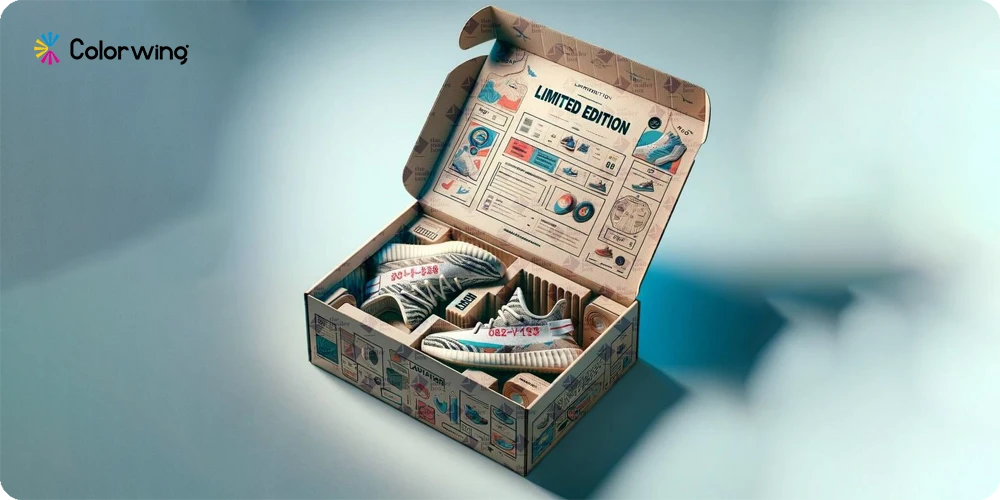
Standard sizes are inadequate, however, when your line is based on unique silhouettes. Chunky sneakers, tall boots, sculpted heels rarely fit in a generic medium box very happily. Custom shoe box dimensions ensure that those designs have breathing room and that they protect their shape. You can build a long, low structure for slingbacks and stilettos to keep heels away from sidewalls. When you are aware of average dimensions of a shoe box your brand positioning can get better.
You can make deeper boxes for winter boots with lined shafts and heavy soles. For wide fit collections, you can increase the width without overgrowing the height. Custom sizing also relieves your creative team. When you go for precise dimensions, you also decide how much space you have on the lids for artwork, logos, and storytelling. ColorWing helps to map your core line to a clear custom size ladder and you don't end up with dozens of random box specs that are hard to manage.
Brand | Key Dimensions (L x W x H) | Material & Sustainability | Collector's X-Factor & Detail |
Nike | 13" x 9" x 5" (Standard Men's) | Lightweight, durable standard corrugated cardboard. It’s best for a regular shoe box size Focus on high volume efficiency and minimal structural components. | The Stackable Icon': Known for the consistent, easily recognizable aesthetic. Their special edition boxes (like 'Just Do It' prints) often feature unique texture or metallic foil stamping. |
Jordan (By Nike) | 14" x 10" x 5.25" (Larger Footprint) | Heavier-gauge paperboard providing increased structural rigidity. Reflects the higher price point and perceived collectible value. | The Time Machine': Many boxes for Retro releases are faithful reproductions of the original 1985-era boxes, making the packaging a crucial part of the collectible value itself. |
New Balance | 13.25" x 8.5" x 4.75" (Slightly more compact) | Explicitly highlights the use of recycled paperboard and non-toxic, soy-based inks. Commitment to reducing packaging mass. | The Sustainable Staple': The box often includes a small, discrete printed icon or text detailing the percentage of recycled content used in its construction. |
Puma | 13" x 7.5" x 4.5" (Slimmest/Lowest Profile) | Reduced-material construction. The slim profile naturally uses less fiber, aligning with a broad eco-friendly directive often seen in their Fast Rider/Future Rider models. | The Efficient Runner': Known for the integrated top-load tab lock mechanism, eliminating the need for extra adhesive or strapping, making it easy to open and reuse. |
Balancing Customization With SKU Control
Full customization does not mean that you have to have every SKU have its own individual unique box. That sort of one-off approach increases tooling, printing, and inventory costs. A more intelligent plan is to group shoes into families with similar needs, and then assign them a tuned box size. One box may be used for three or four sizes of a skinny women's sneaker.
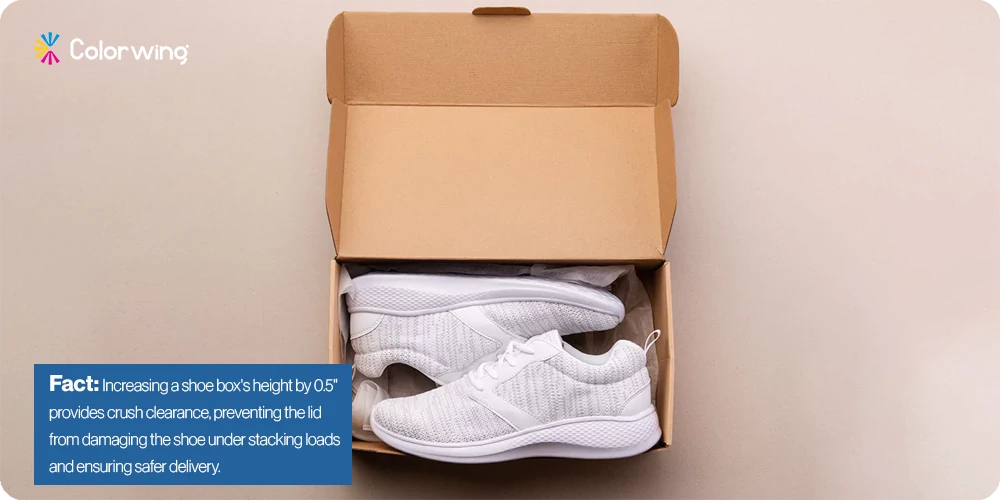
Another might cover several mid-range men's casuals. A taller structure is able to accommodate both the ankle boots and the high-top trainers. The idea is to get as close as you can to "perfect fit" without making packaging SKUs too fat. ColorWing uses your sales data and product roadmap to define these families. The result is a small set of box dimensions that feel custom-made, but that still scale well for different seasons and collections. With our guide to perfect shoe box dimensions, your brand stands out with remarkability.
Materials, Thickness, and Protection
Dimensions tell you how much internal space you have. Material and thickness tell you how that space behaves under pressure. Lightweight paperboard can be enough for simple flats or light canvas sneakers that do not stress the structure. Heavier leather boots, steel‑toe work shoes, and high‑end basketball models often need more robust walls. Corrugated cardboard adds a fluted middle layer between two liners, which absorbs shocks and resists crushing in storage and transit. Material and thickness recommendations follow the same logic. Mostly cardboard shoe packaging boxes range from 1.5 mm to 2 mm in thickness. This much of thickness is sufficient for carrying the weight of shoes without trouble.
Rigid board systems go further, wrapping thick cores with printed paper for a premium feel. As you increase thickness, you also reduce interior clearance unless you adjust dimensions. That is why measuring from the inside is so important. ColorWing looks at product weight, intended sales channel, and shipping journey before suggesting a material and thickness package for each box size.
How Thickness Affects Fitting?
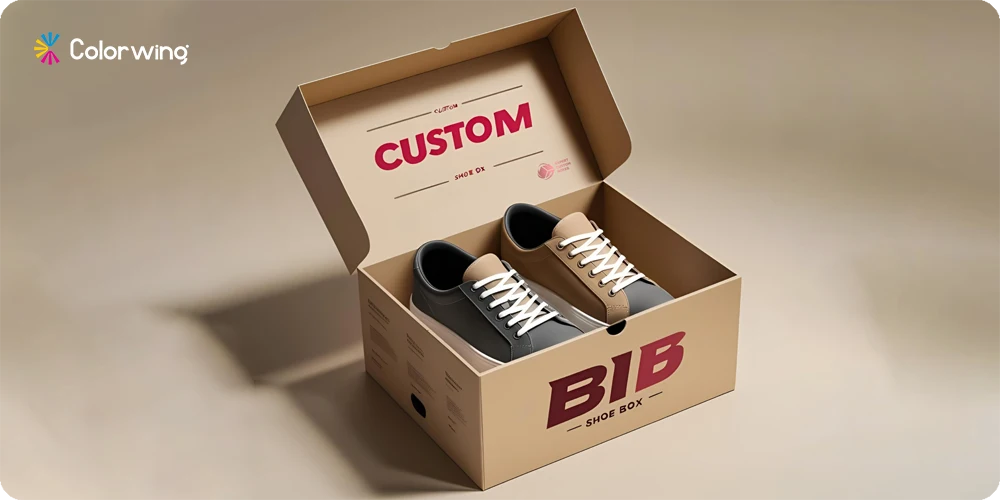
It is easy to approve a digital mockup and forget how much room board and glue take up in the real world. A design may indicate on paper 13 inches of internal length. Once a thicker corrugated board is used the effective space inside could fall by a few millimeters at each wall. For the low-profile sneakers, this may not matter.
For tall or detailed uppers, that can be the difference between neat protection or constant rub marks. Thicker board also contributes to the weight. This can help the box feel more substantial to the customer's hands, but may push certain shipments into a higher freight bracket, if the dimensions are not optimized. ColorWing is very careful about how they prototype something and will have built samples that they measure and adjust where needed so that you get the balance of strength, weight and fit right before they go into full production.
Category & Source | Imperial Dimensions (L x W x H) | Metric Dimensions (L x W x H) | Primary Purpose & Detail |
USPS Priority Mail | 14 3/8" x 7 1/2" x 5 1/8" | 36.5 cm x 19 cm x 13 cm | Shipping & Logistics: Designed for USPS flat-rate shipping (often Medium Box 2). Length is optimized for standard shoe sizes, while the width is narrower for stability. |
Industry Standard | 13.5" x 7.5" x 5" | 34.3 cm x 19 cm x 12.7 cm | General Men's Footwear: The most common size used across the industry for average-sized men's casual or athletic shoes. High Volume Standard. |
Nike Specific Size | 12" x 8 1/8" x 4 7/8" | 30.5 cm x 20.5 cm x 12.5 cm | Brand Specific (Nike): Reflects a commonly used size for many of Nike's primary running and casual sneaker lines. Slightly shorter than the general standard. |
Generic Metric Option | 13 3/4" x 9 7/8" x 5 1/8" | 35 cm x 25 cm x 13 cm | Bulk Storage & Display: Represents a larger, more robust metric size. The increased width (25 cm) accommodates bulkier shoes like high-top hiking boots or thicker women's heels. |
Shipping, Storage, and Retail Efficiency
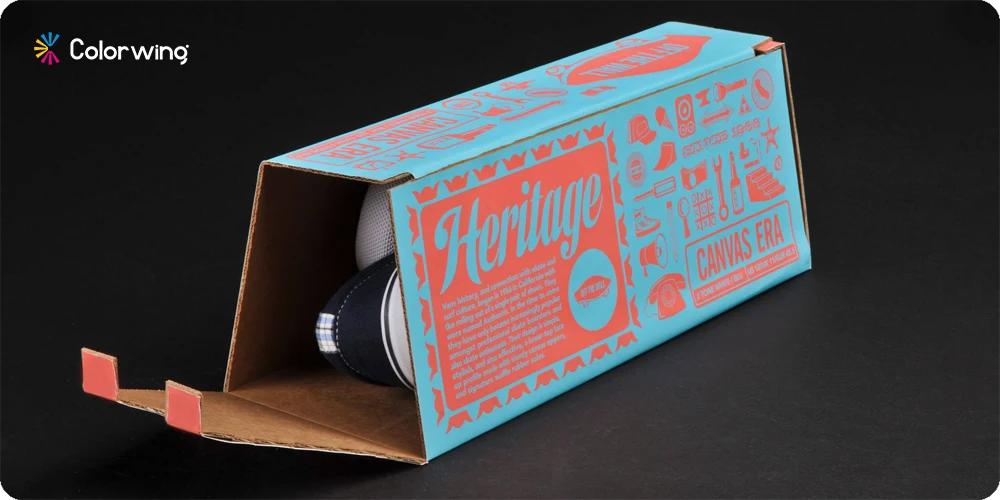
A shoe box does not travel alone. It moves in master cartons, on pallets, into trucks, and onto shelves. This is where well‑planned dimensions pay off.
When your boxes share logical footprints and heights, they can be arranged tightly in shipping cartons with minimal void space. That reduces the need for fillers and protects corners better. On pallets, consistent dimensions build stable columns that wrap cleanly and resist tipping. In retail, matching box widths to shelf depths and heights allows neat rows and easy product rotation.
For online orders, choosing dimensions that work with popular courier boxes helps reduce over‑boxing time and material costs. ColorWing looks at your full path from factory to customer and designs box dimensions that support each step, not just the moment someone picks up a pair in store.
Meeting Carrier and Postal Constraints
Carriers and postal services often publish guidelines and cut‑off points for size and dimensional weight. Ignoring those numbers can turn a great shoe box into a constant cost problem. A box that nudges past a threshold by half an inch can push an entire product line into a more expensive service category.
Multiply that by thousands of shipments, and the impact is obvious. By contrast, a box that was tuned with these limits in mind can maintain a strong presence while still qualifying for more favorable rates. For example, matching certain USPS or courier bands can keep your parcels in standard flows instead of oversize ones. ColorWing stays aware of these constraints when recommending shoe box dimensions for U.S.-focused brands, so your footwear reaches safely without adding avoidable shipping surcharge headaches.
How ColorWing Engineers Better Shoe Boxes
For ColorWing, shoe box dimensions are not just numbers on a spec sheet. They are design choices that connect your footwear, your supply chain, and your brand story. The process usually starts with your size chart, product mix, and sales channels. From there, dimensions are drafted for each box family, tested in sample form, and refined based on how real shoes sit and how boxes stack.
Light styles may get agile, fully printed cartons. Heavy or high‑ticket shoes may move into reinforced or rigid box constructions. Throughout, the goal is consistency. Your team should know that a size range will always arrive in boxes that feel right for that price point and protect the product from factory to closet. ColorWing becomes the partner that cares about every millimeter, so you can focus on designing shoes that customers love.

Emily Chris Kieran
Meet Emily Chris Kieran, a seasoned packaging industry writer with 7+ years of experience in the printing and packaging sector based in Texas. With a keen eye for color and a passion for data-driven insights, Emily crafts compelling content strategies that explore the intricacies of packaging and printing. She possesses in-depth knowledge of the industry's dynamics, staying up-to-date on the latest trends and technologies. When she's not delving into industry trends, you can find her unwinding on the golf course, where she finds inspiration and clarity. With a love for polo and a knack for storytelling, Emily brings a unique perspective to the world of packaging, illuminating fascinating facts and trends that inform and engage.