

*2 mins read
Length, Width, and Height of a Box: The Dimension Guide Every Packager Actually Needs
Publish Date
June 18, 2026
Written by
Emily Chris Kieran
Imagine that a box with accurate dimensions can save you a fortune, like getting a box which is one inch too wide will cost you in many ways. From shipping to making it hard to store in the inventory it will cost you more than the product kept inside. A box that's one inch too narrow can crush a candle, crack a bottle, or send a carefully built brand impression straight to the trash. These are not edge cases, you can get it happen like each and everyday for businesses who ordered packaging without contemplating what length, width, and height actually mean on a spec sheet.
You have already felt the consequences of a dimension problem. The good news is that box dimensions are not complicated once someone walks you through them clearly. This guide does exactly that, covering not just what L x W x H means, but the real-world consequences, the industry conventions, and the details that most packaging blogs skip entirely.
What L x W x H Actually Means?
Length, width, and height will definitely tell the box's physical space, shape, and capacity. As every packaging quote, spec sheet, and warehouse system relies on these three values, understanding them saves you time, money, and major headaches. This article helps to give an overview of box dimensions so that it’s not anymore a burden on your brand.
Here is how the first one breaks down:
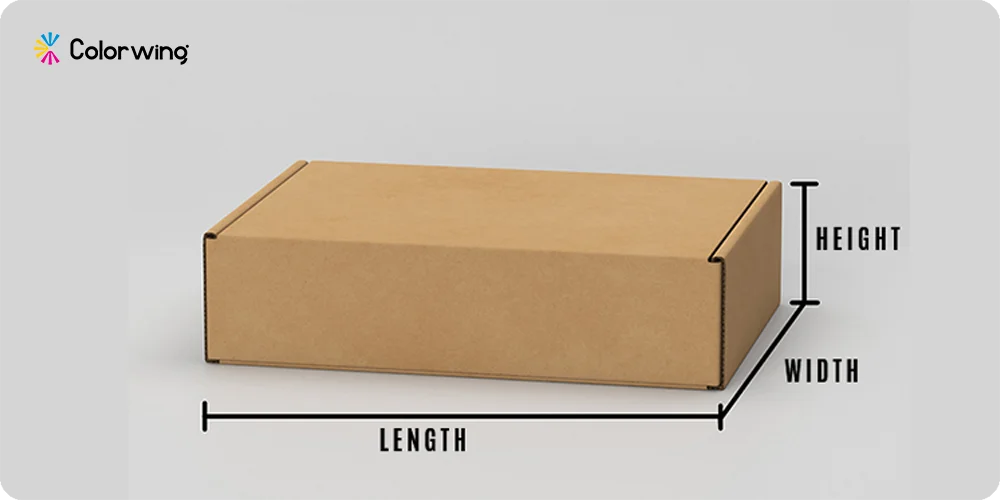
Length: Length is among the longest horizontal measurements of the box when it sits flat in front of you. You can definitely think of it as the distance from the front-left corner to the front-right corner. this always tends to lead the sequence.
Width is the shorter horizontal measurement, running from front to back. If length takes you left to right, width takes you toward and away from you. It sits second in the sequence.
Height is the vertical measurement. It tells you how tall the box stands from its base to its open top or closed lid. It comes last.
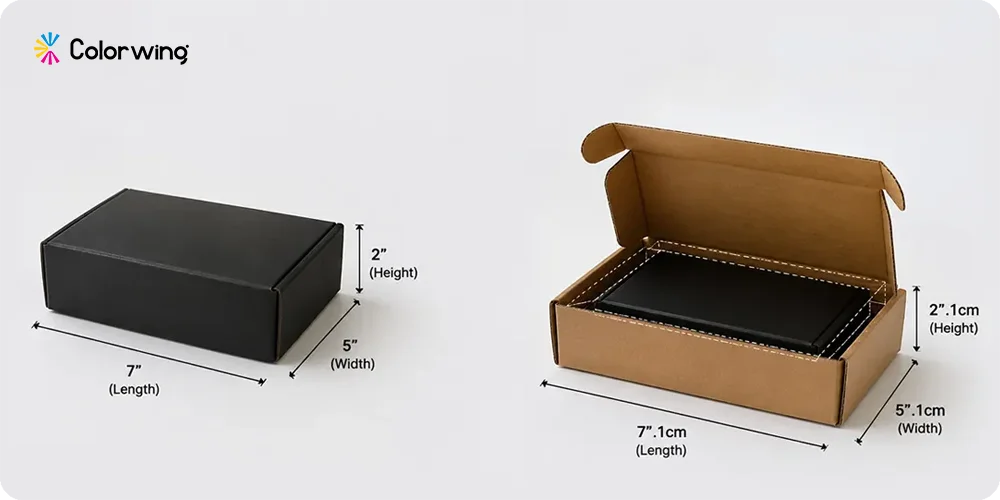
So when you see a box listed as 12 x 8 x 6 inches, you are looking at a box that is 12 inches long, 8 inches wide, and 6 inches tall. That is the industry-standard order, and it is nearly universal in custom packaging: length first, then width, then height.
The dimensions (12X8 X6) go to the standard packaging formula of LengthX WidthX Height (L X WXH)
The Dimension Order Convention Nobody Explains Clearly
This is one of those things that packaging veterans treat as common knowledge but that trips up nearly every new buyer. The sequence L x W x H is not arbitrary. It reflects how a box sits naturally in a working environment and how structural engineers lay out a dieline template.
When a packaging engineer receives your order, they read your dimensions in that sequence. The dieline, which is the flat blueprint a box is cut and scored from before being assembled, is oriented around those three values. Length and width determine the footprint of the box, meaning the space it takes up on a shelf or pallet. Height determines how much vertical real estate it claims.
The confusion tends to arise in two situations. The first is when a buyer measures their product in a different order than convention suggests. The second is when a supplier uses depth instead of height, which some do, particularly for trays and shallow boxes. Depth and height refer to the same measurement, the vertical one, but the word choice shifts depending on box style. If you ever see L x W x D, treat D the same as H.
One practical rule: always measure your product first, in length-width-height order, and match those measurements to the box spec. Do not eyeball it. Do not estimate. Measure the actual item at its longest, widest, and tallest points, then add clearance for inserts, padding, or void fill if you need them.
Interior vs. Exterior Dimensions The Detail That Changes Everything
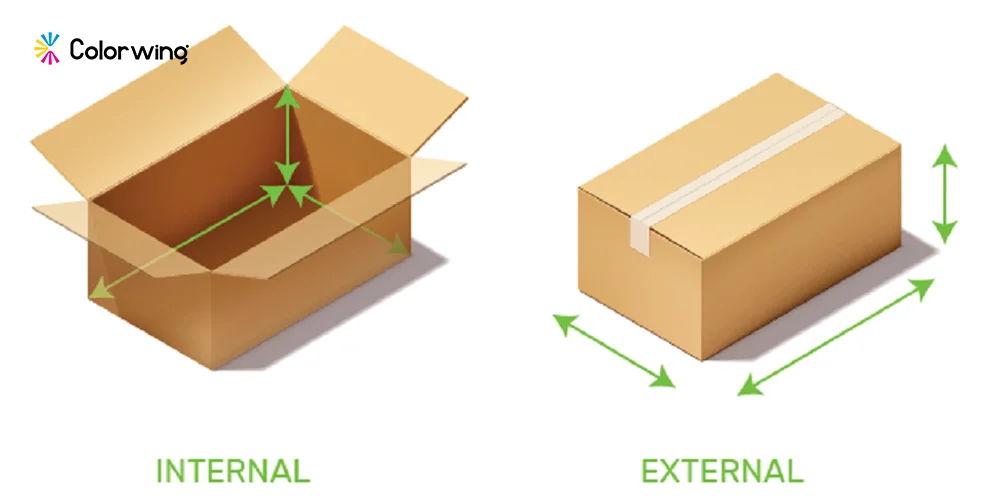
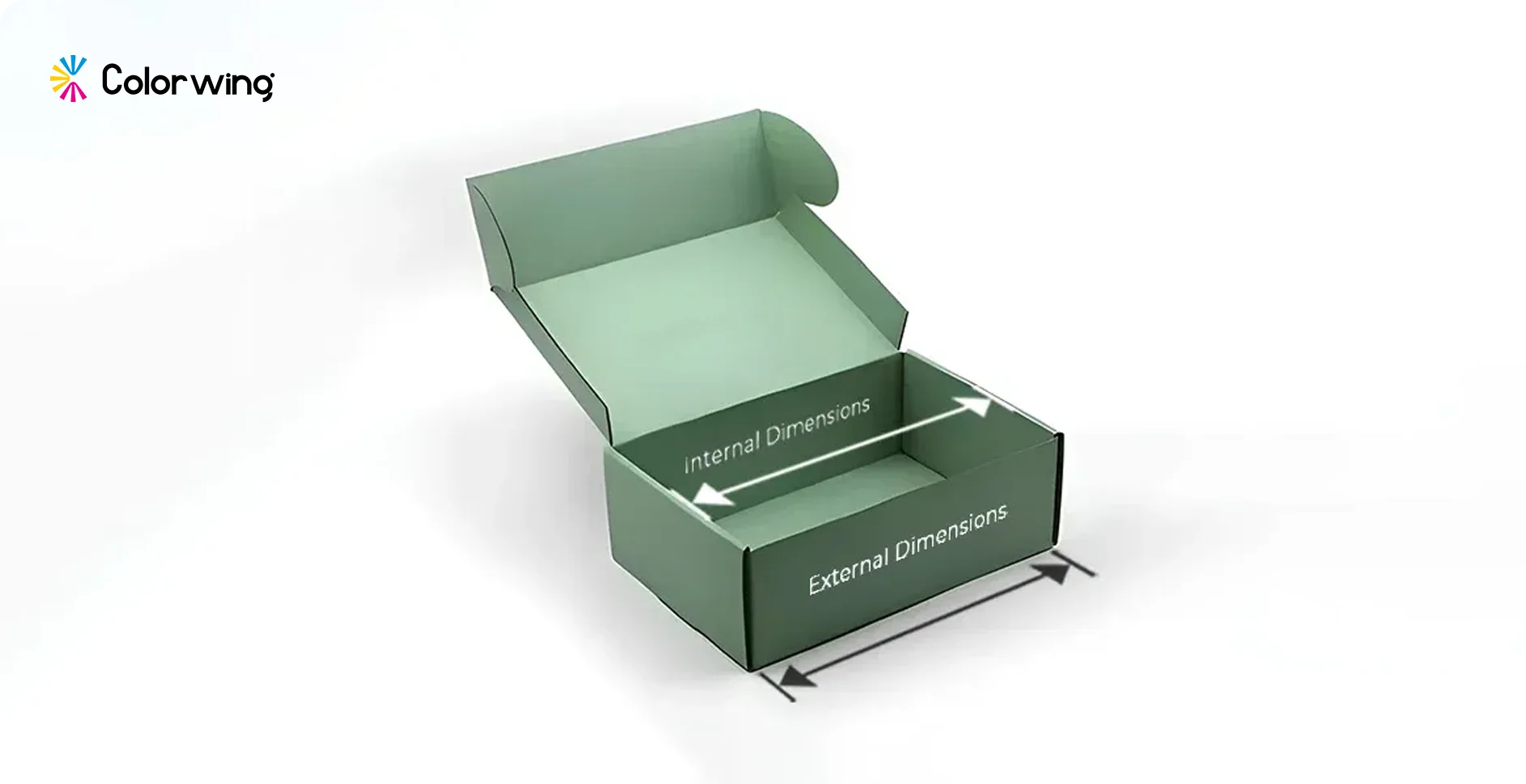
If there is something which distinguishes an experienced packaging buyer from someone who ends up stuck with an expensive reorder, it’s knowing exactly how a box is measured. When you see the box numbers listed as 12 x 8 x 6 inches, those numbers can mean the inside space or the outside exterior space it will be taking and getting them mixed up can completely ruin your packaging plans.
Interior dimensions tell you the actual space you can utilize to fit your product. This is the only number you care about when you are trying to ensure your items fit perfectly without getting crushed or rattling around.
Exterior dimensions describe the outside footprint. This is the number your warehouse team needs for stacking, calculating shelf space, arranging pallet configurations, and planning freight logistics.
Moreover, calculating the gap between interior and exterior measurements comes down entirely to the thickness of the cardboard itself. Like a standard single-wall corrugated board gets usually in between 3 and 5 millimeters thick. That might sound tiny, but remember you have walls on both sides. Those millimeters quickly add up across all six faces of the box.
When you count on a heavy-duty double-wall board for heavier shipments, the material can easily reach 7 to 8 millimeters per wall. Suddenly, you are losing nearly a full inch of interior space just across the length alone.
This is exactly why you should never guess. Before you approve a production run or sign off on an order, always double-check with your packaging supplier whether the quoted dimensions are internal or external. Catching a misunderstanding here is the easiest way to protect your budget and save your fulfillment team from a massive headache.
How to Measure Length, Width, and Height Correctly?
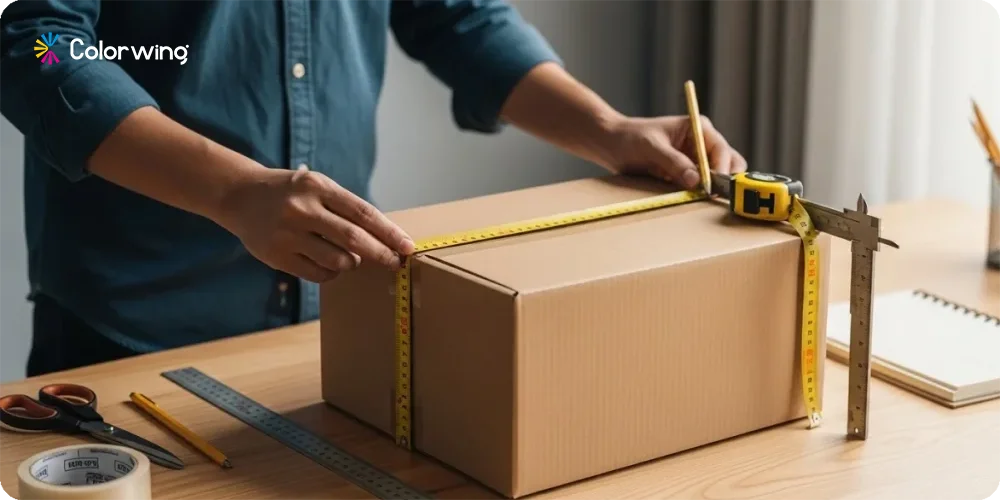
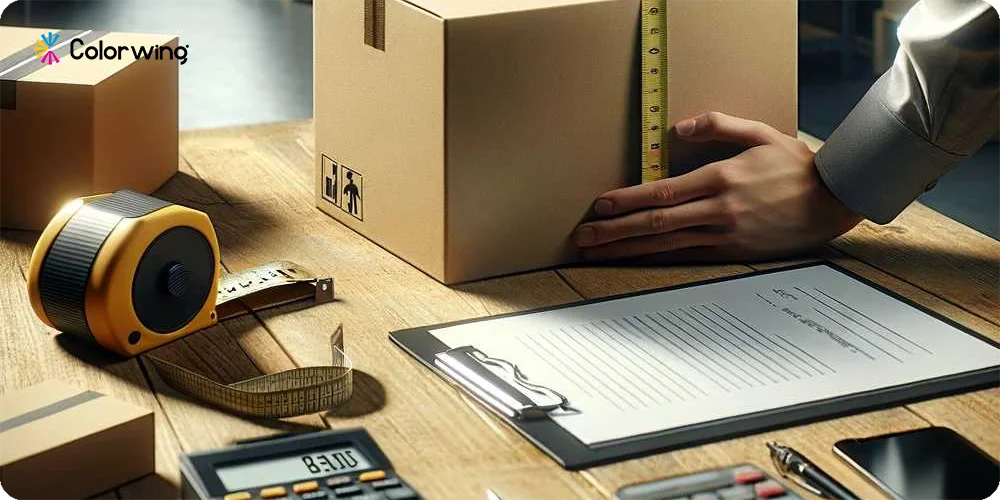
When you want to measure box sizes accurately it tends to require small effort like two minutes with the right approach. But when it is done carelessly it wastes time, materials, and money both. Below is a reliable process that works for both measuring a product you want to package and for verifying a box you have already received.
What you need:
When you have the correct tools like a flexible tape measure or a rigid ruler they can assist. Like for boxes with irregular shapes or protruding parts, a tape measure gives you more flexibility.
Step-by-Step: The 2-Minute Measuring Routine
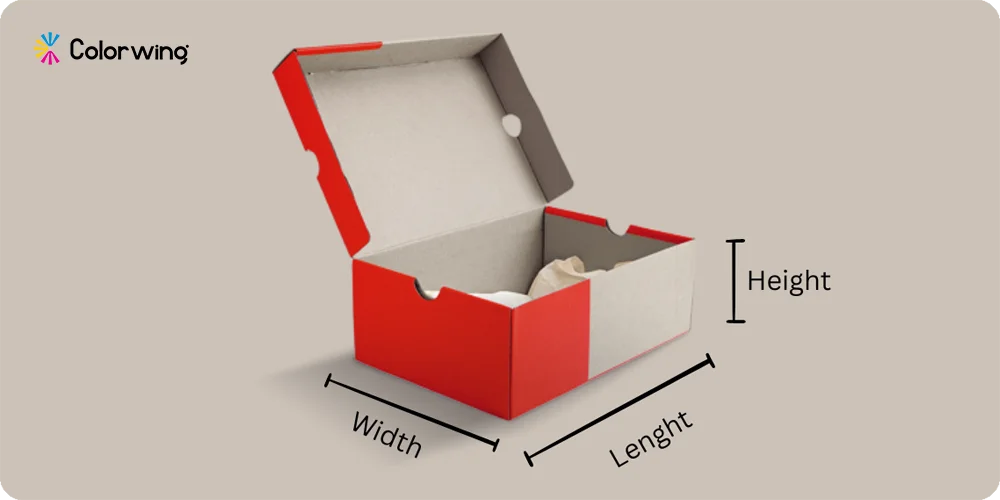
Whether it is like you are sizing up a new item or checking a sample that just arrived, stick to this simple, foolproof sequence:
Find the Opening First: Always measure the box as if you are about to drop something inside it. The open top is your starting line.
Measure Length: Find the longest side of that opening. Line up your tool from inside corner to inside corner.
Measure Width: Turn your tool 90 degrees to measure the shorter side of the opening.
Measure Height: Slide your ruler straight down into the box—from the top opening edge right down to the bottom floor.
Pro-Tip on Irregular Items:
If your product has a handle, a pump top, or a weirdly shaped base, always measure from the absolute widest protruding points. It's much better to have a tiny bit of breathing room than to find out your product is "just a hair too tall" to close the lid.
For measuring your product:
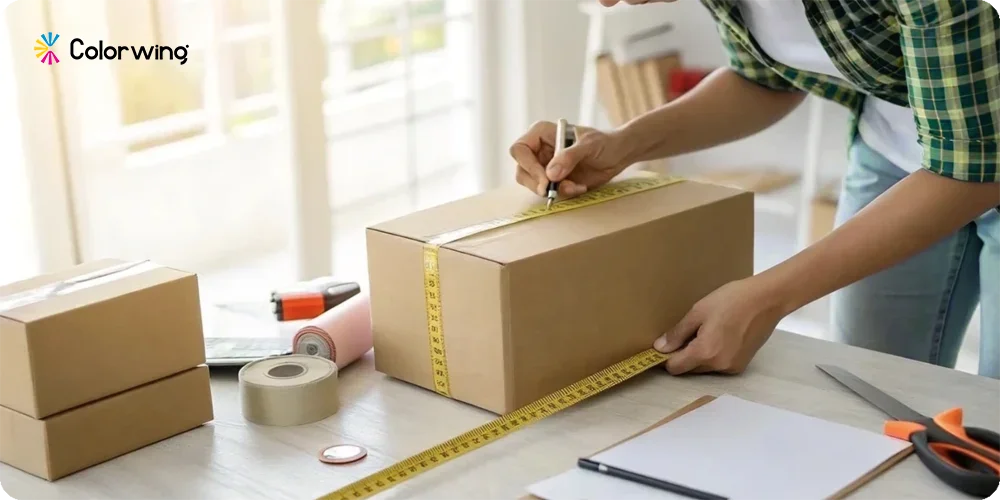
Set your item on a flat surface. Identify the longest horizontal span and measure it from edge to edge. That is your length. Then measure the shorter horizontal span, front to back. That is your width. Finally, measure vertically from the base to the highest point of the product, including any lid, handle, or protruding element. That is your height.
If your product is irregular in shape, a cylinder for instance, or a sphere, measure the bounding box instead. That means measuring as if you were drawing an imaginary rectangular box around the item. Your real box needs to contain that entire imaginary rectangle.
For measuring an existing box:
Open the box flat and measure the inside walls, not the outside edges. For height, stand the box upright and measure the internal depth from floor to rim. Always note which measurement convention the supplier used and ask if it is unclear.
Record your measurements in L x W x H order every time. Building that habit eliminates the confusion that comes from sending a spec sheet that lists dimensions in a different sequence than your supplier expects.
How Dimensions Affect Shipping Costs The DIM Weight Reality?
This is the section that pays for itself in savings the moment you understand it, and it is almost entirely absent from competing packaging guides online.
Shipping carriers like UPS, FedEx, and USPS do not always charge you based solely on how heavy your package is. Many shipments are priced using what is called dimensional weight, sometimes written as DIM weight. DIM weight is a calculated figure based on the volume of your package, and when it exceeds the actual weight of the box, the carrier charges you for the larger of the two numbers.
The standard DIM weight formula used by most major carriers is:
DIM Weight = (Length x Width x Height) / DIM Factor
The DIM factor is typically 139 for shipments within the United States when dimensions are in inches and weight is in pounds. So a box measuring 18 x 14 x 10 inches has a volume of 2,520 cubic inches. Divide that by 139 and you get a DIM weight of approximately 18.1 pounds. If the actual package weighs only 5 pounds, you are still charged as if it weighs 18.
This is why oversized packaging is not just wasteful in terms of materials. It directly inflates your shipping costs on every single order. A custom box that fits your product properly reduces volume, reduces DIM weight charges, and over time saves a meaningful amount of money in freight alone.
Colorwing's approach to custom packaging starts with your product dimensions precisely because the box that fits your product correctly is also the box that costs you the least to ship.
Common Dimension Mistakes and How to Avoid Them?
Measuring the product but forgetting the insert. A product might measure 10 x 6 x 4 inches, but once you add a foam insert, those numbers grow. Always measure the total assembled interior setup, not just the bare product.
Confusing interior and exterior dimensions. Ordering based on exterior measurements when you needed interior ones, or vice versa, is among the most common and costly errors in custom packaging. Always confirm with your supplier which convention they use.
Not accounting for lid closure. Some box styles, particularly two-piece set-up boxes, require the height of the base and the height of the lid to work together. If the height spec only covers one piece, the assembled box will be taller than you expect.
Measuring the smallest version of a product. If your product comes in multiple sizes or configurations, always spec your box to the largest one. Running separate box sizes for minor product variations adds unnecessary cost and complexity.
Ignoring tolerances. Manufacturing tolerances in custom packaging are typically plus or minus 1 to 3 millimeters. On a very tight product fit, that tolerance could mean the difference between a clean close and a lid that bulges.
How Colorwing Makes Box Dimensions Work For You?
Getting your dimensions right should not require an engineering degree or three rounds of sampling. Colorwing provides structural guidance alongside every custom packaging quote, so you are never guessing whether your measurements translate correctly into a finished box.
When you submit your product dimensions, the Colorwing team works backward from your product to the box spec, selecting the right board stock, accounting for interior clearance, and calculating exterior dimensions for your shipping needs. Every specification is reviewed against real product fit before production begins. From rectangular box dimensions to square box dimensions, giving you a worry experience is exceptional and your brand stands out.
Packaging decisions made with precise measurements produce boxes that protect better, ship cheaper, and look the way they are supposed to look when your customer opens them.
Final Thought on Getting Dimensions Right
A box is not just a container. It is the first physical interaction your customer has with your product, and it has to work. Length, width, and height are not bureaucratic formalities on an order form. They are the difference between a product that arrives safely and one that does not. You can some up this through impeccable outcomes choose from an array of options to check out ways of ruling how to measure a box, choose the box dimensions.
There is quite a difference between a product that arrives safely and one that does not. Now that you understand what L x W x H means. It shows how to measure it, why interior and exterior dimensions differ, and how dimensional weight affects what you pay to ship, you are in a far stronger position than most buyers ever reach. Take those measurements in a serious manner, you can get them confirmed with your supplier, and let Colorwing build you a box that fits your product the way it was always supposed to. Ready to get started? Reach Colorwing's packaging team with your dimensions and get a precise custom quote today.

Emily Chris Kieran
Meet Emily Chris Kieran, a seasoned packaging industry writer with 7+ years of experience in the printing and packaging sector based in Texas. With a keen eye for color and a passion for data-driven insights, Emily crafts compelling content strategies that explore the intricacies of packaging and printing. She possesses in-depth knowledge of the industry's dynamics, staying up-to-date on the latest trends and technologies. When she's not delving into industry trends, you can find her unwinding on the golf course, where she finds inspiration and clarity. With a love for polo and a knack for storytelling, Emily brings a unique perspective to the world of packaging, illuminating fascinating facts and trends that inform and engage.