

*2 mins read
Mylar Bag Food Storage Chart - The Complete Guide To Long-Term Food Preservation
Publish Date
July 21, 2025
Written by
Emily Chris Kieran
Have you ever thought how beneficial it will be for your brand if there is a food chart? A Mylar bag food storage chart helps you to determine which food items you can store, how long they will last, and what size oxygen absorbers you need to ensure the optimal preservation. Where dry foods can be stored in regular packaging to maintain their quality for 1-2 years, this time period can be extended to 20-30 years by choosing mylar bags with proper food storage techniques. You can adapt by food storage in mylar bags by getting through this ultimate guide, and also get a list of foods to store in mylar bags.
Have you ever wondered why some food businesses put their complete confidence in Mylar bags while others struggle with spoiled food after just a few months? The difference lies in knowing the logic behind these metalized polyester films and following precise storage guidelines. During the pandemic, mylars have risen more into fame. The Mylar bag market worth at $2.5 billion in 2025 (growing at 6% annually up to 2033), and for good reason - these bags give a protective environment that completely stops food degradation.
What Makes Mylar Bags Essential for Food Storage?
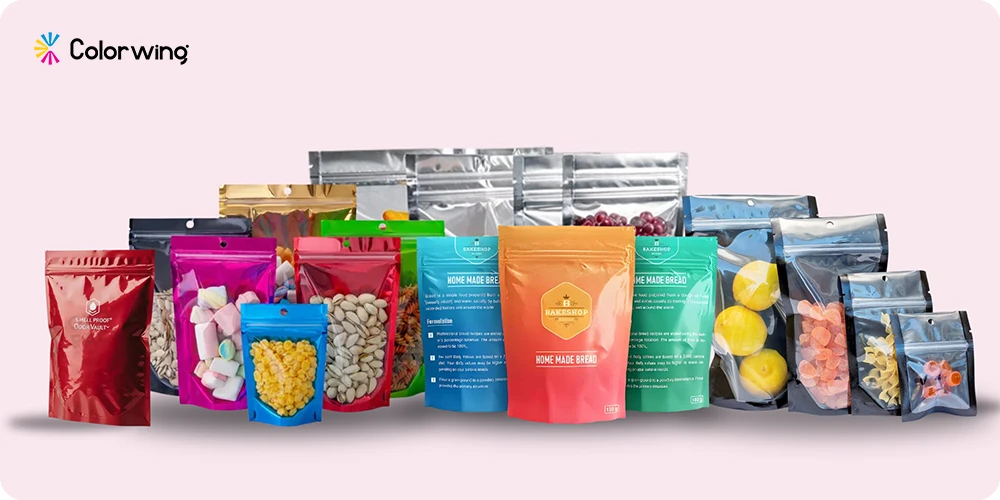
Mylars are referred to as emergency supplies among food businesses to keep their products safe and fresh. What makes mylar bags worthy of this title? They are made using two components, aluminum that is wrapped with two layers of plastic. This robust build creates a protective space to store food items. This aluminum layer completely blocks light and UV rays while reducing penetration of air to nearly zero. And the plastic layers that cover the aluminum provide structural durability and heat-sealing capability. This metalized construction is what separates Mylar from regular storage bags.
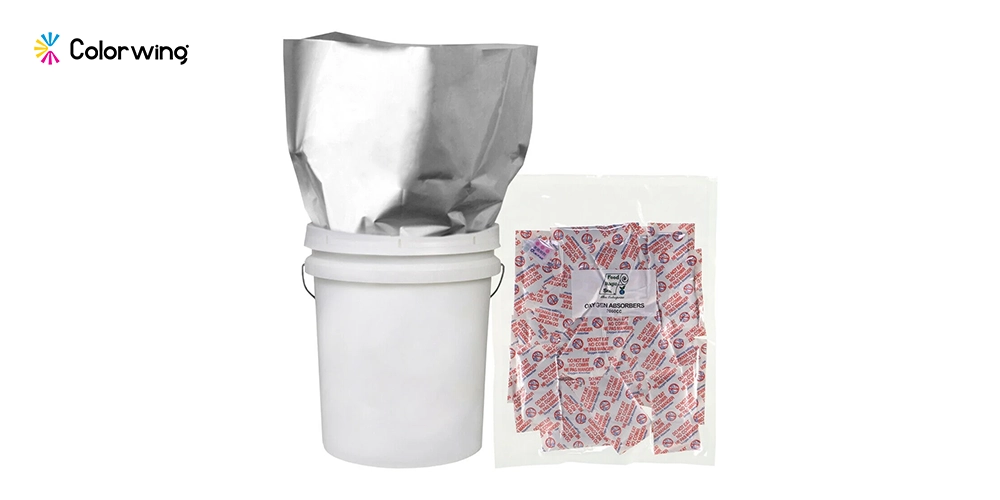
You will get enormous benefits when you include oxygen absorbent packets in the Mylar bags. These little packets contain iron powder that literally "eats" oxygen through oxidation, reducing oxygen levels below 0.01% within 6-8 hours. Without oxygen, no bacteria can survive, enzymes can't cause browning of food items, and fats can't rancid. Ensuring better preservation of food unlike other packaging options.
From our experience working with customers at ColorWing, the biggest game-changer is understanding that thickness matters. While 3.5-mil bags work for soft grains, anything with sharp edges (like pasta) or items you're storing for 20+ years needs at least 7-mil thickness. That extra protection isn't just about puncture resistance; it also helps in thicker bags reduce oxygen infiltration by 27% in a comparison to thinner variants.
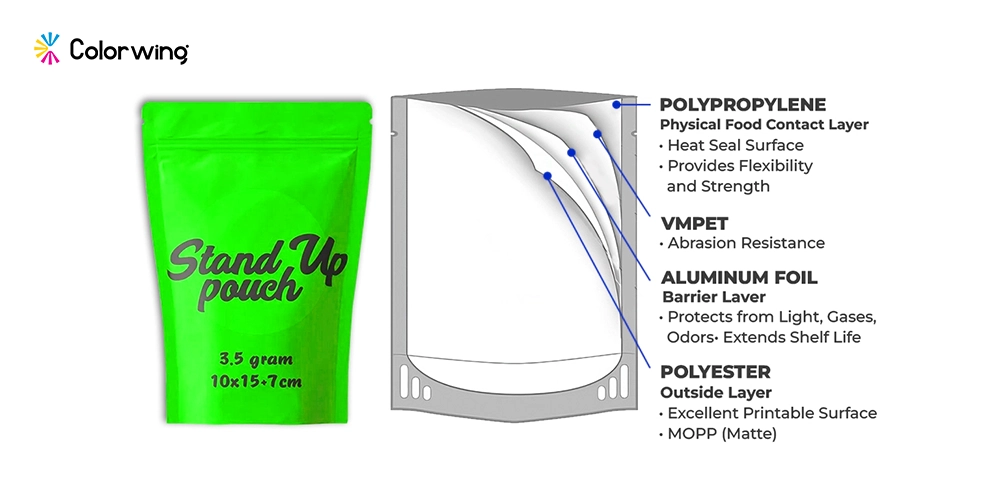
From our experience working with customers at ColorWing, the biggest game-changer is understanding that thickness matters. While 3.5-mil bags work for soft grains, anything with sharp edges (like pasta) or items you're storing for 20+ years need at least 7-mil thickness. That extra protection isn't just about puncture resistance thicker bags reduce oxygen infiltration by 27% compared to thinner variants.
Which Food Items Are Best to Store in Mylar Bags? (Complete Chart)
Not all foods are created equal when it comes to Mylar storage. The golden rule? Low moisture equals long life. Foods with less than 10% moisture content are your best friends for long-term storage. We will also guide you know how many oxygen absorbers are needed per mylar bag.
Food Category | Specific Items | Oxygen Absorber | Max Shelf Life |
Whole Grains | Wheat, Durum, Rye, Barley | 2000cc | 30+ years |
White Rice | Long grain, Jasmine, Basmati | 1500cc | 20-30 years |
Legumes | Black beans, Lentils, Chickpeas | 1000cc | 15-20 years |
Flour | White flour, Unbleached flour | 1500cc | 10-15 years |
Pasta | Dried pasta, Egg noodles | 3000cc | 8-10 years |
Powdered Dairy | Non-fat milk powder, Butter powder | 500cc | 5-8 years |
Sugar & Salt | White sugar, Sea salt | 300cc (or none) | Indefinite |
Frozen Foods | Fruits, Vegetables, Meats | 1000cc | 25-30 years |
How Many Oxygen Absorbers Do You Really Need?
Getting the oxygen absorber quantity right is where many people stumble. The formula is actually simple: Required CC = 5 × V × 0.21, where V is the air volume in cubic centimeters. But who has time for math when you're trying to preserve 50 pounds of rice?
Here's our practical approach based on food density:
Mylar Bag Size | High Density Foods (Rice, Wheat, Sugar) | Medium Density (Beans, Flour) | Low Density (Pasta, Cereal) |
1 Gallon Pouch | 300-500cc | 500-750cc | 750-1000cc |
5 Gallon Pouch | 1500-2000cc | 2000-2500cc | 2500-3000cc |
1 Quart Pouch | 100-200cc | 200-300cc | 300-400cc |
The biggest challenge with oxygen absorbers? Those air gaps around irregular foods. Pasta shapes create tons of empty space that needs oxygen removal. Our pro tip: always slightly oversize your absorber. Using 2500cc instead of 2000cc won't hurt your food, but undersizing will have you opening moldy bags in a year.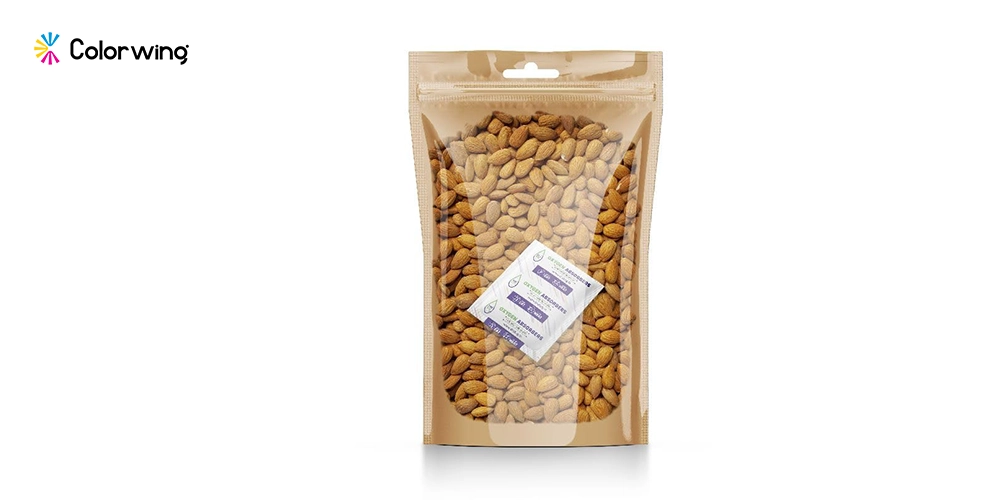
One critical timing issue: oxygen absorbers start working the moment they're exposed to air. You've got about 4 minutes to get them into your bags and sealed. We have seen customers frantically trying to fill 20 bags after opening their absorber pack; that's a recipe for failure and it ruines freshness. Work in small batches, and store unused absorbers in a mason jar filled with rice to minimize air exposure.
What Size Mylar Bags Should You Choose?
Mylar bag sizing isn't just about volume it's about matching your lifestyle and storage goals. After helping thousands of customers at ColorWing, we have noticed distinct patterns in what works best.
Bag Size | Mylar Bag Dimensions | Food Capacity | Best For |
Small (1 Quart) | 6" × 9" | 1-2 lbs | Spices, specialty items, single servings |
Medium (1 Gallon) | 10" × 14" | 4-6 lbs | Small families, variety storage |
Large (5 Gallon) | 20" × 30" | 25-35 lbs | Bulk staples, large families |
Extra Large | 24" × 36" | 40-50 lbs | Commercial use, community prep |
The custom Mylar bags we produce show an interesting trend. 8 out of 10 businesses choose 5-gallon bags to pack essential items like rice and wheat, as it is cost-effective and enables their customers to buy bulk quantity products at one time. On the other hand, they also get small 1-gallon pouches to accommodate regular-use food items in smaller quantities to facilitate a big portion of their customer base. This hybrid approach gives them bulk storage efficiency while maintaining access flexibility. The article widely covers how to use Mylar bags for food storage.
If you have to use mylar bags for long-term food storage, you can fill thick bags with low-moisture, dry goods (e.g, rice, beans, oats). You can definitely add rice, beans, oats, adding appropriate-sized oxygen absorbers, typically 400cc per gallon. Heat-seal the top using a hot hair straightener or an impulse sealer if you are looking for a DIY method. You can store sealed bags in a cool and dark place.
Don't forget about gusseted bags; those side pleats increase capacity by 40% and provide better stability when stacking. They're especially useful for stand-up storage in tight spaces.
How Do Environmental Factors Impact Your Stored Food?
Even the best Mylar bags can't overcome poor storage conditions. Temperature fluctuations are the silent killer of long-term food storage. Every 10°F increase in temperature cuts shelf life in half. That attic storage idea? Forget it.
Humidity is another threatening factor. While Mylar food bags block moisture vapor transmission, the seals can weaken over time in high-humidity environments. Experts from Print247 always suggest a double-layer protection for your food: Put Mylar bags inside tough plastic buckets with special tight-sealing lids. We at ColorWing also ensure that mylar bags are efficient for this double protection and thus protect your food from big temperature changes and keep it from getting crushed.
Light exposure, even indirect, causes vitamin degradation and plastic brittleness. Those clear storage totes might look organized, but they're doing your Mylar bags no favors. Opaque buckets or a dark storage room are non-negotiable to ensure storage for decades.
What Are the Most Common Mylar Storage Mistakes?
After years in the packaging industry, we've seen every mistake imaginable. The topper? Poor sealing technique. A weak seal might hold for months, then unfortunately fail. You can use a special heat tool called an impulse sealer. If you do, set its temperature to 400 degrees Fahrenheit and hold it on the bag for 2 seconds. If you don't have that tool, you can use a regular clothes iron. Set the iron to the cotton setting, and make sure to put parchment paper (like baking paper) between the iron and the bag to protect it.
Another critical error is storing the wrong foods. We once had a customer store homemade beef jerky, thinking it would last decades. Six months later? Rancid fat smell that contaminated everything nearby. Stick to foods with less than 10% moisture and minimal fat content.
The "set it and forget it" mindset also causes problems. Smart businesses use a rotation system with QR codes or date labels. Annual spot checks, looking for bulging bags or seal failures, catch problems before they spread.
If you have a concern about “how long do mylar bags keep food fresh” here is the simple answer to your query. When mylar bags are used in connection with oxygen absorbers and proper sealing, you can upkeep. Pick the fresh sealing for dry foods for up to 10 to 30 years. These significantly extend the shelf life, which is ideal for long term storing of low-moisture foods, such as rice, beans and grains. These mylar bags prevent moisture and oxygen from the spoilage.
How Should You Properly Seal and Store Mylar Bags?
Successful Mylar storage follows a precise sequence. First, fill your bag, leaving 3-4 inches of headspace for sealing. Gently compress the contents, or use automated vibratory fillers for bulk products, to minimize air pockets and achieve optimal density without risking bag punctures or material degradation.
Next, add your oxygen absorbers and immediately begin sealing. Start from one corner, working across slowly to push out excess air. The seal should be at least 3.5mm wide with no wrinkles or food particles. Test every seal by gently pulling the edges. If it separates, reseal above the failure point.
For protective storage, pack your sealed Mylar bags in buckets with the heaviest items on bottom. Add a bay leaf between layers as a natural pest deterrent (though the oxygen-free environment already killed any bugs). Label everything with contents, pack date, and expected expiration.
What Does the Future Hold for Mylar Bags for Food Storage?
The Mylar food storage landscape is evolving rapidly. There are now graphene-enhanced films bags that reduce oxygen transmission by 70% compared to standard Mylar. Smart packaging is also being introduced. Think of it as a Mylar bag with a special spot that changes color if the food inside starts to go bad. This would be amazing to know if the food is still good without even having to open the bag. Having in-house printing facilities in Rosenberg, TX, and Houston,TX, ColorWing takes utmost pride in servicing all of the USA for Mylar bags and other packaging and printing items.
At ColorWing, we are particularly excited about biodegradable barrier films that match Mylar's performance while reducing environmental impact. The integration of QR-based tracking systems with automated inventory management is transforming how businesses and serious manufacturers manage their stores.
The rise of child-resistant Mylar options also addresses safety concerns for businesses storing poisonous house cleaning supplies. These innovations aren't just about technology but they're also about making long-term food storage more reliable.
Conclusion
It is intrinsic for the purpose of mastering Mylar bag food storage, which transforms your approach to emergency preparedness and bulk food management. With the right combination of bag thickness, oxygen absorbers, and storage conditions, you're looking at decades of perfectly preserved food. The key is to match your storage method to your specific food item and goals; there's no one-size-fits-all solution.
Ready to start your journey for long-term food storage? ColorWing proffers custom Mylar bags designed for your specific needs, from family-sized portions to commercial bulk storage. Our packaging experts can help you choose the perfect thickness, size, and features for maximum shelf life. Don't wait for the next supply chain disruption — secure your food future today with professionally designed Mylar storage solutions.
Frequently Asked Questions About Mylar Bag Food Storage
Can I reuse Mylar bags for other products?
Yes, if you choose mylar bags with zip-locks and the heat seal remains intact above the zipper then you can reuse them however you fancy. But keep in mind that each time you open and reseal, you make way for new oxygen and moisture to enter the bags. For best results, transfer contents to smaller bags rather than repeatedly accessing large quantities. The integrity typically holds for 15-20 open/close cycles.
Why did my sugar turn into a rock-hard brick in Mylar storage?
Sugar doesn't actually need oxygen absorbers. In fact, manufacturers cause sugar to solidify by removing all air between crystals. Store sugar in sealed Mylar without absorbers, or be prepared to chip away at sugar concrete. The same applies to salt and other crystalline substances that don't spoil from oxygen exposure.
How do I know if my oxygen absorbers are good to use or not?
Fresh oxygen absorbers are soft and powdery. But in the scenario that they turn hard as a rock or make a crunching sound, they are not good to use. Once activated, you'll see the Mylar bag pull tight within 24 hours — this "brick effect" confirms proper oxygen removal. No vacuum seal appearance means insufficient absorber capacity.
What is the difference between Mylar bags and vacuum sealing?
In vacuum sealing, the air is removed mechanically, but oxygen or air cannot be eliminated as oxygen absorbers do. Plus, vacuum pressure can damage delicate foods like pasta or crackers. Mylar with oxygen absorbers achieves better long-term results without crushing your food, though vacuum sealing works great as a first step before Mylar packaging.
Should I freeze food before storing it in Mylar bags?
Freezing for 72 hours kills any insect eggs that might be present, especially in grains and flour. Let foods return to room temperature completely before packaging — any condensation will introduce moisture that shortens shelf life. This extra step provides peace of mind, though the oxygen-free environment will eliminate pests anyway within 12 days.
Can you eat 20-year-old canned meat?
Canned meat remains safe if the seal stays perfectly intact today. However, the texture and nutritional value will degrade significantly over time. Always inspect the can for bulging, deep rust, or foul odors. Professional survivalists recommend rotating your meat stock every five years instead. Safety depends entirely on the integrity of the original industrial vacuum.
Are dispensary bags Mylar?
Most high-quality dispensary bags utilize metalized polyester, commonly known as Mylar. This material provides an airtight barrier against moisture, oxygen, and light. Odor-proof properties make Mylar the "Industrial Standard" for sensitive herbal storage. ColorWing produces these bags to maintain product freshness and strict potency. Ensure your bags feature a certified child-resistant zipper for legal compliance.
Does Target sell Mylar bags?
Target usually carries basic food storage bags but rarely bulk Mylar. You might find small Mylar pouches in their specialized camping sections. For industrial quantities, businesses should order directly from a packaging manufacturer. ColorWing offers wholesale Mylar solutions with much better thickness and durability. Local retail stores often lack the specialized barrier ratings required today.
Do Mylar bags extend shelf life?
Mylar bags significantly extend shelf life by blocking all environmental oxygen. They create a high-barrier shield against light and destructive moisture vapor. When paired with oxygen absorbers, food can last twenty-five years. This material is the "Splendid Core" of long-term emergency food supplies. Proper heat sealing is required to activate the full barrier potential.
What foods cannot be stored in Mylar bags?
Never store foods with high moisture or high oil content here. Wet items like fresh meat or vegetables will cause botulism growth. Oily nuts and whole grains can turn rancid inside the bag. Stick to dry goods with less than ten percent moisture content. This ensures your long-term storage remains safe and healthy for consumption.
Are Mylar bags worth it?
Mylar bags are the best investment for protecting your valuable inventory. They offer superior protection compared to standard clear plastic storage bags. The cost per bag is low when compared to food loss. Businesses save thousands of dollars by preventing spoilage during long transits. High-quality Mylar is the foundation of a successful bulk storage strategy.
Can I store oatmeal in Mylar bags?
Oatmeal is an ideal candidate for long-term storage in Mylar bags. Dry oats stay fresh for decades when sealed with oxygen absorbers. This process prevents the oats from absorbing stale odors or moisture. Store your bags in a cool, dark place for maximum longevity. ColorWing Mylar ensures your breakfast staples remain nutritious and very delicious.
How many oxygen absorbers for a 1-quart Mylar bag?
A single 100cc oxygen absorber is sufficient for one-quart Mylar bags. This capacity effectively removes the air trapped within the small volume. For dense foods like flour, a 100cc pack works perfectly well. If the food is loose, consider using a 200cc absorber instead. Proper sizing ensures a total vacuum seal for your stored goods.

Emily Chris Kieran
Meet Emily Chris Kieran, a seasoned packaging industry writer with 7+ years of experience in the printing and packaging sector based in Texas. With a keen eye for color and a passion for data-driven insights, Emily crafts compelling content strategies that explore the intricacies of packaging and printing. She possesses in-depth knowledge of the industry's dynamics, staying up-to-date on the latest trends and technologies. When she's not delving into industry trends, you can find her unwinding on the golf course, where she finds inspiration and clarity. With a love for polo and a knack for storytelling, Emily brings a unique perspective to the world of packaging, illuminating fascinating facts and trends that inform and engage.