

*2 mins read
Playing Card Sizes & Dimensions: A Detailed Guide
Publish Date
July 16, 2026
Written by
Emily Chris Kieran
The standard size of playing cards is 2.5 x 3.5 in inches or 63.5 x 88.9 in mms. The size and dimension of playing cards tell how good and seamless a deck would look like in hands, how well it would shuffle, and how perfectly it fits into the playing card packaging.
No matter how much the world modernizes, physical playing cards will definitely remain the true masterpiece of the entertainment world and game culture. For every type of play, game, and purpose, playing cards differ in sizes. Even a little change in millimeters can make all the difference.
Whether you’re designing poker decks, bridge cards, tarot, cool playing cards, or trading card games like Magic: The Gathering, getting the sizes and dimensions right is the foundation of any custom card project. And for us at ColorWing, designing packaging for any of the types of playing cards is a hassle free process.
In this detailed and designer-friendly guide, we’ll guide you about the specific playing card sizes & dimensions including stands, MTG and trading card formats, plus the corners, bleed, and how to choose the right size for your deck of playing cards. Plus, we will cater to your unique packaging needs for the playing cards with our custom packaging solutions.
Why Playing Card Size Matters
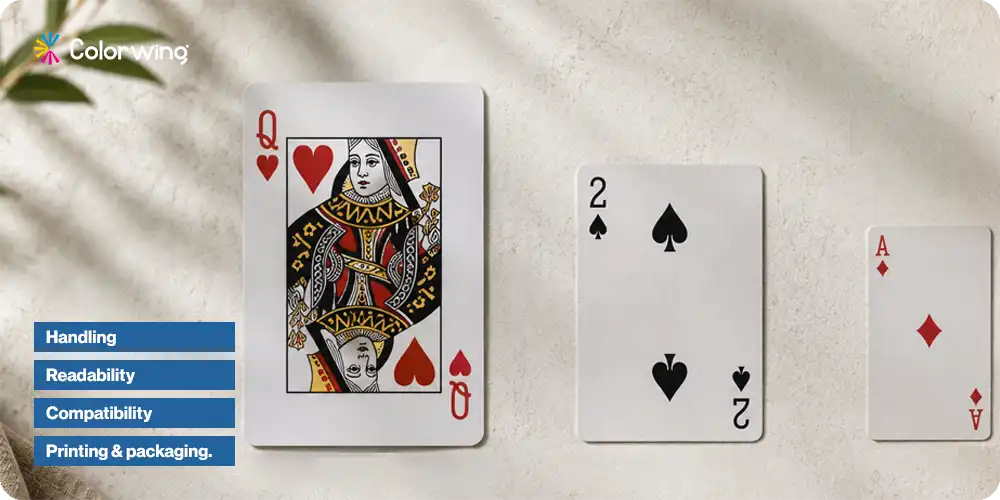
Playing card size is the final width and height of each card after it is done going through the printing, cutting, and finishing process. It matters because it directly affects:
Handling: A playing card that is too big or small doesn’t feel right during shuffling or holding in hands, especially for the games where players have to manage many cards.
Readability. Cards that’re big in size can accommodate more artwork and text as compared to smaller ones to stay legible.
Compatibility. Standard formats like poker and TCG cards fit existing sleeves, deck boxes, and storage solutions generally used worldwide.
Printing & packaging. Card dimensions influence sheet layouts, die‑cut tooling, corner radius, tuck box dimensions, and overall deck thickness.
When we plan a packaging box for a deck of cards, we start by locking in card size because it controls everything from designing visuals to card stock selection, plus how the box will feel in the hands of buyers.
What Is Playing Card Size?
In printing terms, playing card size usually refers to the final trimmed size of the card. This refers to the dimensions of the card you hold once it comes off the cutter.
You’ll see three related concepts:
Final size: It is the finished card size that comes out after cutting and corner rounding.
Trim size: It is the target size the die-cut machine is set to achieve.
File size: The complete document size including the bleed area which is larger than the trim size.
For most of the playing cards, measurements are listed down in the width × height format (e.g., 2.5" x 3.5" inches), and then in millimeters and centimeters to match international references.
Below is the detail of the most popular playing card sizes.
Standard Playing Card Size (Poker Size)
.webp?alt=media&token=7f20df9a-050c-4d14-b035-195e922684a7 "standard poker card dimensions")
Poker size is the most used playing card size globally.
Poker card size (final): 2.5" x 3.5" inches
In mm: 63.5 x 88.9 mm
In cm: 6.35 x 8.89 cm
This format is used for:
Traditional playing card decks.
Many modern card games.
Most trading cards and TCGs (including MTG, Pokémon, and many custom TCG decks).
Poker size cards balance readability and handling for most adults. It is not too small to hinder shuffling, and definitely not too big to compromise display artwork and text. Plus, it aligns with sleeves and deck tuck boxes designed for standard trading cards.
Common Bridge Playing Card size
Bridge cards don’t match the standard playing cards in width, but they have a common height.
Bridge card dimensions: 2.25" x 3.5" inches
In mm: about 57.15 x 88.9 mm
In cm: 5.72 x 8.89 cm
Bridge playing card size works best when players are required to hold many cards at once like 10–13 cards. For complex tricks‑taking games or any design involving big hands of cards, bridge size can make gameplay more comfortable.
Common Tarot Card Playing Card Size
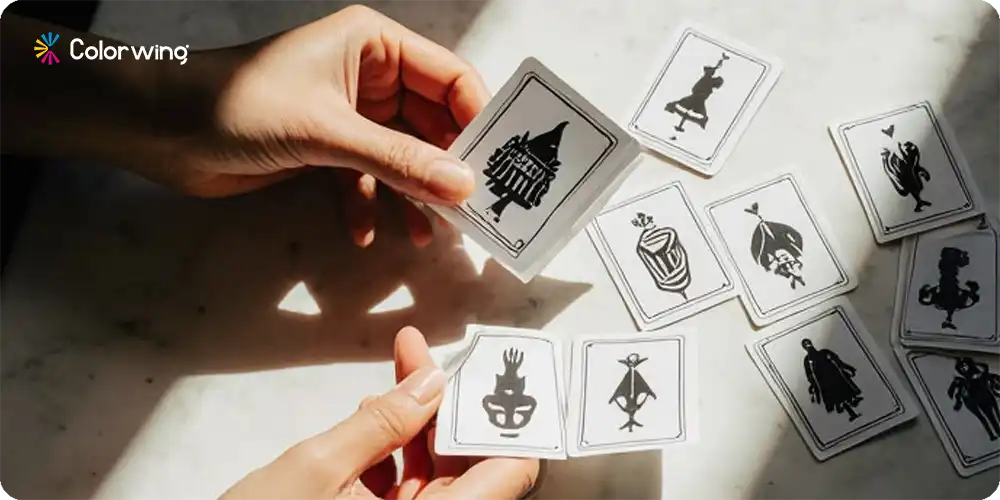
Tarot and many oracle decks use tall playing cards to give more room for detailed art and symbolism.
Tarot card size: 2.75" x 4.75" inches
In mm: approx. 70 x 120 mm
In cm: approx. 7 x 12 cm
The extra height supports rich visuals and longer text but affects handling and requires taller packaging (rigid boxes or taller tuck boxes).
Mini Playing Cards
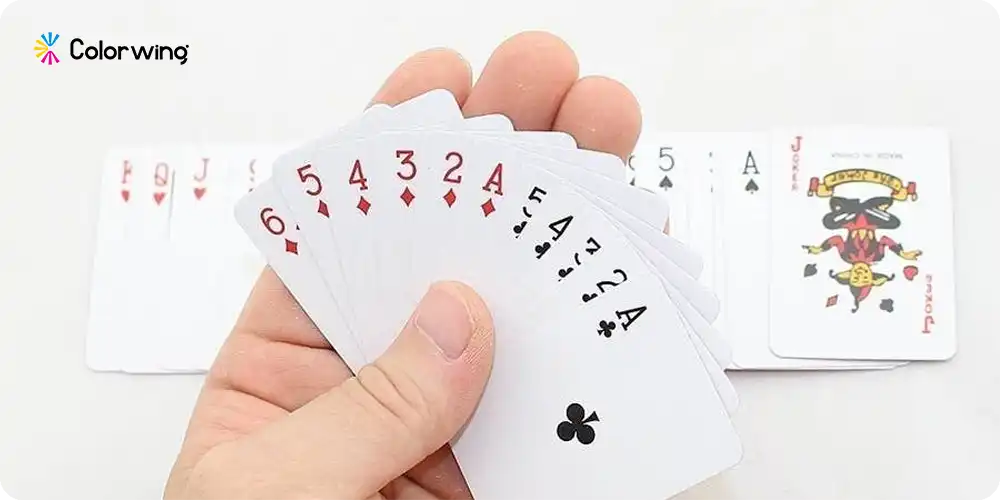
As the name suggests, mini playing cards are the smallest in size to encourage portability and kid-friendly card decks.
Size of mini playing cards is set at 1.75" x 2.5" inches
In mm: 44.45 x 63.5 mm
In cm: 4.45 x 6.35 cm
They’re a popular option to be used for travel decks, party favors, and children’s games. Keep note that the artwork and text must be kept simple and minimal.
Jumbo / Oversized Playing Cards
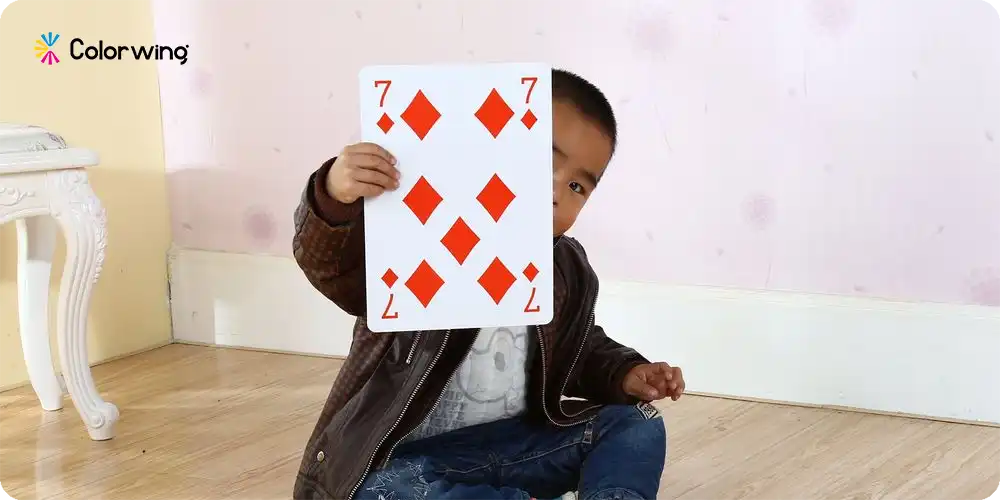
Jumbo cards are on the large end. They scale up visibility and accessibility.
Jumbo playing card size: around 3.5" x 5" inches
In mm: 88.9 x 127 mm
In cm: 8.89 x 12.7 cm
They’re useful for teaching, stage magic, and accessible decks where larger text and images are important, but they use more material and need bigger boxes.
Standard MTG Playing Card Size
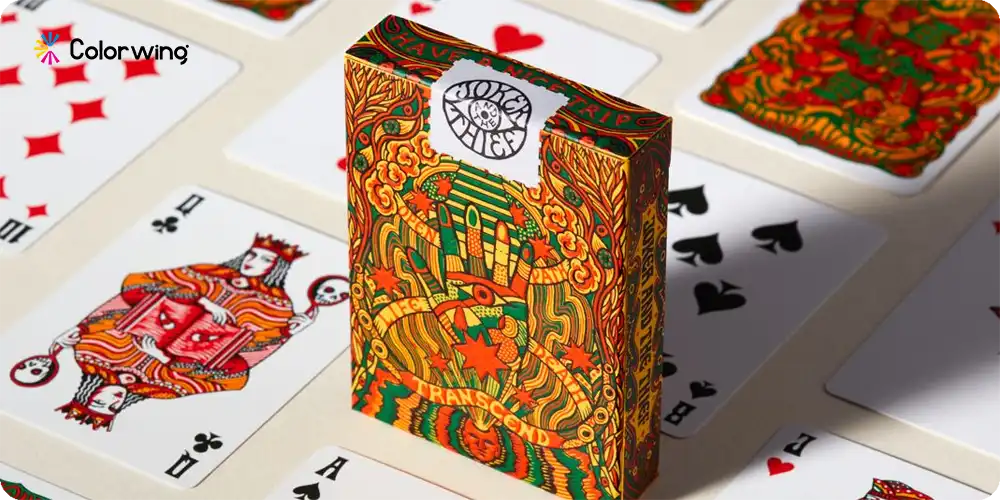
Magic: The Gathering cards use a dieline that closely resembles normal playing cards.
MTG card dimensions: around 63 x 88 mm (≈2.49" x 3.46"–3.48" inches)
This slight change can be neglected as mtg cards also come out equaling playing card size.
Standard Trading Card Size

Most trading cards, including MTG, Pokémon, and many collectible sports cards, share near‑identical dimensions.
Standard trading card size: 2.5" x 3.5" inches
In mm: roughly 63 x 88 mm
If you want your game to be sleeve‑friendly and fit common deck boxes, choosing MTG card dimensions or standard trading card size is usually best. ColorWing can match these specs so your cards slide into existing TCG accessories perfectly.
Standard Playing Card Rounded Corner Size
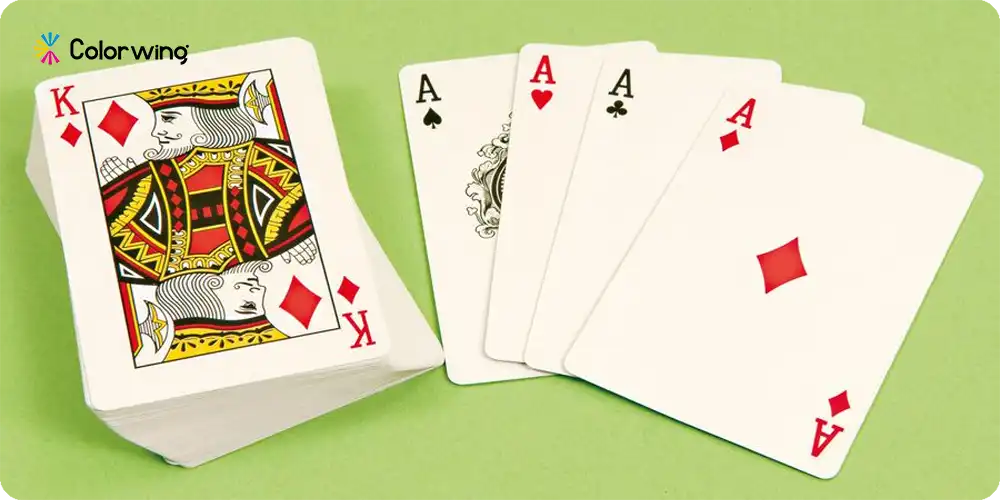
Most decks use rounded corners to prevent fraying and catching, especially during frequent shuffling.
Standard corner radius: around 1/8" (≈3–3.5 mm) for poker and trading cards.
Rounded corners:
Make shuffling smoother and more comfortable.
Extend card life by reducing edge damage.
Match common sleeve shapes for TCG and poker decks.
Specifying standard playing card rounded corner size ensures your cards feel familiar and work seamlessly with accessories.
ColorWing can work with any of these playing card dimensions & sizes, or help you package any custom format in custom playing card boxes that speak premium and justify the looks of your cards.
Bleed, Safe Zone & Print Setup
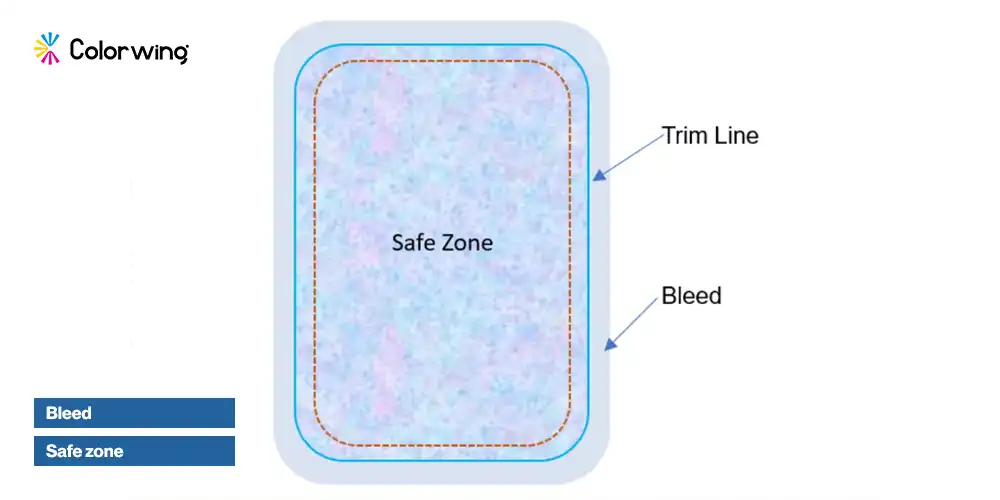
Accurate playing card dimensions are only half the story, your design files must have correct bleed and safe margins.
Bleed
Bleed is extra artwork that goes beyond the trim line. It can help avoid unprinted edges if cutting shifts even a little bit.
The normal size of a bleed line is 0.125" (3 mm) on each side for standard cards.
For a finished card of 2.5" x 3.5" inches, the complete file including bleed lines is 2.75" x 3.75" inches.
Safe zone
It is the printed area inside the trim line which contains the core of the artwork.
Safe margin is at least 0.125" (3 mm) inside the trim are for text and logos.
Example: keep critical text and icons within roughly 2.25" x 3.25".
How Card Size Affect Gameplay
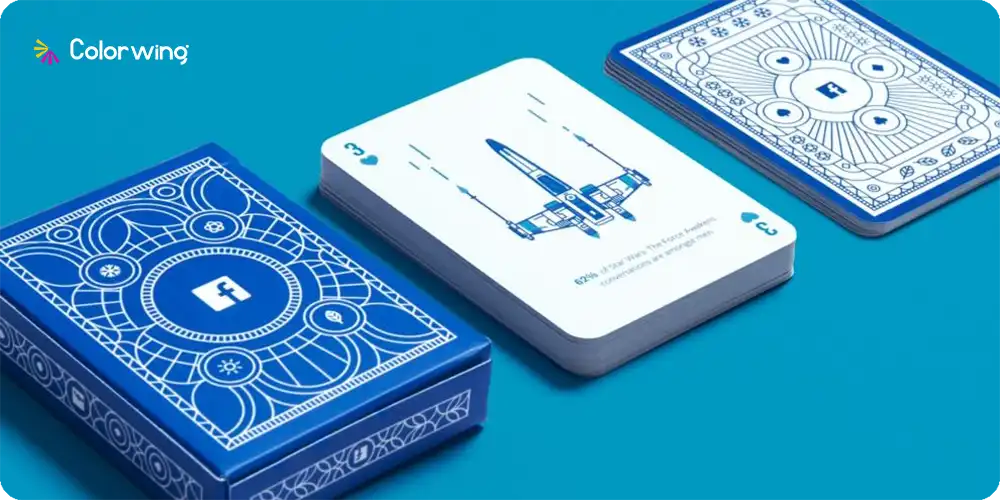
Opting for a playing card format is partly about how the deck will be used at the table.
Poker size works for regular card games and most modern designs.
Bridge playing card size suits games with large hands because narrow cards are easier to fan and hold.
Tarot cards size helps storytelling or visual decks shine but changes how players shuffle and store the deck.
Mini cards size make travel and child‑friendly decks fun.
Jumbo cards enhance visibility and accessibility for teaching and performance contexts.
How Card Size Impacts Packaging
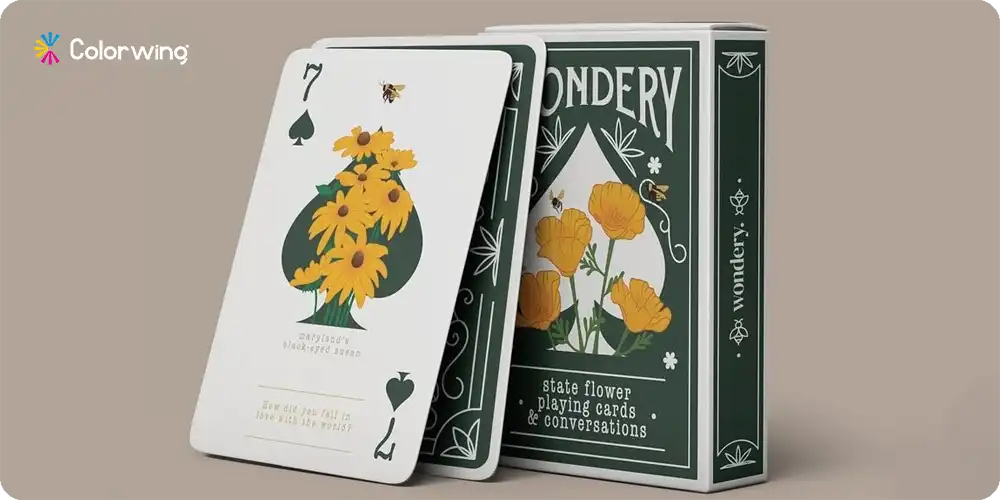
Every card size has downstream effects on tuck boxes, rigid boxes, trays, and inserts.
Standard poker and trading card decks use tuck boxes sized slightly larger than the card footprint, adjusted for thickness and corner radius.
Bridge decks use narrower boxes; tarot decks need taller cartons or two‑piece rigid boxes to accommodate height and sometimes guidebooks.
Mini decks allow very compact boxes; jumbo decks demand larger packaging and more space on shelf.
Opt For the Right Playing Card Size for Your Project
When deciding the best size for your deck of playing card, ask yourself the following questions:
What kind of game or experience do you want your cards to offer?
Fast shuffling and classic gameplay → poker or bridge size.
Visual storytelling or tarot‑style readings → taller tarot dimensions.
Will the players hold multiple cards at once?
Large hands with 10+ cards → bridge size is more comfortable.
Small hands or quick draw/play cycles → standard or TCG size works well.
How much artwork and text does each card need?
For minimal content → go for poker or bridge size playing cards.
For detailed scenes or text paragraphs → tarot size works perfectly.
Will players use sleeves and accessories?
Yes → MTG/trading card dimensions (≈63 x 88 mm) ensure compatibility.
What packaging format do you plan?
If you want a simple tuck box → then go for standard poker, bridge, or mini sizes.
If your goal is a premium rigid box with book → tarot or larger custom dimensions are great.
ColorWing can help turn your answers into a size specification, then provide templates and packaging options that support your game design and your production budget.
Cool Playing Cards: When Design Meets Dimension
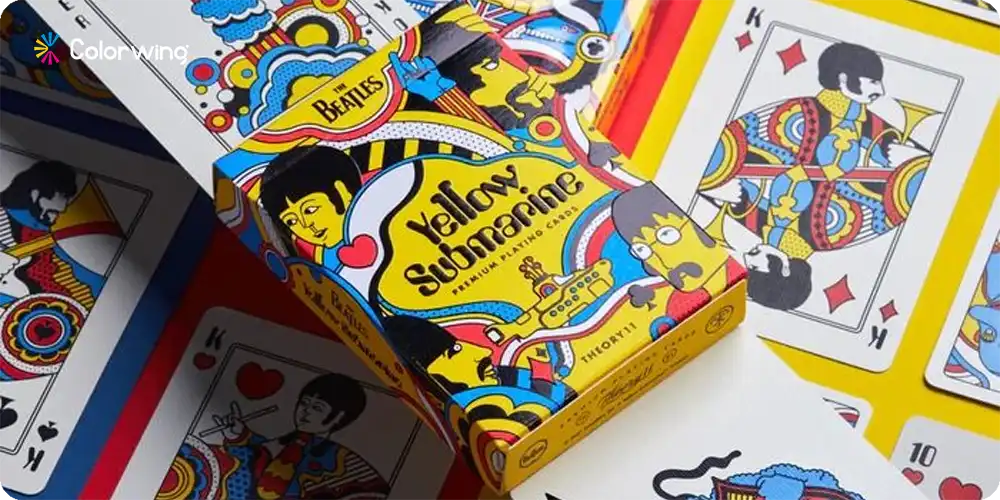
“Cool playing cards” aren’t just about artwork, they’re about how design, finishing, and playing card dimensions work together.
Varying sizes (mini, tarot, or custom) can make a deck special and a collectible item.
Poker or MTG card sizes can give off a chic look via foiling, embossing, and spot UV.
Novelty decks might intentionally play with size to create a distinctive user experience.
Quick Size Reference Table
Card Type | Size (inches) | Size (mm) | Typical Use |
Poker playing card size | 2.5" x 3.5" | 63.5 x 88.9 mm | Standard decks, trading cards, TCGs |
Bridge playing card size | 2.25" x 3.5" | Approx. 57 x 89 mm | Bridge, games with large hands |
Tarot card size | 2.75" x 4.75" | Approx. 70 x 120 mm | Tarot, oracle, visual storytelling decks |
Mini playing cards | 1.75" x 2.5" | 44.45 x 63.5 mm | Travel decks, kids’ games |
Jumbo playing cards | 3.5" x 5" | 88.9 x 127 mm | Teaching, magic, accessibility decks |
MTG / trading card size | ≈2.5" x 3.5" | ≈63 x 88 mm | Magic: The Gathering, Pokémon, TCGs |
Conclusion
In this blog article, we have discussed the varying sizes and dimensions for different types of playing cards. In a nutshell, it can be said that going for the right playing card size can bring a deck together and give off a coherent look. Plus, it will affect how the cards feel in hand, how easily they can be shuffled, how clearly the artwork can be read, and whether the deck of cards fit perfectly in the packaging boxes and sleeves.
Whether you are designing a standard poker card deck, mtg cards, tarot cards, or any custom design, what you need to do is finalize the size and then get a packaging to pack them effectively. For all your playing card packaging needs, ColorWing offers the best solutions. With us, you can order playing card boxes in any style, material, shape, and finishing as you see fit.
FAQs
What is the standard size for a playing card?
The common size for a standard playing card, aka poker card, is 2.5" x 3.5" inches or otherwise referred to 63.5 x 88.9 in mms.
What size are standard MTG cards?
Standard size of MTG cards is measured at 63 x 88 mm.
What is the usual size of a trading card?
Most of the trading cards use the exact same size as standard poker or playing cards which is 2.5" x 3.5".
How many cards are there in a deck of playing cards?
Usually there are 52 playing cards in a deck. But if you add the two jokers, the total becomes 54. As far as oracle or tarot decks are considered, there are 60 to 80 cards in total.

Emily Chris Kieran
Meet Emily Chris Kieran, a seasoned packaging industry writer with 7+ years of experience in the printing and packaging sector based in Texas. With a keen eye for color and a passion for data-driven insights, Emily crafts compelling content strategies that explore the intricacies of packaging and printing. She possesses in-depth knowledge of the industry's dynamics, staying up-to-date on the latest trends and technologies. When she's not delving into industry trends, you can find her unwinding on the golf course, where she finds inspiration and clarity. With a love for polo and a knack for storytelling, Emily brings a unique perspective to the world of packaging, illuminating fascinating facts and trends that inform and engage.