

*2 mins read
What Are Booklet Boxes? Mastery of the Book Style Packaging Standard
Publish Date
April 09, 2026
Written by
Emily Chris Kieran
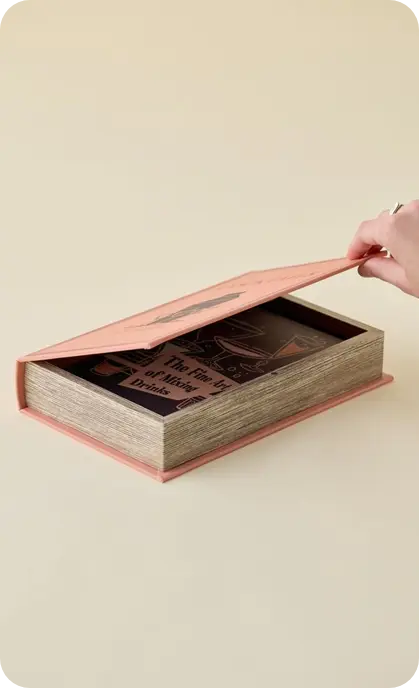
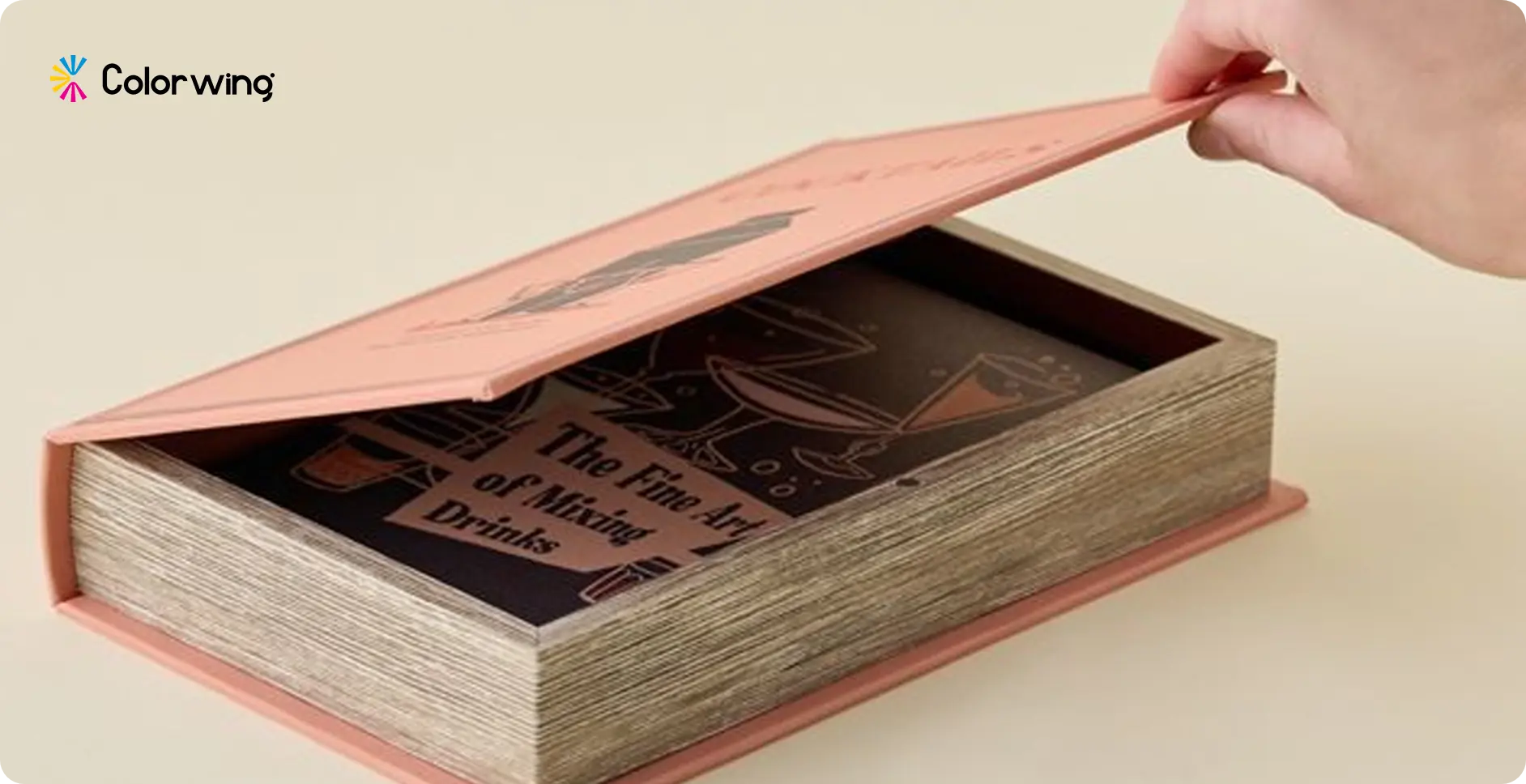
While standard booklet boxes are typically associated with gifting products, literature and media storage, book-style boxes represent the rigid, industrial-luxe evolution of this form factor. Engineered to mimic a hardbound book, these custom rigid structures utilize magnetic closures and 1200gsm chipboard to provide a high-fidelity unboxing experience.
They work well for gifts, special product launches, makeup, and other products where first impressions are as important as the product itself. And because the box opens as a book, it also governs how the viewer experiences the story, product and brand, in order.
What are Booklet Boxes in Rigid Packaging?
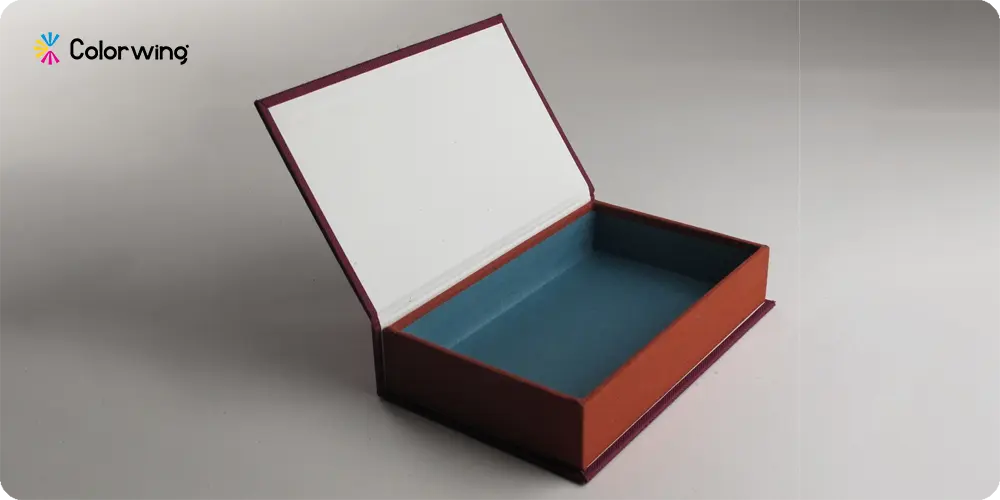
In premium packaging, a Booklet Box (also known as a Book Style Box) is a rigid container constructed from high-density 1200gsm greyboard. It features a hinged lid and a defined spine that allows the packaging to open like a hardbound book. Unlike standard folding cartons, these boxes utilize magnetic closures and friction-fit inserts to provide an industrial-luxe presentation for high-value products.
Make Packaging Feel Like a Book
A book style box is not a box with a book cover printed on it. It is a rigid box that adheres to a book-style structure: a spine, front and back covers and an opening mechanism to reveal the contents or products. This is different to a rigid box, which usually has a lid that opens, and a folding carton, which has a flap.
Book-style boxes are common for packaging that needs to feel more like luxury packaging, gift packaging, or media packaging. This structure adds weight to the product and makes the Tactile unboxing sequence that reinforces brand authority.
Booklet vs Bookend Boxes: What's the Difference
Booklet boxes and bookend boxes both mimic the form of a book, but they are used for different purposes. Knowing the difference helps brands decide between booklet boxes for product samples, displays, catalogs and product sets.
Booklet Boxes In Detail
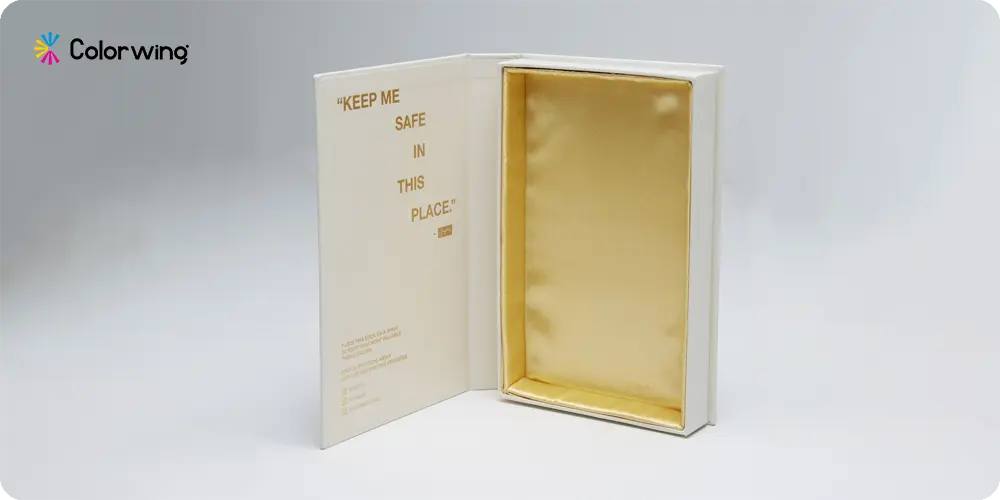
Booklet boxes are designed to house printed material, small items, or product samples in a book-like package. Inside, booklet boxes can contain printed pages, dividers, trays or foam inserts to hold everything in place and allow the viewer to follow the story in the right order. They're a great choice if you need the packaging to look like a kit, media kit or experience.
Bookend Boxes In Detail
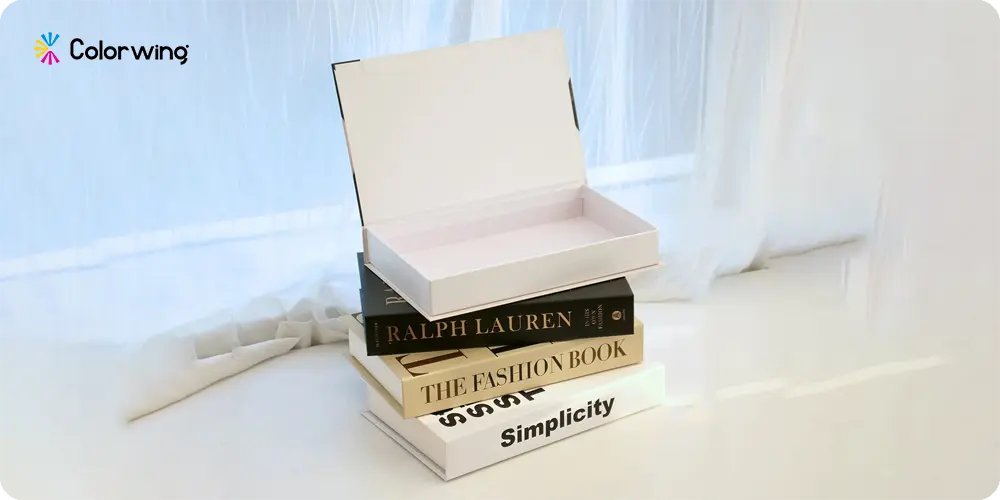
Bookend boxes are about the front panel and the box itself. The front panel is usually thicker and double-walled to make it pop and open like a book to display the product inside. They are ideal for display, because the first point of contact is at eye level and the product needs to be seen instantly
Designing custom book boxes for influencer PR kits ensures a memorable unboxing experience optimized for high-fidelity visual presentation on digital platforms like TikTok and Instagram.
Feature | Booklet Boxes | Bookend Boxes |
Primary purpose | Structured storytelling, kits, media, sample packs | Shelf display, product visibility |
Opening style | Opens like a book with interior panels and inserts | Opens like a book with a double‑thick front panel |
Interior layout | Often has printed panels, trays, or foam inserts | Inside is usually simpler, focused on product display |
Content focus | Pages, brochures, manuals, and written guidance | Product and visual presentation on shelves |
Use case | Brochures, catalogs, manuals, welcome kits, media kits | Retail display, software, electronics, cosmetics |
Narrative role | Controls information flow, step‑by‑step opening | Emphasizes front‑facing product view |
Unboxing feel | More like opening a booklet or small catalog | More like turning a book to see the product |
Best for brands that want | Exploration, education, storytelling | Visibility, display, premium presence on shelves |
This Matters For Your Brand
Booklet boxes typically work better when you want to educate, explore, and tell a story. They work well for brochures, catalogs, manuals and product kits that require a specified order and a more immersive reading experience.
If you want to make a point on the shelf, display a product and draw attention to it, bookend boxes will usually be the better choice. They're good when the box is the display and the product is the star of the show.
“The research by Fortune Business Insights says custom packaging with the broader custom packaging market is estimated to reach USD 81.04 billion by 2034”
Understand The Core Idea
The fundamental idea behind book- style packaging is that it uses the form of a book as a metaphor for the packaging of products. It turns a box into something that resembles a hardcover book, opens like a book and looks more like an artisan product than just a box.
This is great for brands that tell stories through their packaging. The cover identifies the brand, the spine can identify the line, and the pages can contain the product, printed information, or inserts. So, book style boxes are great for cosmetics, luxury products, accessories for electronic products, and gift items.
Are Book Style Boxes Equal Bookend Boxes?
Bookstyle boxes are not the same as bookend boxes. Bookstyle boxes are book‑like in their opening, and can be used like book‑shaped rigid boxes with a hinged front panel, internal set‑up and design that prioritises branding. They are more decorative, branding‑oriented, or for gifting.
Luxury magnetic book boxes for electronics provide a secure, high-end presentation that protects delicate components while reinforcing a premium brand identity. Bookend boxes also resemble books but are often design for display. They are often used for display boxes, where the product is placed behind the panel and the thicker front panel is visible.
Each design often includes high‑end finishings, stiff structure and branding. The key difference is their purpose: book style boxes are more focused on unboxing, while bookend boxes are more focused on display.
Key Components Of Book Style Boxes
The components common to book style boxes include:
Spine - the panel on the back edge that joins two covers, like the backbone of a book.
Front cover - the primary panel that displays the product's design and marketing information.
Back cover - the secondary panel that can include secondary information, codes or storytelling.
Book style hinged panel - a panel that folds back like a book, giving access to the product.
Inner board or base – a firm panel that provides stability and luxury.
Inner panels or inserts - optional dividers, trays or foam that secure the product and inform the brand narrative.
This design allows book style boxes to be used for products that must be protected but also need a special unboxing experience.
See Where Book Style Boxes Excel
Book-Style boxes are particularly good for:
The product is part of a narrative or has a complex brand story.
The package will be presented as a gift, unpackaged in front of the consumer, or photographed.
It is a luxury product, like cosmetics, fragrance, jewelry, or accessories.
The company needs to maintain a similar look for product launches, limited or special editions.
They are also suitable for sample and media kits, welcome packs, and displays that must feel special.
Choose The Right Use Case
Use book style boxes when:
You want to give the packaging a gift-like feel
You need to protect and open the product
The company tells a story and uses imagery to add value.
The boxes will be on display in a retail environment.
Don't use them like a shipping box. Reserve them for valuable products, limited‑edition product runs or products where the box should be considered as valuable as the product.
Book Style Boxes: Materials
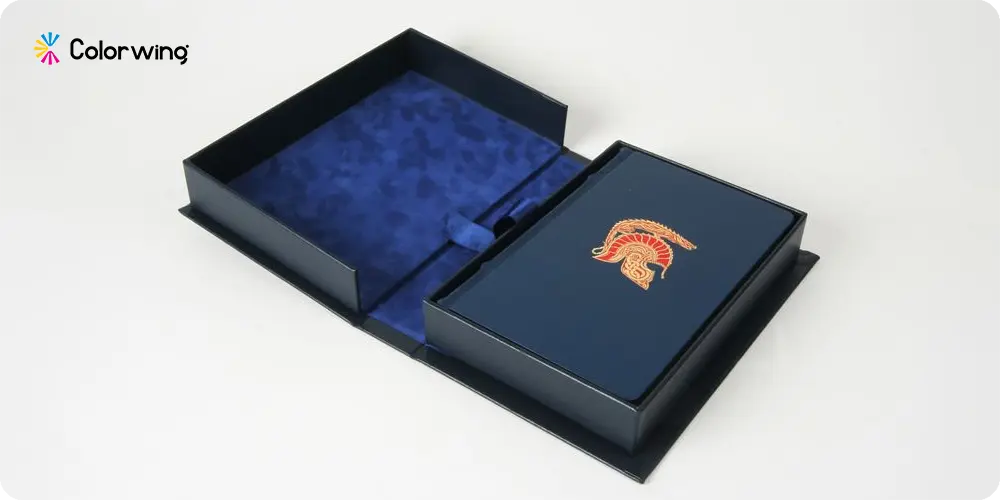
Book-style boxes use high‑quality rigid materials that can support a book‑like structure and finish. These both have their unique structural design which allows secure product display. They help for internal branding space magnetic closures and luxury finishes such as foil stamping for embossing making it quite ideal for high-end retail luxury goods and best to be presented for corporate gifts.
Common materials include:
C1S paperboard - one coated side for good printing and finishes.
C2S paperboard - both sides coated for better printing and surface finish.
Solid bleached sulfate (SBS) - smooth, white board for a premium appearance and finish.
Solid unbleached sulphite (SULFITE) – rigid board for durability.
Greyboard - thick board that is often used as the inner shell of rigid boxes.
Kraft cardboard - natural, textured board for an organic or sustainable look and feel.
Corrugated board - for increased crush protection and shipping strength.
These materials make a box feel solid, heavy and expensive rather than thin and cheap.
Use The Right Surface Texture
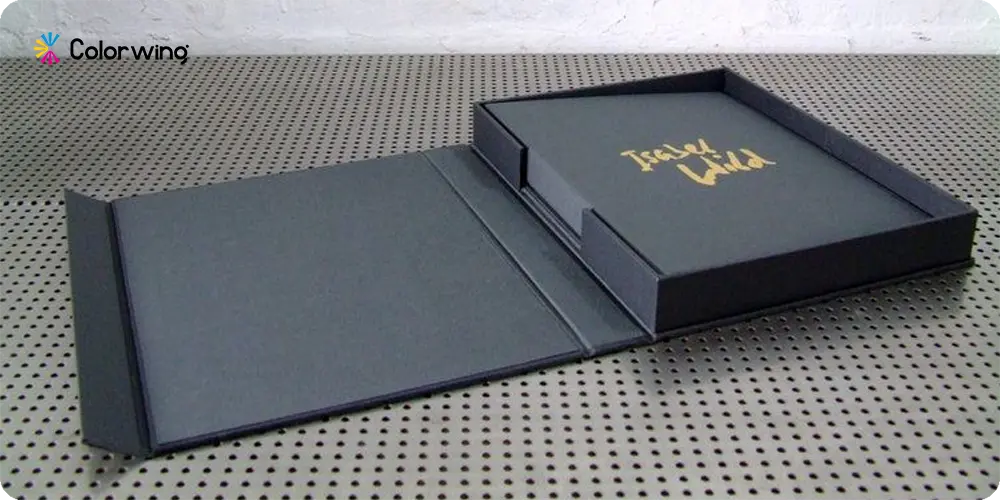
Book-style boxes are a good candidate for texture because it can be applied to the stiff box. Popular textures include:
Linen texture - makes the box soft like a cloth and elegant.
Soft‑touch finish - gives the box a velvety feel for a quality feel.
Leatherette or leather‑like finish - evokes luxury and elegance.
Embossed texture - brings selected elements to the surface for texture.
Debossed texture - stamps details into the surface for a sophisticated effect
Patterned texture - creates a repeating rhythm effect.
Such textures allow the box to stand out from the rest of the cartons, and create a bigger brand impact.
Apply Finishes That Extend The OutLook
Finishes are what turn a rigid box into a book style premium box. They influence how the box looks, feels, and resists wear and tear. Useful options include:
Matte finish – smooth, non‑reflective surface that feels modern and understated.
Gloss finish – adds brightness and makes printed elements pop.
Soft‑touch lamination – velvety coating that improves tactile value.
Aqueous coating – adds protection with a light, clean sheen.
Gloss lamination – brighter protective layer that increases shine.
Matte lamination – protective finish that keeps the look muted and sophisticated.
Spot UV - It provides stunning and shiny accents to your logos, borders or panels..
Foil stamping - highlights that shine in a metallic or coloured finish.
Embossing - raised accents for dimension.
Debossing - sunken details for an elegant effect.
Combined, these techniques can add to the intentional feel of a book style box.
Intentionally Design The Cover And Spine
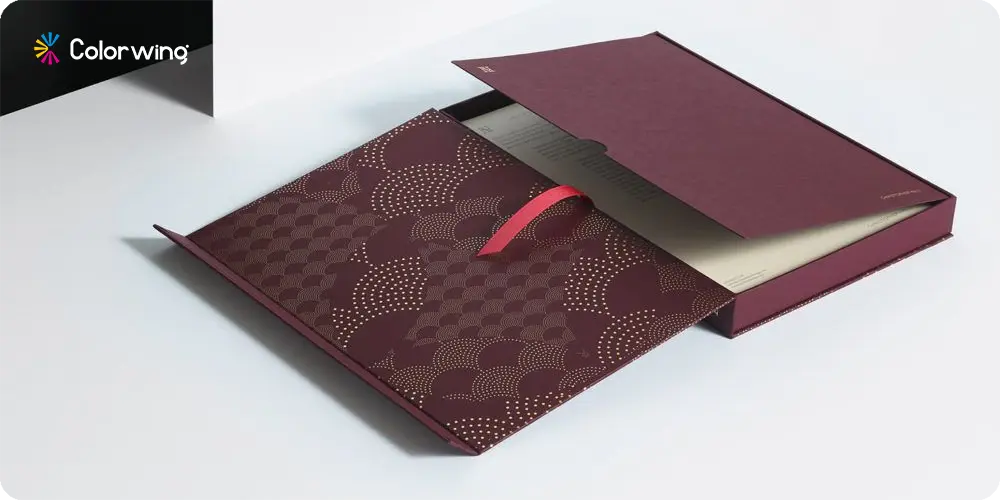
Book style boxes should be designed like books:
The front cover can hold the main brand, product, and image.
The spine can display the product line, series or edition.
The back cover can contain secondary copy, QR codes, or the next chapter.
The sequence can help the viewer navigate the product and printed content.
Text should be legible, contrasting and reflective of the brand. Rigid pack surfaces can be less forgiving of fine detail, small fonts, and intricate patterns, so it's best to keep things bold and simple. By changing to eco-friendly rigid book style packaging USA, businesses can respond to the demands of environmentally aware consumers while still providing the strength needed for high volume shipping.
Plan The Interior Layout Carefully
Book style boxes benefit from interior organisation. That can include:
Flat interiors for products that only require a surface.
Panels or dividers that isolate several items or pages.
Trays or foam inserts to hold the product.
Paperboard inserts that hold the product's brochure, cards, or instructions in place.
Sheet dividers to separate sections, product variations or chapters of the story.
Good interior design keeps the box tidy and makes sure the product doesn't shift in transit.
Match Finishes To Brand Personality
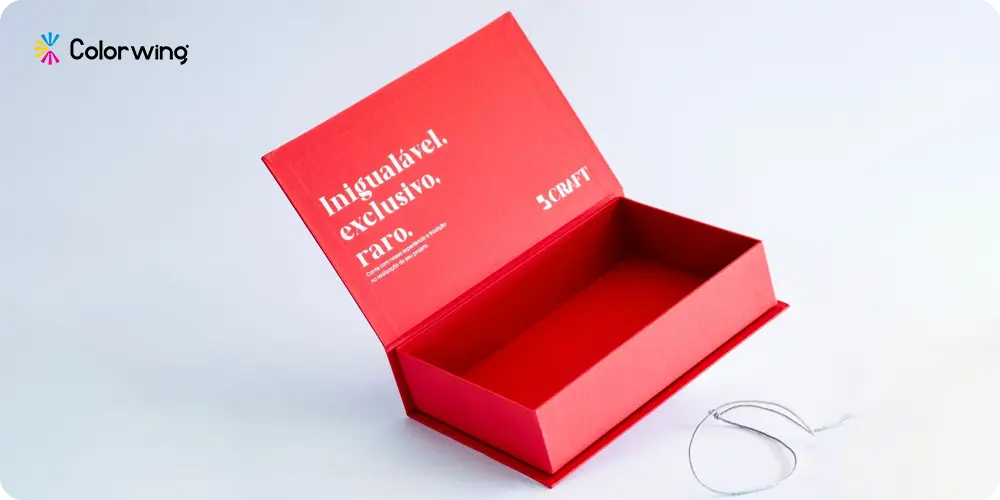
Book style boxes can be used to convey any brand personality. Use finishes to match the mood:
A soft‑touch, matte, linen‑texture box is serene, elegant, and luxurious.
A shiny, foil, embossed box feels dramatic, vibrant, and luxurious.
A kraft, matte‑laminated box feels natural, organic and sustainable.
A foil‑stamped, embossed rigid box feels regal, gift‑worthy.
It's all about consistency: the box structure, material, texture and finish should all point in the same direction.
Understand The Applications of Book Style Boxes
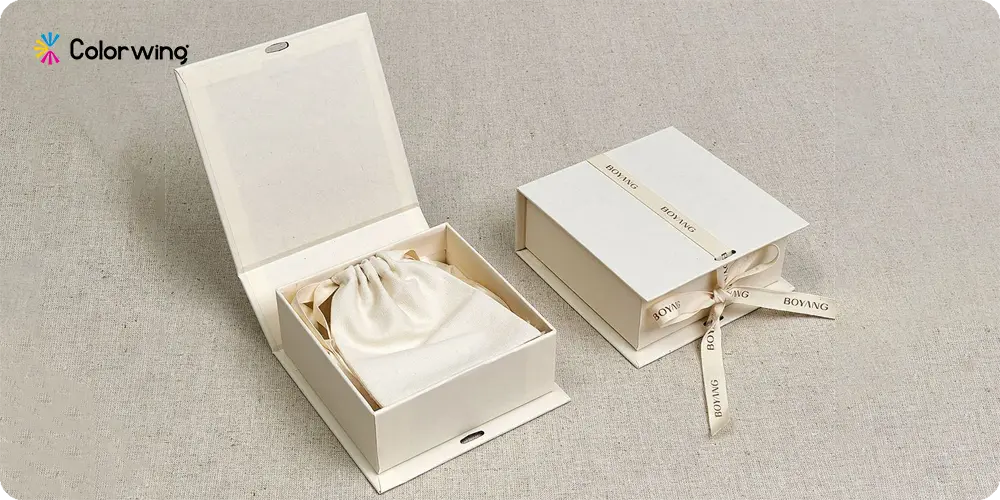
Book style boxes are particularly common in:
Cosmetic packaging, where the box is part of the consumer experience.
Perfume and scent packaging, where the box should be a treasure chest.
Accessory and jewelry, where the box is part of the gift experience.
Gifts and corporate, where the box should feel exclusive and special.
Sample boxes and launch packs, where the box becomes a narrative.
Media kits and company welcome packs, where nothing should be left to chance.
These companies use book style boxes to Distinguish the product" without modifying the product.
See The Unboxing Advantage
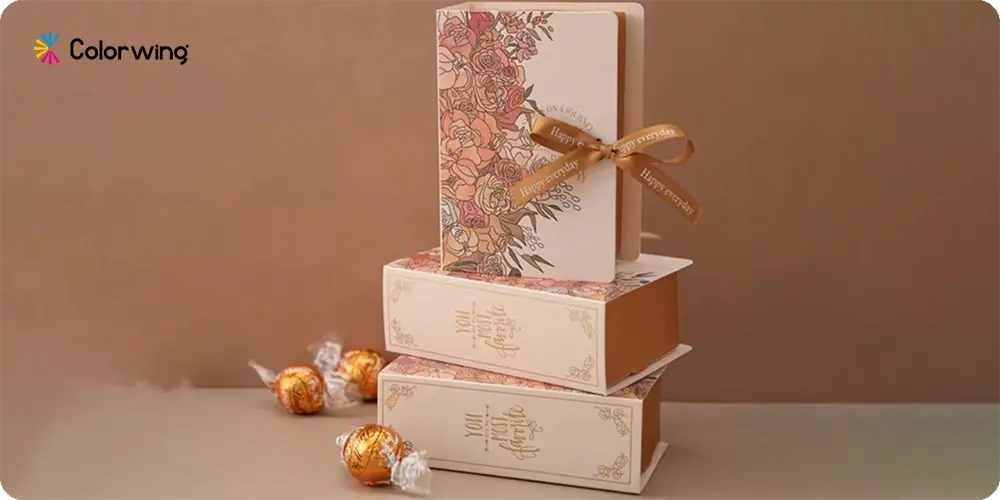
Unboxing is memorable. A book style box opening is a narrative‑based opening, because the consumer lifts the cover, reveals the product, and often reads supporting text or images.
This can be used to:
Introduce the product.
Explain how it was made.
Provide instructions.
End with a revelation.
When the box is a book, unboxing is more of a surprise than an unpacking.
Book Style Boxes vs Booklet Boxes vs Bookend Boxes
Book style boxes are part of a larger category:
Book style boxes - rigid book‑like packaging used as a luxury container or gift box. They focus on form and substance.
Booklet boxes - typically used for booklets, catalogs, or printed booklets with more content on the inside and several panels.
Bookend boxes - resemble books and are more decorative, with the front panel of the box facing out on a bookshelf.
Each style has its place. Book style boxes are the ideal choice when you want your box to be substantial, gift‑able and stand out.
Avoid Common Mistakes In Design
Some common mistakes inexperienced designers make with book style boxes include:
Using small text and minute details on the front cover that don't work on a hard surface.
Not using the back cover and spine for secondary branding.
Overusing finishes, then the box can look busy and over-saturated.
Neglecting the interior design, which can result in a sloppy fit.
These can typically be resolved through cleaner layouts, balance and surface use.
Use Finishes to Add Value
Finishes add to the product's value. They:
Enhance durability and scuff resistance.
Preserve printed image.
Enhance the sense of quality.
Help brand recognition as the box feels different.
If brands want packaging to feel durable, matte lamination, soft‑touch coating, foil stamping and embossing are the way to go.
Check out Custom Book Style Wholesale
If brands want to use book style boxes frequently, custom book style wholesale and book style boxes bulk make sense. Ordering in bulk can lower your cost per unit while maintaining a premium look. With the custom booklet mailing boxes, your brand can standout with the mailers that portray elegance.
Buying in bulk also allows brands to standardise the box shape, finish and box structure across a range of SKUs, which can enhance brand recognition on the shelf and in hand.
Let ColorWing Design Your Custom Booklet Boxes
Book-Style boxes are an effective way to add a bit more meaning to your packaging. They're a good choice when the package needs to be a gift, a narrative, or an experience more than a box. ColorWing can help brands for the purpose of creating custom book style boxes that match the product, consumer and brand voice. Book style boxes will be carefully considered in materials, finishes, construction and layout to match the product.
Frequently Asked Questions
What are book style boxes?
Book style boxes are rigid packaging units that look like books, with a spine and hinged front cover that opens like a book. They are used for premium products, gifting, and storytelling‑driven packaging.
Are book style boxes the same as bookend boxes?
No. Book style boxes emphasize book‑like opening and premium presentation, while bookend boxes are often used for display and shelf visibility.
What materials are used for bookstyle boxes?
Common materials include C1S, C2S, solid bleached sulfate, solid unbleached sulphite, greyboard, kraft cardboard, and corrugated board.
Which finishes work best on book style boxes?
Matte, gloss, soft‑touch lamination, aqueous coating, gloss lamination, spot UV, foil stamping, embossing, and debossing are all effective.
Are book style boxes good for cosmetics and beauty?
Yes. They are widely used for cosmetics, fragrances, and premium gifts because they create a strong unboxing experience.
Can I buy custom book style wholesale or book style boxes bulk?
Yes. Custom book style wholesale and bulk orders help brands standardize premium packaging across multiple SKUs at a lower per‑unit cost.
Are book style boxes good for surface finishes?
Yes. They respond well to matte, gloss, soft‑touch, spot UV, foil, embossing, and debossing, which can all enhance the look and feel.
What are the main benefits of book Style boxes?
They improve perceived value, create a stronger unboxing experience, support storytelling, and help products stand out on shelves.

Emily Chris Kieran
Meet Emily Chris Kieran, a seasoned packaging industry writer with 7+ years of experience in the printing and packaging sector based in Texas. With a keen eye for color and a passion for data-driven insights, Emily crafts compelling content strategies that explore the intricacies of packaging and printing. She possesses in-depth knowledge of the industry's dynamics, staying up-to-date on the latest trends and technologies. When she's not delving into industry trends, you can find her unwinding on the golf course, where she finds inspiration and clarity. With a love for polo and a knack for storytelling, Emily brings a unique perspective to the world of packaging, illuminating fascinating facts and trends that inform and engage.