

*2 mins read
What Are Standard Banner Sizes? A Complete Guide to Choosing the Right One
Publish Date
July 23, 2026
Written by
Emily Chris Kieran
A standard banner size ranges from 2’ x 4’ for indoor setups to 4’ x 8’ for regular storefront and 6’ x 12’ for large outdoor signage. Print shops and printing products suppliers use these standard banner dimensions because they fit basic hardware and common display areas accurately.
You have a big event coming up and you need a sign. Banners are a cost effective option to grab attention if you’re going to organize an event or participate in a trade show. You need to determine the exact dimensions for your banner so it looks fine from a distance. A right banner size directly impacts whether your advertisement will get noticed or ignored at the spot.
If the banner size is too small, people just walk right past it. If it is massive, the material sags on the wall and looks terrible. You don’t need to figure out custom sizes when standard banner sizes already exist and solve the problem. They keep product costs low by using standard printer materials, inks, and rolls.
ColorWing’s professional team assists you in figuring out banner dimensions according to event needs. This blog provides you detailed information on common banner sizes and how you can choose the right one. Read this thoroughly and pick the right one to fulfill your advertisement goals perfectly.
Key Points to Remember
Avoid wasting time and money with predefined banner dimensions.
3' x 6' and 4' x 8' layouts look best on storefront signs.
A retractable trade show sign typically measures 33 inches by 80 inches.
In order to be viewed from ten feet away, text needs one inch of height.
Before ordering anything, be sure to measure the space where it will hang.
What Is a Standard Banner Size?
A standard banner size refers to a set of common measurements that are used in the printing industry defaultly. These predefined dimensions offer an easy start instead of designing a fully custom size from scratch. In other words, there’s no such thing as one standard measurement that can be applied to every single sign. Instead, you get a handful of reliable options that handle most retail and trade show needs easily.
Why is There No Single Official Standard Size For Banners?
There are slight variations between the menus listed by different print shops. It depends on the banner material rolls and printing machines a shop uses to determine a banner's default size. The fact that buyers regularly order certain dimensions led to them becoming standard. Additionally, these popular sizes fit the best retail templates and metal stands currently available.
Common Standard Banner Sizes & Quick Reference Chart
It's not a one-size-fits-all thing when it comes to banner sizes, but there are some that are considered industry standards. The right size is a critical decision that sometimes depends on creativity and sometimes depends on the environment. We have put together this simple banner dimensions chart to show you the most common sizes along with their use cases. Check this list to match your project with the right measurements.
Banner Type | Common Sizes (W x H) | Best Use Case |
Small / Tabletop | 2' x 4', 2.5' x 6' | Vendor tables, indoor displays |
Medium / Storefront | 3' x 6', 4' x 8' | Shop windows, fences, market stalls |
Large / Outdoor | 5' x 10', 6' x 12' and up | Parking lots, building walls, highways |
Retractable | 33" x 80", 47" x 80" | Trade show floors, retail lobbies |
Pole Banner | 18" x 36", 24" x 36" | Streetlights, parking lot poles |
X-Banner Stand | 24" x 72", 36" x 78" | Temporary indoor promotions |
You can start your project with standard banner sizes. They give you a full idea of what to expect before you begin discussions with a supplier.
Here’s more details about common banner dimensions so you can get the complete overview.
Small Banners Sizes
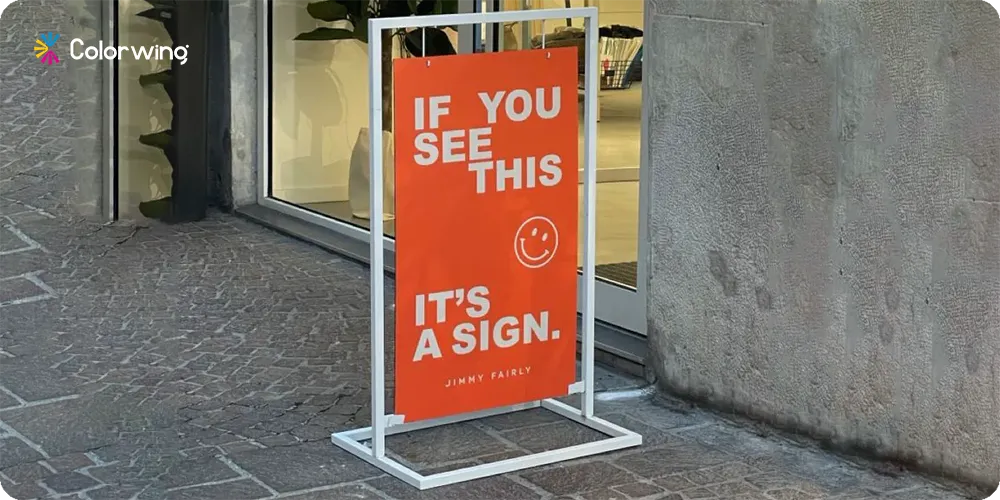
Small banners in sizes of 2’ x 3’ and 2.5’ x 6’ do a great job by handling close up messaging in tight physical spaces. You can find them at checkout counters, small window displays, and tabletop events. An attractive 2' x 4' sign is just right for a farmers market vendor table. If you put too much text in this small banner, people will have difficulty reading it. Typically, they are used where larger signage would be obstructive.
Medium Banner Sizes

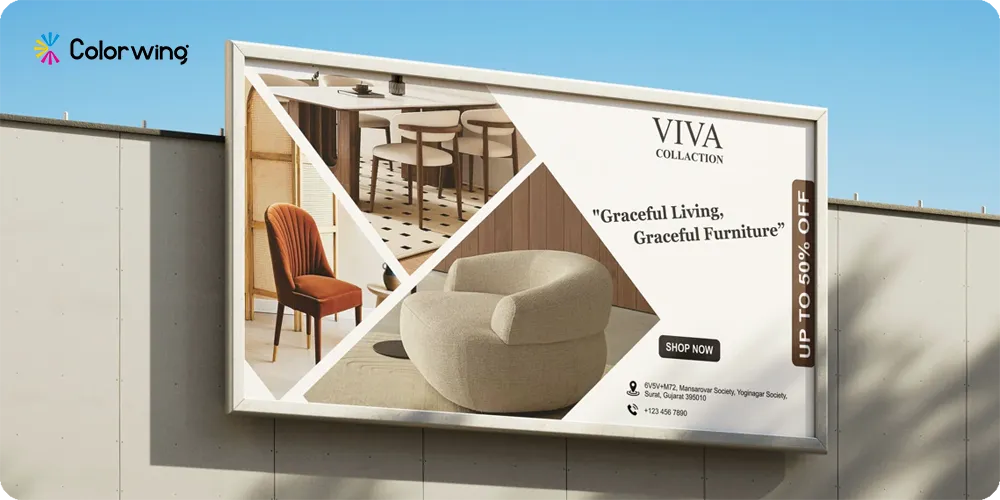
Medium banners, typically sized at 3' x 6' and 4' x 8' are the most versatile signage options in businesses. These options give you great exposure while staying portable. This standard banner size can be seen everywhere, on shop windows, local fences, and market stalls. Their long range visibility and ease of handling make them an ideal choice. This size is the most searched standard banner size because it falls into the sweet spot of everyday advertising.
Outdoor Banner Sizes
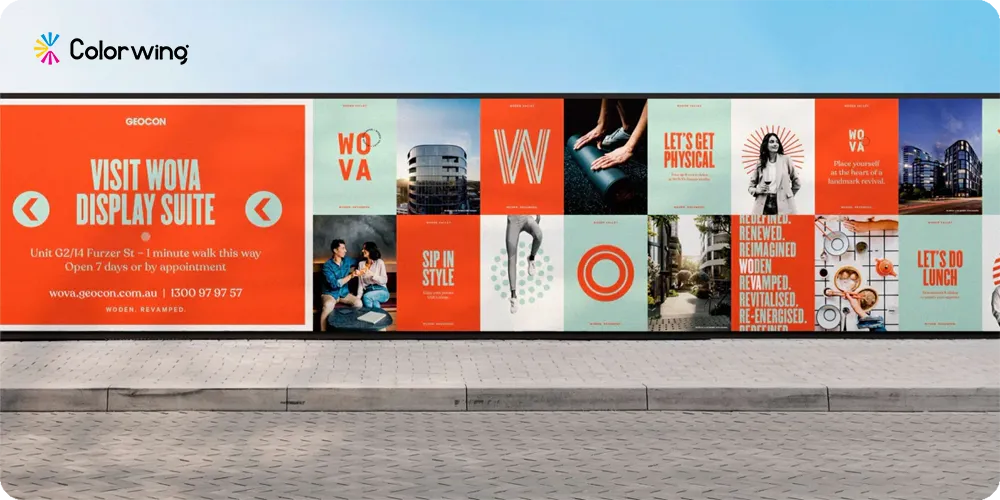
Outdoor banners sized 5’ x 10’, 6’ x 12’, and larger are highly recognizable symbols designed for long-range legibility. It is necessary to scale up when you want people to be able to see your message from a distance. It is best to use a large outdoor banner in parking lots, busy intersections, and at big events like grand openings. A 6' x 12' footprint makes sense for the side of a building. These massive banner dimensions make material durability more important. It must withstand heavy winds and rain.
Retractable, Pole & X-Banner Sizes
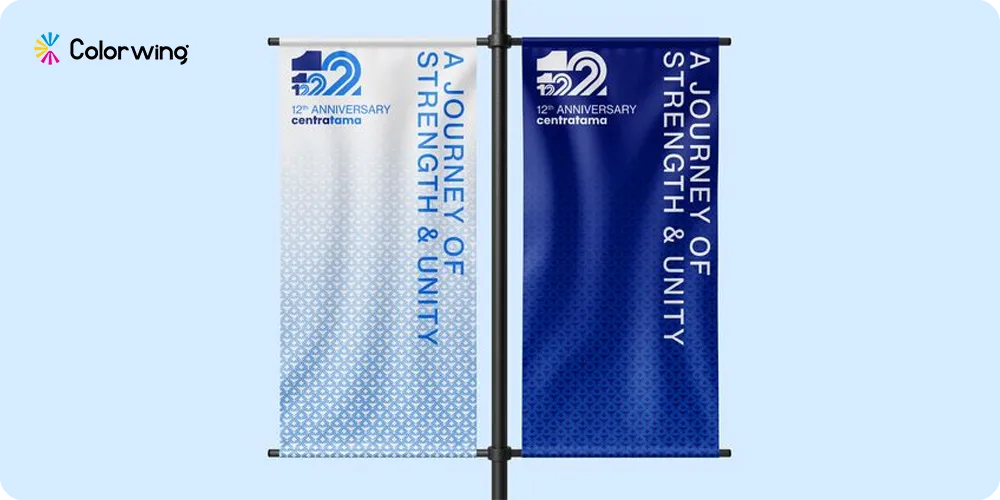
There is a strict sizing requirement for hardware stands at indoor trade shows and street promotions. For these setups, you cannot guess the dimensions.
Retractable sizes: Most pull-up trade show banners measure roughly 33 inches wide by 80 inches tall.
Pole banner sizes: Streetlight signs usually measure 18 x 36 inches, 24 x 36 inches, or 30 x 36 inches.
X-banner stand sizes: These indoor portable stands need sizes like 24 x 72 inches, 36 x 78 inches, or 48 x 84 inches.
The banner default size ensures that everything fits perfectly.
How to Choose the Right Banner Size for Your Space?
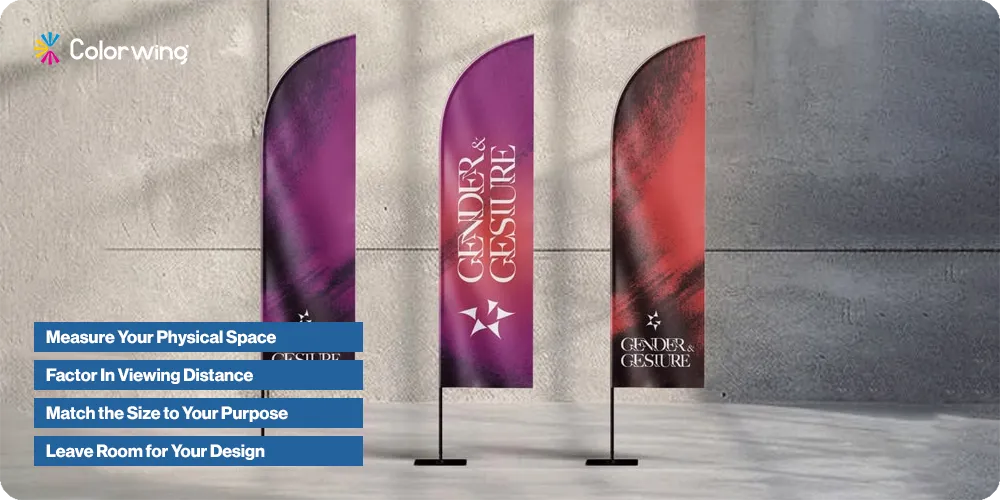
Choosing the ideal banner size requires a simple strategy. Just guessing about what appears to be the right choice won't suffice. Think about your current geographical position and who your intended audience is while making a decision. The most effective way to get the right fit for any space involves a process that consists of four stages. This method will serve you well whether you need customized banners or just regular banners.
Use the following steps to determine the correct banner size.
Measure Your Physical Space
Take a tape measure and carefully evaluate your wall, window, fence line, or booth backdrop. Do this before you even look at a print catalog. Write down the exact width and height you have available. You must leave a margin of empty space around the edges. If your size of banner stretches tight from corner to corner, it looks sloppy.
Factor In Viewing Distance
Distance is what determines your final banner size. Visibility in the printing industry is governed by a very specific rule of thumb. The letter height needs to be approximately 1 inch per 10 feet of viewing distance. If cars drive past your storefront banner from 50 feet away, your text must be at least 5 inches tall. You have to buy a sign big enough to hold those massive letters. Using this rule completely changes how you think about banner dimensions.
Match the Size to Your Purpose
Your business goals affect your sizing choices directly. An attention-grabbing sign is essential to a massive brand awareness campaign. You do not need much space in a bakery window for a quick weekend promotion. The standard banner size needed for directional signs should be spacious enough for pedestrians to read while walking. Pick a size that actually matches the job it needs to do.
Leave Room for Your Design
Do not pick a size first and then try to fit an elaborate design into it. Margins, font scaling, image clarity, and your banner ratio go hand in hand with your measurements. When you squeeze a complex logo and a big paragraph onto a small space, it becomes a sloppy blur. Avoid this common mistake by planning the artwork and the size together.
Standard vs. Custom Banner Sizes: Which Do You Need?
The choice between standard and custom banner size heavily relies on a specific display environment. You have to decide whether a standard option would suit your requirements or a custom choice is necessary. There is usually a wide choice of sizes and templates available at print shops. On the other hand, a custom banner costs more money and requires a longer lead time.
Feature | Standard Banner Sizes | Custom Banner Sizes |
Cost | Budget friendly | Usually much higher |
Turnaround | Prints very fast | Takes extra days |
Templates | Ready to use | Built from scratch |
Fit | General spaces | Exact architectural fits |
Commercial buyers almost always choose a standard banner to save time and money. It is only appropriate to invest in a custom banner size if it is required for a strange physical environment that requires a specific fit.

Emily Chris Kieran
Meet Emily Chris Kieran, a seasoned packaging industry writer with 7+ years of experience in the printing and packaging sector based in Texas. With a keen eye for color and a passion for data-driven insights, Emily crafts compelling content strategies that explore the intricacies of packaging and printing. She possesses in-depth knowledge of the industry's dynamics, staying up-to-date on the latest trends and technologies. When she's not delving into industry trends, you can find her unwinding on the golf course, where she finds inspiration and clarity. With a love for polo and a knack for storytelling, Emily brings a unique perspective to the world of packaging, illuminating fascinating facts and trends that inform and engage.