

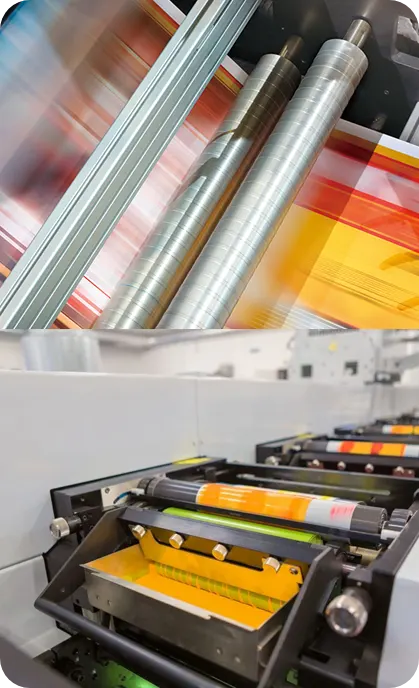
*2 mins read
What is Rotogravure and Flexography? Key Differences
Publish Date
January 21, 2026
Written by
Emily Chris Kieran
Have you been stuck in conundrums of competitive business of packaging printing? We know here every color and lines will determine the brand image, rotogravure or flexography may be the difference between success and failure of your production. To converters, brands, printers in need of flashy labels, flexible pouches, and rigid boxes, the answer to what is rotogravure and Flexography vs. Gravure is the key to cost-effectiveness, high quality and quicker response times.
This is a professional manual, customized to the critical clients of ColorWing that determines these processes, breaks down the most notable distinctions, and provides practical suggestions on the variation between rotogravure and flexographic printing. We also manufacture custom mylar bags with the use of remarkable materials.
We shall discuss rotogravure printing process, Flexographic printing examples, rotogravure substrate compatibility, etc ,and conclude with a Flexo vs gravure vs offset comparison table. Despite your eye on a rotogravure printing press or a Flexographic printing near me, in any case, ColorWing puts you on the road to success.
What Are The Key Definitions of Both Rotogravure and Flexo?
When you are going to define gravure or define flexographic printing it’s crucial to get the process they utilize for printing. Both of these processes have their own unique key features.
Rotogravure printing
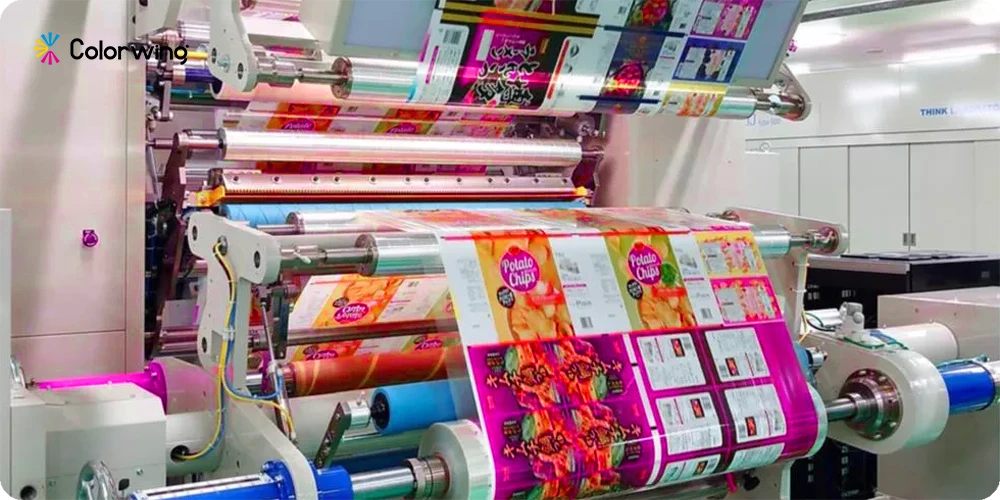
Rotogravure is known as an intaglio process which then focuses that image is engraved as tiny recessed cells on metal cylinder. The ink fills these cells and is then get it transferred directly for the substrate, giving very consistent ink film thickness. These are high-in detail and have a smooth high-quality tonal gradations, these are also showcasing exceptional outcomes over very long runs.
Flexographic printing (flexo)
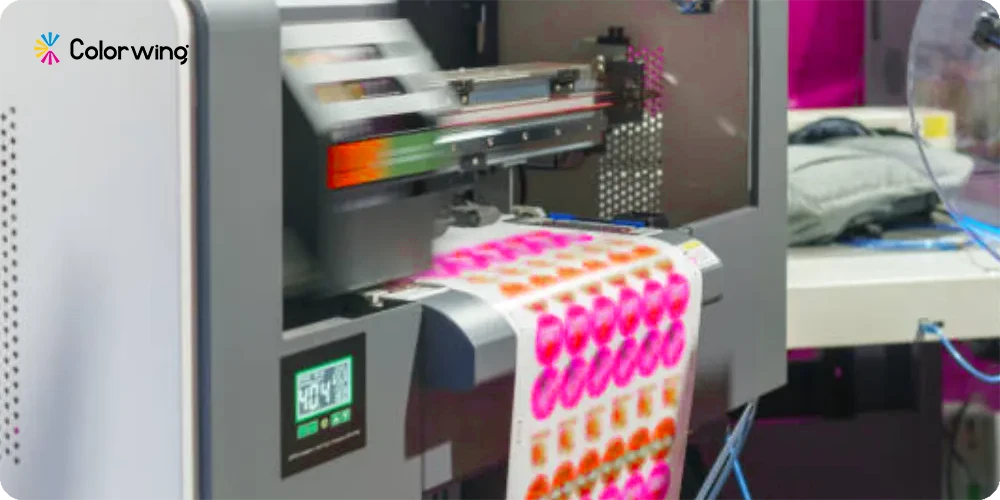
Flexography is a process with flexible photopolymer plates with a raise design area. The ink gets metered onto the plate by an anilox roller and gets transferred to the substrate. Flexo is quick engineered for fast setup, lower plate cost, these also get a wide substrate and have ink compatibility, these tend to be quite efficient in production from short to long runs.
Explaining Rotogravure: The Precision To Ensure Solid Prints
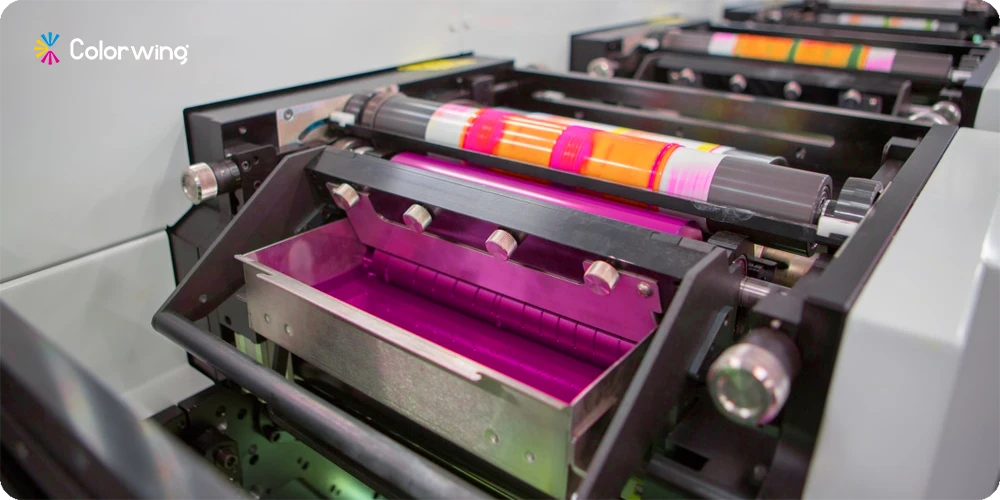
Take the meaning of rotogravure: masterpiece of intaglio printing: a cylinder-based process in which images are cut in miniature recessed cells into a copper-sleeved steel cylinder. In rotogravure, low-viscosity ink solvents that have been tanked up in flood cells flow through a bath onto the substrate with excess being removed with a doctor blade ,and the cylinder then presses the substrate against an ink transfer roller, depositing cells in a rich and uniformly distributed manner. Cells have a photo depth of different depths (10-50 microns) and angles of tonal gradient. While rotogravure is often paired in conjunction to the die-cutting process and it turns out to be remarkable print quality.
Rotogravure printing machines are used with 8-color towers where the web speed of 800-1,200 m/min. is required; roto gravure is used in pharmaceuticals, snacks, and cosmetic industries where gloss and registration (+-0.1mm) require perfection. The cylinders have a life of 10-20 million impressions that amortize a high setup to volume.
Flexography: Master of High-Speed Multitasking.
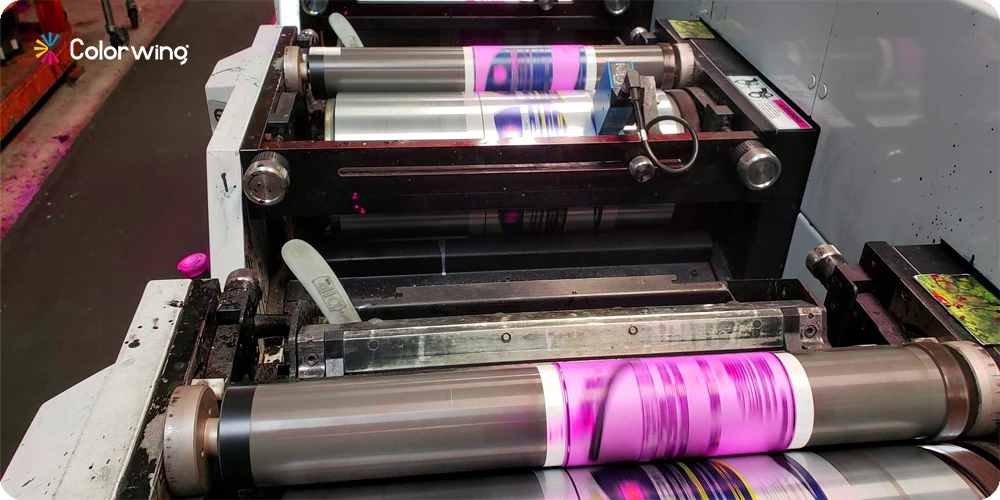
The flexography- abbreviated flexo-uses flexible (1-3mm) photopolymer plates that are attached to plate cylinders. Ink meters Ink meters Ink meters Ink meters Ink meters Ink meters Ink meters,Ink Anilox regulates homogeneity; inks based on UV/water dry through LED/IR dryers at 300-600 m/min.
Flexographic printing tends to showcase exceptional versatility, these are capable of printing a multifarious porous and non-porous substrates. There are numerous applications of flexographic printing: beverage labels, shrink sleeves, corrugated boxes. There are hybrids of flexo gravure printing machines, but pure flexo is used on corrugated, paperboard and films with fast plate changes (hours vs. days). Modern HD flexo reaches 250 LPI, and competes with gravure in most packaging
Rotogravure Printing Process: Mastering the Process.
The gravure printing advancements have been widened these involve the transition, from primarily using porous substrates likewise, paper, with capillary action for effectively handling non-porous substrates.
Rotogravure printing method requires accuracy:
The process of Rotogravure printing definitely requires a higher and substantial precision.
Ink release Cells (diamonds/pyramids) are formed by electromechanical/chemical etching.
Chrome/Etching: Cells are etched further; protective chrome coats.
Ink Flood: Bath sinks cylinder; Ink fills cells.
Wipe and Print Doctor blade cuts off excess; substrate pressed at 2-5 bar.
Dry & Rewind: Evaporation of solvents is done by using dry and rewind.
Automation Gravure printing machines have closed-loop color control, maintaining +-0.02 DE consistency across millions of meters. Waste? Minimal at scale.
Head to Head: Rotogravure vs Flexography
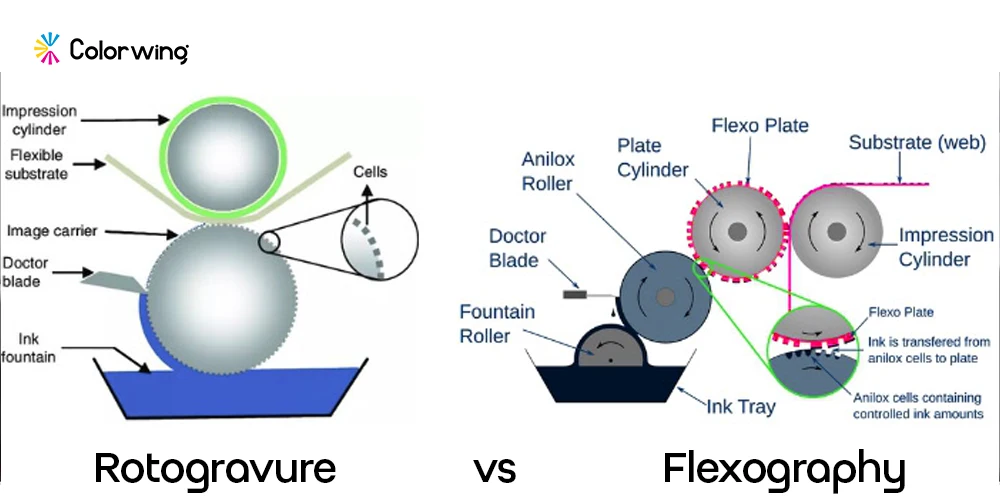
Flexography vs. Gravure is a both goes through the run length, price and quality:
Print Quality & Resolution
Gravure printers offer unrivaled depth-gloss on rotogravure substrate such as BOPP/PET, smooth vignette, 3D like gloss. Flexo, flat-top dots, bridges gap of 133-200 LPI but loses micro-text (6pt).
Setup & Cost Dynamics
Rotogravure printing press cylinders are expensive: $5000-150000 each (8-color: $80000 more), profitable >1M meters. Flexo plates: 200-500/station, available in hours- ideal short/middle runs.
Speed & Volume
Gravure: 1,000 m/min continuous. Flexo: 400-700 m/min, is good in variable data.
Substrate Versatility
Rotogravure substrate is biased towards smooth films (PE, PVC); flexo porous corrugated/paper easily.
Ink & Sustainability
Gravure: VOC-heavy, solvent-dominant and recyclable. Flexo: Water/UV inks cut emissions 70%.
Rotogravure Substrate & Applications
Sweet spots of rotogravure substrate: Thin films (12-50m BOPP/PET/PE), metallized foils, cellophane. High-end flexible packaging, such as cereal liners, coffee pouches, etc., where the barrier and the opacity count, is dominated by gravure printing companies. Not well fitted to absorbent stocks.
Aspect | Rotogravure | Flexo 2‑color | Flexo 4‑color (CMYK) |
Imaging principle | Etched cylinder cells meter ink very precisely, giving highly consistent film thickness and tone. | Two plates, usually a main brand color plus a support color, with minimal color interactions. | Four process plates (CMYK) are overprinted to build a full‑gamut image. |
Typical use | Flagship SKUs, ultra‑high‑volume flexible packaging needing the smoothest tones. | Simple branding, line art, secondary or transport packs where cost dominates. | Mainstream retail packs and labels needing photography, gradients, and rich branding. |
Setup/tooling | High‑cost engraved cylinders, slow to change but extremely stable once running. | Lowest plate and setup cost, fastest changeovers for basic designs. | Moderate plate cost and setup; more complex than 2‑color but far more flexible than gravure. |
Quality ceiling | Highest detail, smooth vignettes, very uniform solids. | Limited color depth and visual impact; flat but clean graphics. | High quality suitable for most shelf brands; small gap to gravure only in extreme tonal smoothness. |
Economic sweet spot | Very long, stable runs where cylinder cost is amortized over millions of impressions. | Short to mid runs with minimal graphic complexity. | Short to very long runs where full‑color branding and agility across SKUs are required. |
Exceptionally rotogravure has been a pertinent printing method for printing on the packaging. Our remarkable packaging printing can massively impact your brand to success.
Flexographic Printing Near Me: Local Agility Wins
Whenever you search Flexographic printing near me? Proximity allows freight reduction, JIT. Flexo caters to regional converters who print folding carton, tags or multi-SKU runs.
Evolution of flexo Flexures and gravure machines.
Digitization of gravure machine (AI inspection) increases uptime 99%. As this technological advancement can upsurge exceptional peace of mind. Combos of flexo gravure printing machines surfacing. The trends in the industry for flexographic printing have been doubled with a continually improved approach of the highest quality prints and traditional associated with gravure.
Flexo vs Gravure vs Offset: Ultimate Comparison Table
Aspect | Rotogravure (Roto) | Flexography (Flexo) | Offset |
Ideal Run Length | Long (>1M m) | Short-Medium (10K-1M m) | Medium (50K-500K) |
Setup Cost | High ($50K-200K) | Low ($2K-10K) | Medium ($10K-50K) |
Print Speed | 800-1,200 m/min | 300-700 m/min | 10K-20K sheets/hr |
Resolution | 150-300 LPI, superior gradients | 100-250 LPI, improving | 150-300 LPI, sharp halftones |
Substrates | Films, foils (smooth) | Paper, film, corrugated | Paper, board (coated) |
Ink Types | Solvent (low-viscosity) | Water/UV/Solvent | Oil-based |
Cost per Unit (1M run) | $0.01-0.03/m | $0.02-0.05/m | $0.03-0.07/m |
Best For | Premium flexible packaging | Labels, cartons, variable runs | Brochures, magazines |
Information derived based on industry standards. Gravure is volumetric; flexo is versatile; sheet offset. The industry standards for budget friendly printing goes in-line with remarkable flexo printing techniques.
The Right Choice: Strategy Decision-Making Framework?
High-volume films? Roto gravure. Short-run cartons? Flexo. Hybrid needs? Test pilots. Factor MOQ, waste (gravure 5-10% startup) and ROI -break-even at 100K meters per hour.
Which One Is Better: Flexography or Rotogravure? Flexo vs Gravure Printing
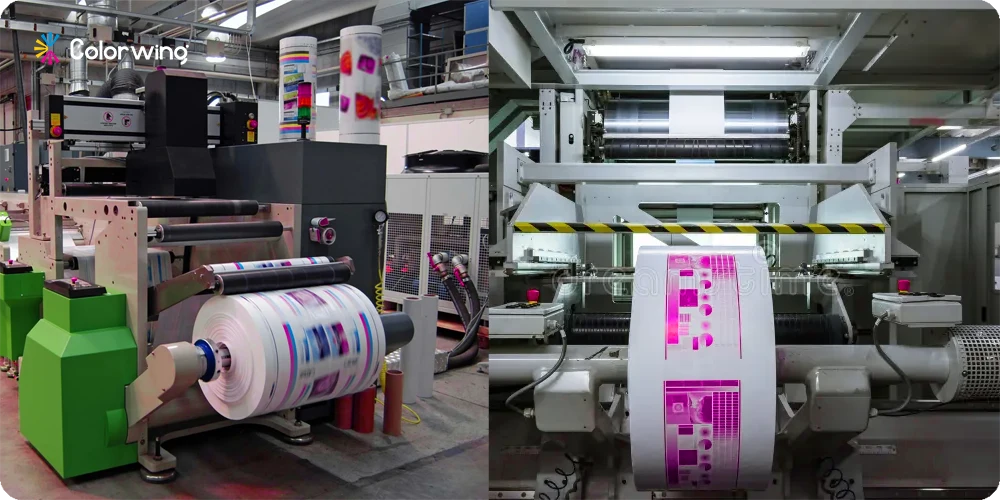
With the adoption of flexographic for printing there have been substantial advancements making it a preferred choice. The flexo is better in several aspects in comparison with the gravure printing. Rotogravure utilizes engraved cylinders for a premium outlook detailed images on long runs while flexography utilizes flexible plates for a faster yet budget-friendly design. The printing is especially for bold graphics, larger volumes.
For the Mylar Packaging, Rotogravure is better for providing the highest quality, intricate designs, gradients, and printing on packaging durably. The frequent changes and high volumes where speed cost trump up tends to be your key specifications.
in many aspects over gravure printing. It offers compatibility with all types of substrates, a wide variety of ink options, and lower initial costs. These factors make Flexo printing an excellent choice for commercial printing with high print loads or jobs requiring versatility.
When it’s about the rotogravure printing it can be utilized for two-color printing, they tend to be reliable for high-quality prints. You will be able to receive 2-color rotogravure machines for exceptional features like packaging, labels and wallpapers. The core rotogravure process itself utlizes separate engraved cylinders for achieving each color continuous tones, high detail often for longer runs.
ColorWing; Your Authority of Printing Process
At ColorWing, we have mastered rotogravure printing machine and flexo eco-systems, and we provide the flexibility of flexo with the quality of gravure printing companies. Since we started with custom rotogravure process cylinders, through to Flexographic printing demonstrations on varied substrates, our presses have a +-0.1mm registration, vivid Pantone matches ,and sustainable inks. Scale without any inconvenience, trial with our experts. Improve your packaging printing. where quality meets production.

Emily Chris Kieran
Meet Emily Chris Kieran, a seasoned packaging industry writer with 7+ years of experience in the printing and packaging sector based in Texas. With a keen eye for color and a passion for data-driven insights, Emily crafts compelling content strategies that explore the intricacies of packaging and printing. She possesses in-depth knowledge of the industry's dynamics, staying up-to-date on the latest trends and technologies. When she's not delving into industry trends, you can find her unwinding on the golf course, where she finds inspiration and clarity. With a love for polo and a knack for storytelling, Emily brings a unique perspective to the world of packaging, illuminating fascinating facts and trends that inform and engage.