

.webp?alt=media&token=df8a6a31-3552-4b89-a217-28c58577d152 "Mobile Card")
%20.webp?alt=media&token=290ab278-f22f-4f3d-a195-44e2d0643bf9 "Desktop Card")
*2 mins read
Common Myths About Folding Cartons (Busted with Real Data)
Publish Date
July 14, 2026
Written by
Emily Chris Kieran
We can see folding cartons almost everywhere in the form of cereal boxes, skincare sleeves, pharmaceutical packaging, and for other products like tech accessories, confectionery items, frozen foods, and more. Despite all this popularity and rising demand, there are myths like “paperboard won’t be strong enough to protect the products” and “this doesn’t look sustainable.”
There are three main reasons these kind of myths hang around folding cartons:
Some bad old experiences with specified cartons like they are too thin, wrong board, poor design.
Confusion between technical recyclability and real‑world recycling systems.
Outdated assumptions about forestry, paper, and sustainability that ignore current data.
At ColorWing, we see these myths influencing budgets, sustainability targets, and even brand decisions. That is why we have structured this article around all the folding carton myths, what current studies actually show, and how we help you use those insights in your packaging projects. In short:
Myth – the belief you may have heard in meetings.
Fact + data – what current research and industry sources actually show?
How we help – how ColorWing helps you use that insight in real projects.
Myth #1: “Folding Cartons Aren’t Really Sustainable”
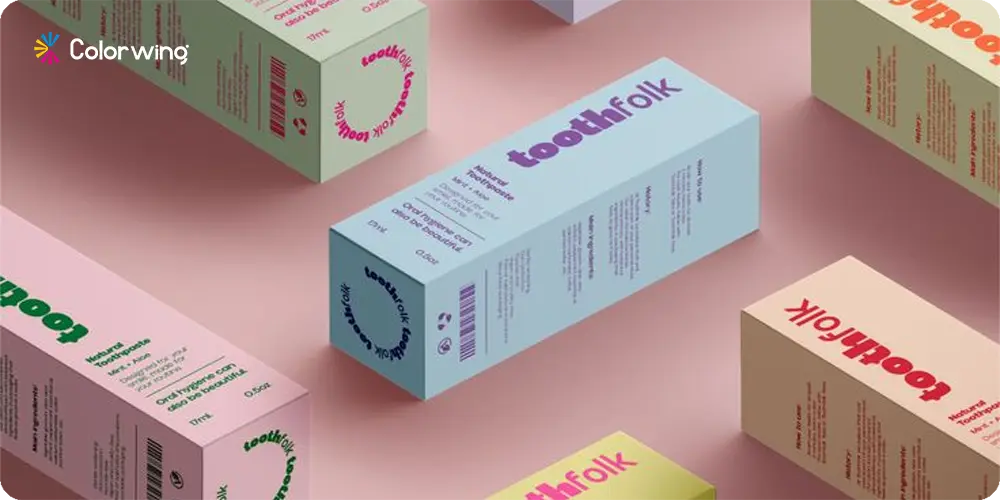
The myth
Paperboard was previously perceived to be “tree heavy.” In other words, folding cartons were assumed to be not totally sustainable or just less harmful than plastics.
The fact
This is without a doubt that folding cartons are made from eco-friendly materials and are considered sustainable.
Paperboard folding cartons are made from recycled pulp rather than fossil‑based polymers.
Industry analyses show paper and paperboard packaging achieve much higher recovery rates than plastics. In many North American and European markets, paper and paperboard recovery rates sit around 65–80%, while plastic packaging often remains under 20%.
Market research highlight that folding cartons are more sustainable packaging because they are lightweight and can replace difficult‑to‑recycle plastic packaging.
How we help
When your order your custom folding cartons with ColorWing, rest assured that we use the right paper grade that is:
Practically recyclable (fiber‑based) and not just “theoretically biodegradable.”
Supported by a mature recycling infrastructure in your major markets.
Myth #2: “Cartons Can’t Be Recycled Because of Coatings”
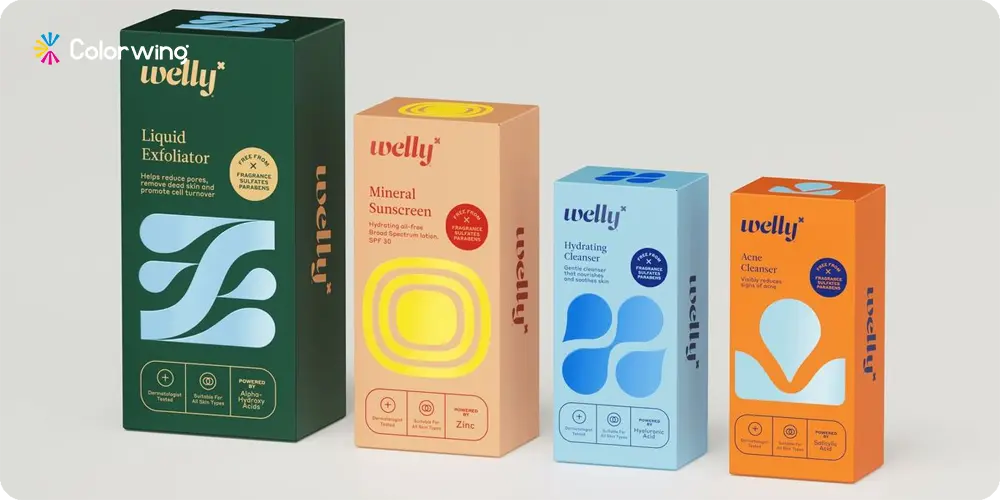
The myth
It is a common concept that any coated or shiny paperboard carton is automatically stays in landfills and is impossible to recycle.
The fact
Most folding cartons used in mainstream food, personal care, and retail are fully compatible with today’s recycling systems.
Paperboard Packaging Council data on the frozen food sector found that about 90% of folding cartons by tonnage shipped to that segment were made from recyclable paperboard grades. Around 70% of those were standard uncoated boards; roughly 20% were wet‑strength boards designed for moisture resistance but still recyclable via conventional paper recycling streams.
High‑barrier and multi‑layer structures exist but the majority of folding boxes (cosmetics, OTC, personal care, dry food, and general retail) are based on standard or lightly coated board that is widely recovered today.
How we help
At ColorWing, we help you choose paperboard material and coating combinations that stay within widely recyclable structures when possible.
Myth #3: “Paperboard Is Weak – Corrugated Is the Only ‘Safe’ Option”
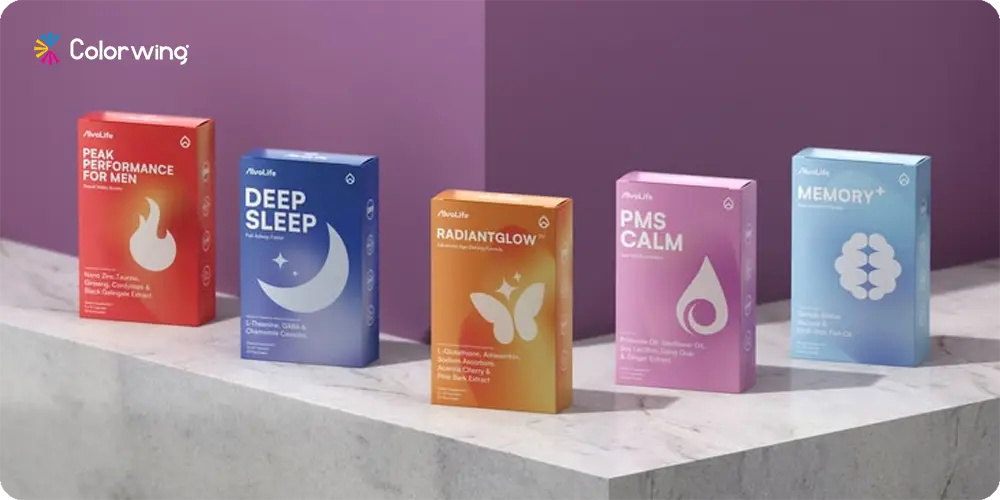
The myth
Folding cartons are thin in structure than corrugated boxes. This gives the perception that they can’t protect products properly or survive logistics.
The fact
Folding cartons and corrugated boxes are designed for different roles, and paperboard is more capable than most people think when correctly specified.
A folding carton is a lightweight, printed paperboard structure optimized for branding, product organization, and protection against scuffing and moderate impact.
Corrugated is optimized for shipping, palletization, and heavy loads; it often serves as the outer shipper, not the retail‑facing primary pack.
Industry experts note that most damage issues blamed on “paperboard” are really caused by poor structural design, insufficient caliper, or failure to account for humidity and real handling conditions.
In simple terms, a well‑designed folding carton does what it is made to do, and that is protection and presentation of the product.
How we help
At ColorWing, we:
Use product weight, dimensions, and logistics data to specify appropriate board thickness and structure.
Design cartons to work alongside corrugated boxes where needed, rather than pretending they are the same thing.
We balance strength and material use so you are not overpaying for being overweight or under‑specifying and risking damage.
Myth #4: “Folding Cartons Are Only for Cheap, Low‑End Products”

The myth
Because paperboard is so common, it is sometimes treated as a “commodity” look which makes it fine for cereals and dry goods, but not for premium brands.
The fact
Premium brands in beauty, confectionery, tech accessories, and food choose folding cartons for chic presentation.
Folding cartons allow precise shapes, sharp edges, and engineered unboxing experiences that simple plastic shells cannot match.
They support high‑end printing and finishing: multi‑color offset, embossing, debossing, foils, soft‑touch and matte coatings, and custom structural features.
Market commentary from paperboard producers highlights how folding cartons have “grown up” into sophisticated, brand‑driven packaging for premium segments, not just mass grocery.
How we help
At ColorWing, we have capable experts who specialize in this criteria. We treat folding cartons as:
A design canvas for your brand story.
A structural tool for memorable unboxing.
A premium touchpoint that can justify higher price points and better shelf positioning.
You are not limited to basic boxes but you are using the same underlying format that many top‑tier brands choose on purpose.
Myth #5: “Paper Packaging Is Killing Forests”
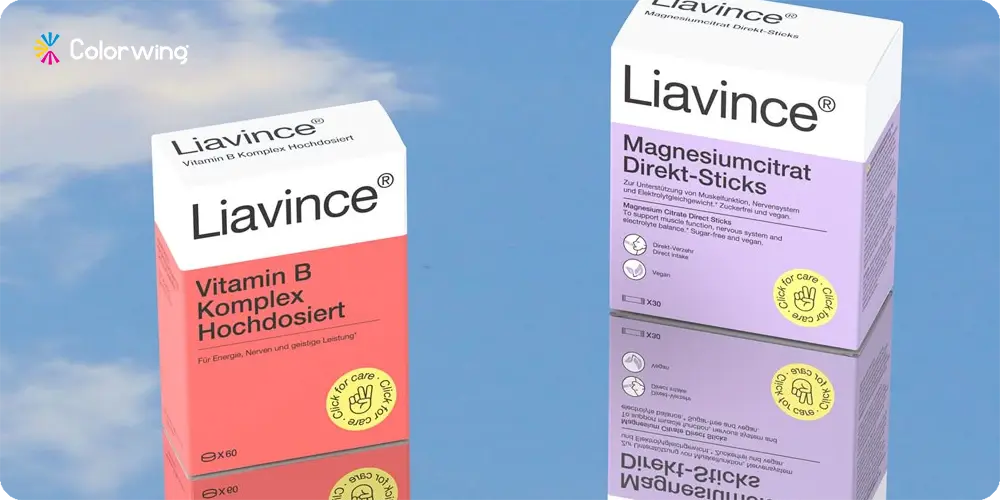
The myth
A common belief is that more paperboard equals more deforestation. This makes paper‑based packaging like folding cartons inherently bad for forests.
The fact
In major paper‑producing regions, forests used for paper are generally stable or growing, not disappearing.
Analyses from sustainable packaging and paper organizations show that forests in regions with strong paper industries (Europe, North America) have been net‑growing for decades.
European forest area, for example, has been increasing by the equivalent of over 1,500 football pitches per day according to industry‑cited figures.
The real risk to forests is often land‑use change (conversion to agriculture or development), not responsibly managed harvest for paper. Demand for certified fiber can create financial incentives to keep land forested.
How we help
At ColorWing, we use:
Certified materials.
Combine virgin and recycled content appropriately for performance and sustainability.
Myth #6: “Cartons Look Good at First but Fall Apart on Shelf”
The myth
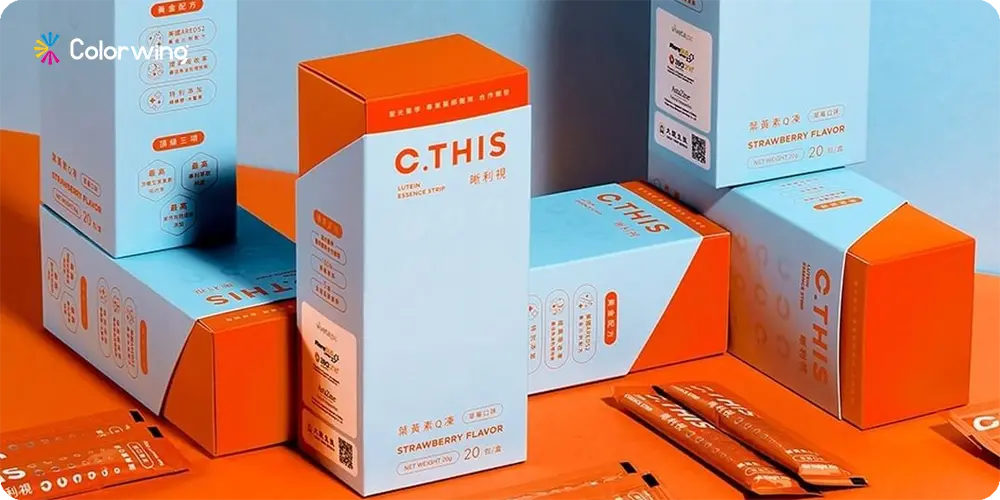
You might have seen cartons that bow, crush, or scuff on shelf and concluded that folding cartons are fragile.
The fact
Most of these failures trace back to incorrect specifications and poor design. This is not a flaw in paperboard.
Some case studies about packaging show that humidity, rough handling, and subpar design (poor creasing, and no allowances for stacking) are the main culprits in making a folding box collapse.
When engineers match board grade and structure to product weight, stack height, and logistics, folding cartons remain stable and attractive through their intended shelf life.
It is not that every carton falls apart; but it is only the bad ones that do.
How we help
When you order your folding cartons from us, keep peace of mind as we:
Treat structural design and board choice as engineering problems, not aesthetic afterthoughts.
Use ‑case inputs (stacking, pallet patterns) to avoid under‑spec cartons.
Offer prototypes and performance testing options where critical, so you are not guessing.
Myth #7: “Folding Cartons Can’t Deliver Real Sustainability Metrics”
The myth
Some sustainability teams quietly believe folding cartons are a side‑grade, nice for messaging but not impactful on actual KPIs like CO₂, recyclability, or material waste reduction.
The fact
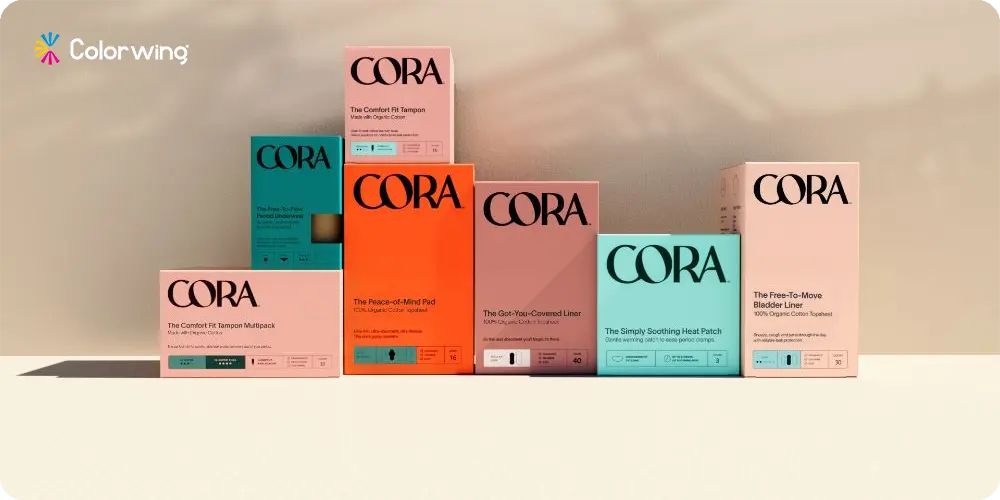
Folding cartons are central to many companies’ measurable sustainability gains.
Market analysts note that folding cartons are lightweight, design‑optimized, and often reduce material usage compared with bulkier alternatives.
Lightweight packs reduce shipping mass, which can lower transport emissions per unit, especially in high‑volume consumer goods.
Because paper and paperboard achieve higher recovery rates than many plastics, switching to folding cartons can raise the share of your packaging that is actually recycled at end‑of‑life.
How we help
We design folding cartons to move numbers, not just appearances:
Right‑sizing structures to cut material use and void space.
Choosing coatings that align with high‑recovery waste streams.
Supporting your sustainability goals by using eco materials.
Myth #8: “Folding Cartons Are Just a Cost, Not a Value Driver”
The myth
Because cartons are purchased by the unit, they often get viewed as a line‑item cost to minimize, rather than a lever for revenue and brand impact.
The fact
Cartons are one of the cheapest brand touchpoints you have per impression.
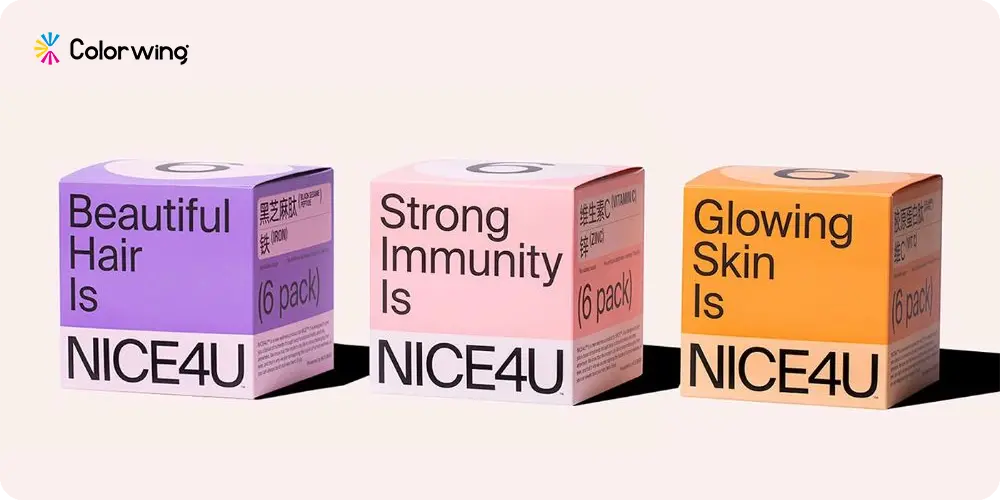
Packaging analysts emphasize that folding cartons do more than protect a product, they make a statement, tell a story, and invite customers to connect with your brand at the shelf.
Better on‑shelf packaging has been linked to improved perceived value and higher conversion rates in retail environments; cartons are central to that effect for many categories.
Because every unit shipped carries a carton, the cost per brand impression is extremely low compared with most marketing channels.
How we help
Our entire business model is built around turning “just a box” into:
A branding asset that pays for itself via better shelf performance and perceived value.
A communication tool for sustainability, origin, instructions, and brand story.
A consistent, scalable format across SKUs, making your brand instantly recognizable.
If you want to know how much it costs for you to order your folding cartons, then read here.
Myth #9: “If there’s No Recycling Logo, the Carton Isn’t Recyclable”
The myth
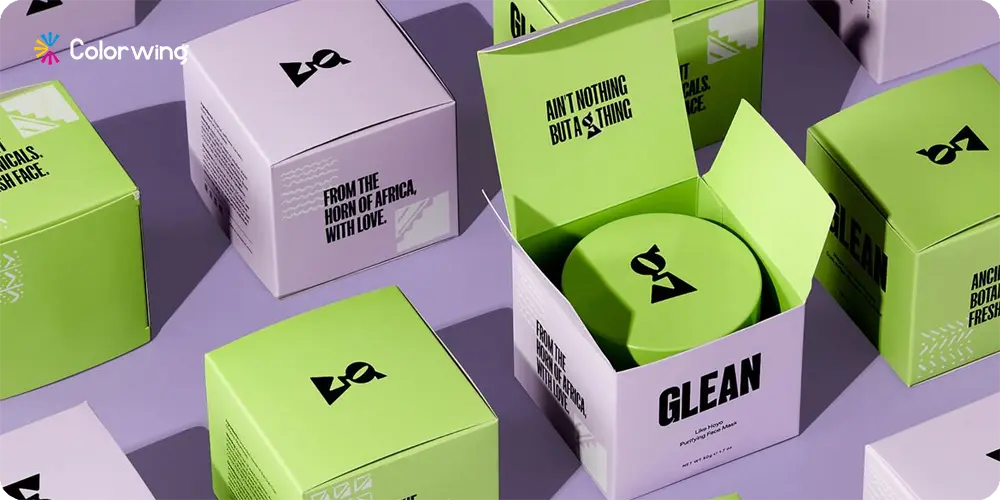
Many people believe that packaging is only recyclable if there is a specific symbol or logo printed on it.
The fact
Recyclability depends on the material and local infrastructure, not only on what is printed on the pack.
Carton recycling groups point out that the absence of a recycling symbol does not automatically make packaging non‑recyclable.
What can be recycled varies by municipality and MRF (material recovery facility) capability; many accept standard paperboard cartons as part of mixed paper streams.
For paperboard cartons in particular, real‑world experience shows broad acceptance where paper recycling is established.
How we help
Every folding carton we create here for our customers is made from 100% recyclable stock. So whether there is any symbol there or not, it doesn’t matter. Every box can still be broken down.
Conclusion
In this blog, we have potentially discussed a variety of myths that revolve around folding cartons. Also, we have given proofs in direct facts that totally destroy those myths.
So, if you have made up your mind to get folding cartons for your product packaging needs, then don’t change the decision by focusing on bogus myths.
When ordering with ColorWing, you get plenty of customization options in terms of finishing choices, printing arrangements, material selection, box shapes & styles, and so much more. This allows you to customize folding cartons exactly as per your branding and product packaging needs.
Contact our experts via call or you can simply send an email to get started with your custom folding carton project.
Frequently Asked Questions
Are folding cartons better for the environment than plastic packaging?
In most of the cases, yes, folding cartons are a good choice for the environment. They are made from renewable fiber, achieve higher recycling rates, and support lighter, right‑sized designs, factors repeatedly highlighted in sustainable packaging research.
Can all folding cartons be recycled?
Not all, but most common grades for food, cosmetics, and retail use are widely recyclable in paper streams. High‑barriers or complex laminates need more care, which is why choosing the right structure with a partner like ColorWing matters.
Is corrugated always a safer choice than folding cartons?
Corrugated is better for heavy, shipping‑intensive roles; folding cartons are often better for retail‑facing packs, inner protection, and branding. The best systems use both in a layered way.
Is paper packaging driving deforestation?
Data from forest and packaging organizations shows that forests in key paper‑producing regions are stable or growing, especially where sustainable forestry and certification are applied.

Emily Chris Kieran
Meet Emily Chris Kieran, a seasoned packaging industry writer with 7+ years of experience in the printing and packaging sector based in Texas. With a keen eye for color and a passion for data-driven insights, Emily crafts compelling content strategies that explore the intricacies of packaging and printing. She possesses in-depth knowledge of the industry's dynamics, staying up-to-date on the latest trends and technologies. When she's not delving into industry trends, you can find her unwinding on the golf course, where she finds inspiration and clarity. With a love for polo and a knack for storytelling, Emily brings a unique perspective to the world of packaging, illuminating fascinating facts and trends that inform and engage.