

*2 mins read
Mailer Box vs. Shipping Box: How to Choose the Best Box for Your Brand
Publish Date
May 15, 2026
Written by
Emily Chris Kieran
If you are in the ecommerce business and sell products online, the box is usually the only thing that, while protecting the products, also gives a great first impression. So, it can be said that a good packaging can perform more than one goal for your product and business. One, it reflects your brand values perfectly, and second, it protects your products until they arrive at customers’ doorsteps.
Many brands mix up mailer boxes and shipping boxes, but they are built for slightly different jobs. While shipping boxes are built for bulk and heavy-duty durability, mailer boxes are designed for a premium unboxing experience and retail-ready aesthetics
In this guide, you’ll see what each box type is, how they differ, and how to pick the best option for your products and budget. You’ll also learn how we, at ColorWing, can help you make a choice between the two packaging options for your ecommerce business or how to use mailer and shipping boxes together in a smart way.
What Is a Mailer Box?
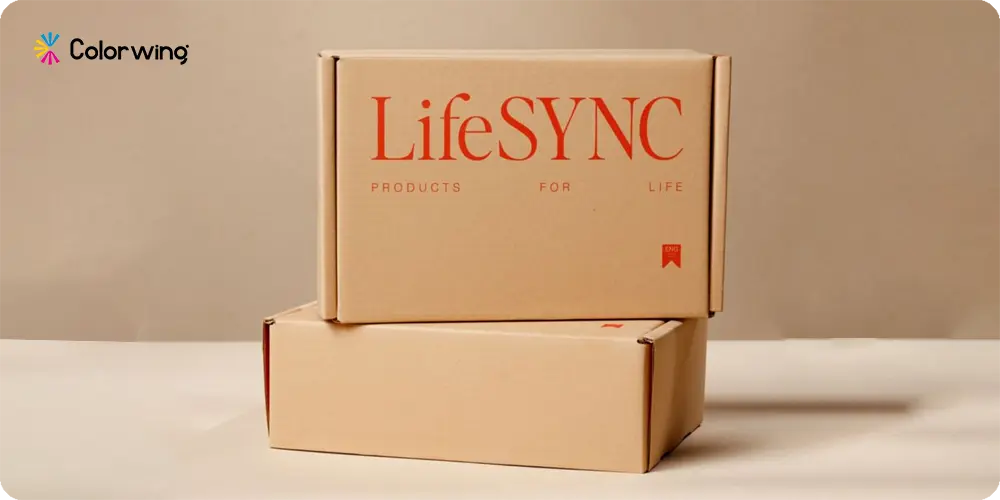
A mailer box is a one‑piece box that usually folds up and locks without tape. It is usually made from corrugated board or strong cardstock and has a lid that tucks into the base.
Mailer boxes are popular for:
E‑commerce orders shipped directly to customers.
Subscription boxes and PR kits.
Gift boxes for light to medium‑weight items like clothes, cosmetics, books, or small gadgets.
Key traits of mailer boxes:
Self‑locking design (tabs and slots) instead of flaps and tape.
Good protection for small to medium products.
Large print area on the outside, and often the inside too, which is great for branded unboxing.
Types of mailer boxes:
Kraft mailer boxes
Rigid mailer boxes
Roll end tuck front boxes
Corrugated mailer boxes
Roll end tuck top boxes
Tuck top mailer boxes
Magnetic closure mailer boxes
Collapsible mailer boxes
What Is a Shipping Box?
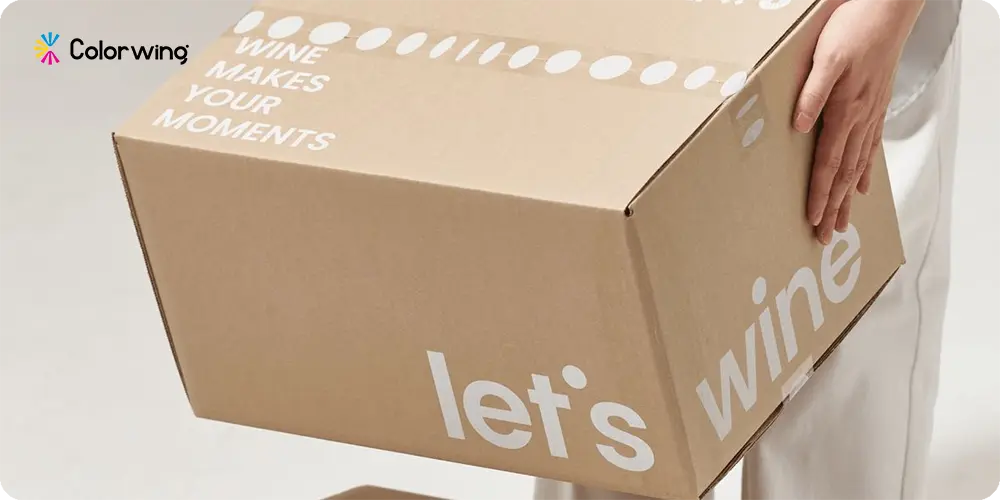
A shipping box is usually a standard corrugated carton with four flaps on top and bottom that you close with tape. Many people call this an RSC (regular slotted container).
Shipping boxes are used for:
Protectively sending heavy or bulky products.
Multiple products or items in one box (wholesale, B2B, or big orders).
Outer cartons that hold smaller product boxes or branded mailers.
Key traits of shipping boxes:
Strong structure with bottom and top flaps that meet in the middle and are taped or glued.
Available in single‑wall, double‑wall, and even triple‑wall options for very heavy loads.
Designed to stack well on pallets and survive long shipping routes.
You can also print on shipping boxes, but many brands keep them simpler and focus their strongest graphics on inner mailer or product boxes.
Mailer Box vs. Shipping Box – Side‑by‑Side Comparison
Here is a simple way to see the main differences.
Feature | Mailer box | Shipping box |
Structure | One‑piece, self‑locking with tuck‑in lid. | Box with top and bottom flaps sealed with tape (RSC style). |
Assembly | Folds quickly, usually no tape needed. | Needs tape for top and bottom; a bit slower to build. |
Typical material | Single‑wall corrugated or strong card. | Single‑, double‑, or triple‑wall corrugated. |
Protection level | Good for light to medium‑weight items and parcel shipping. | Better for heavy, bulky, or multiple items and stacking. |
Branding space | Great print area inside and out for unboxing. | Good outer print area but usually less focus on inside graphics. |
Typical use cases | Subscription boxes, D2C e‑commerce, PR kits, gifts. | Bulk shipping, outer cartons, wholesale orders. |
Relative unit cost | Often higher per box (more design detail, printing). | Often lower per box, especially in plain brown/Kraft. |
Best weight range | Light to medium items in 1–3 piece orders. | Heavy or multiple items, full case packs. |
Both are useful. The right option is dependent on what you ship and how you want customers to feel when they open the box.
When a Mailer Box Is the Best Choice
A mailer box is usually the better choice when:
You sell direct‑to‑consumer online.
D2C brands love mailer boxes because they look neat, feel sturdy, and are easy for customers to open, no need for extra tape cutting.Your products are light to medium in weight.
Items like clothing, skincare, candles, books, and small electronics fit very well in mailers.Unboxing is part of your marketing.
Mailer boxes have large printable surfaces, inside and outside, so you can add patterns, messages, and branding that make unboxing share‑worthy.You care about packing speed.
Because mailers are self‑locking, your team can assemble them very quickly compared to taping up shipping cartons.You want right‑sized packaging.
Custom mailers can be made to fit your products snugly, which cuts down on void fill and can reduce dimensional weight costs.
For many small to mid‑size brands, a custom printed mailer box is the main hero box, for both protection and branding.
When a Shipping Box Is the Best Choice
A shipping box is usually the better choice when:
Your products are heavy, bulky, or very fragile.
Large electronics, multiple glass bottles, bulk food, and equipment often need the extra strength and stacking power of standard shipping cartons.You ship many units at once.
Wholesale or B2B orders often pack several product boxes into one outer shipping carton.You need strong stacking for pallets.
Double‑ or triple‑wall shipping boxes can handle tall pallet stacks, long storage, and rough handling in transport.Cost and protection matter more than presentation.
For inner supply chain movements, plain or simple‑print shipping boxes are a cost‑effective, reliable choice.
Many brands still add a logo, website, or handling icons to shipping boxes, even if they keep them simpler than their mailers.
How Mailer and Shipping Boxes Work Together
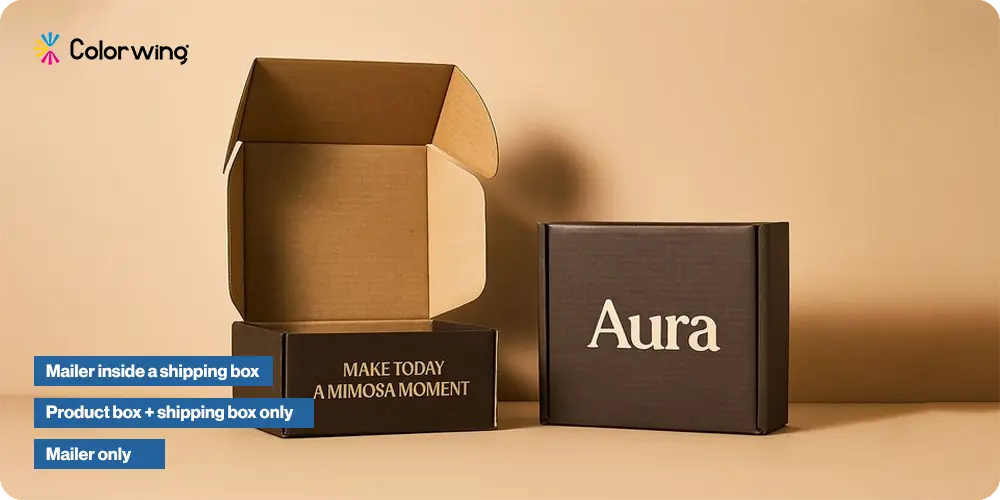
You don’t have to choose one of the packaging types. Most established brands use a mix of mailer and shipping boxes, depending on the product and delivery situation.
Common combinations:
Mailer inside a shipping box
For very fragile or high‑value items, you might put the product into a printed mailer box, then place that mailer inside a larger shipping box with extra padding. This gives strong protection plus a great inner unboxing moment.Product box + shipping box only
Retail products can go into their usual product boxes, which are then packed in plain or branded shipping cartons for wholesale or online orders.Mailer only
For many D2C orders, a well‑designed mailer box alone is strong enough for parcel networks, especially for light items.
Thinking this way lets you balance protection, cost, and branding for each channel instead of forcing one box type to do everything.
Key Factors to Consider When Choosing for Your Brand
Here’s a simple framework to choose between a mailer box, a shipping box, or both.
1. Product weight and fragility
If your product is weighted light to medium and not extremely fragile, then mailer boxes work best for you.
And if it is heavy or very fragile, then you can go for a shipping box. Or you can go for a mailer + shipping box combo.
2. Average order size
If you are shipping a single item or small bundle, a mailer box is usually more efficient.
If you are sending bulk quantities of products, then a shipping box is a more practical way to store them in one package.
3. Shipping distance and handling
Looking to ship products locally or domestically, small parcels and mailer boxes may be enough.
Shipping to long‑distance or internationally? Stronger shipping cartons are safer options than mailers.
4. Unboxing and branding goals
If unpacking is part of your marketing (subscriptions, influencer kits), invest more in a printed mailer. To make your brand prospects' favorite, you have to adapt to luxury packaging for cosmetics that ensures your brand outshines the competitors.
If the box is rarely seen by the end customer, simple shipping cartons may be enough.
5. Fulfillment and storage
Mailer boxes fold quickly and stack flat, saving time and space.
Shipping boxes may take longer to tape but can handle more weight and stack well once built.
6. Budget per shipment
Plain shipping boxes are usually cheaper per unit.
Custom printed mailers cost more but can replace separate inner gift packaging and reduce marketing spend in other areas.
To sum it up – Check Simple Decision table
Situation / priority | Better choice |
Light lifestyle product, strong unboxing, D2C orders | Mailer box |
Heavy, fragile items or multiple units per shipment | Shipping box |
Premium product that must arrive perfect and “wow” inside | Mailer box inside shipping box |
B2B / wholesale case packs | Shipping box |
New D2C brand testing packaging | Start with a mailer; add shipping boxes if needed |
How ColorWing Helps You Pick and Design the Right Box
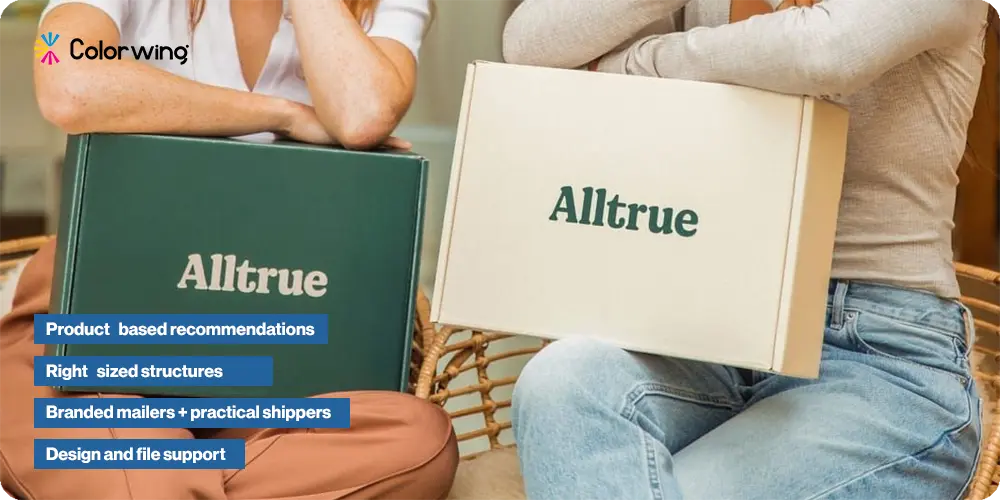
Choosing between a mailer box and a shipping box can feel confusing and a hectic decision when you are considering sizes, inserts, and finishes.
At ColorWing, we already provide our customers with both the packaging options including different types. Thus we are specialized to help you choose and build the right box that fits your products and shipping channels.
Ways we can support you in making a decision:
Product‑based recommendations
Share your product list, average order size, and shipping regions. We can suggest when to use mailers, when to use shipping cartons, such as milk carton dimensions vary for retail and inventory storage, we will explain and when you may need both for separate purposes.Right‑sized structures
We can design custom sizes so your boxes fit your products closely, which cuts void fill and can reduce DIM weight charges.Branded mailers + practical shippers
We can design and print high‑impact mailer boxes for unboxing, plus sturdy, cost‑effective shipping boxes that match your brand look.Design and file support
If you need help with artwork or dielines, our design support can prepare templates and check your files before production, just like in your other packaging projects.
Conclusion: Choose the Box That Matches the Job
Mailer boxes and shipping boxes are both essential tools for any ecommerce business, but they shine in completely different spotlights. Mailer boxes are a great option for light to medium‑weight products where branding and unboxing matter a lot; whereas shipping boxes are best to be used for heavy, bulky, or multi‑item shipments where stacking strength and protection come first.
Instead of picking one box type for everything, look at your products, orders, and shipping risks and match each job to the box that fits it best. If you want help mapping this out, you can share your products and shipping setup with experts available here at ColorWing. They will build a mix of mailer and shipping boxes that fits your brand, your customer experience goals, and your budget. So request assistance now and get started to scale your ecommerce business to new heights.
Frequently Asked Questions
Are mailer boxes durable enough for shipping products on their own?
Yes, well‑designed corrugated mailer boxes are strong enough for many small and medium‑weight items shipped through parcel carriers, especially when sized correctly and used with proper internal padding.
What is the major difference between a mailer box and a shipping box?
A mailer box is a one‑piece, self‑locking box that is used for branded e‑commerce and subscription packaging. On the other hand, a shipping box is a standard corrugated carton with flaps that you seal with tape for heavier or bulk shipments.
Can I print my branding on shipping boxes too?
Yes. Both mailer and shipping boxes can be printed with your logo, colors, and messages. Many brands put full design focus on mailers and use simpler, one‑ or two‑color branding on shipping cartons to keep costs down.
When should I use a mailer box inside a shipping box?
Use this combo for high‑value or fragile products, international orders, or situations where the outer carton may get rough treatment but you still want a perfect, branded unboxing inside.
How do I know what wall strength for boxes (single, double) I need?
The right wall strength depends on product weight, stacking height, and shipping distance. Heavier or bulk shipments and pallet loads often need double‑wall shipping boxes, while a single‑wall is enough for many mailer boxes and lighter products.
Which box type is better for the environment?
Both mailer and shipping boxes can be made from recycled and recyclable corrugated board. Right‑sizing your boxes and avoiding unnecessary outer cartons are usually the biggest environmental wins, regardless of type.
Can you help me decide between mailer and shipping boxes?
Yes. At ColorWing, we can review your products, order patterns, and shipping methods, then recommend when to use mailers, when to use shipping boxes, and how to design each so they work together and still fit your budget.v

Emily Chris Kieran
Meet Emily Chris Kieran, a seasoned packaging industry writer with 7+ years of experience in the printing and packaging sector based in Texas. With a keen eye for color and a passion for data-driven insights, Emily crafts compelling content strategies that explore the intricacies of packaging and printing. She possesses in-depth knowledge of the industry's dynamics, staying up-to-date on the latest trends and technologies. When she's not delving into industry trends, you can find her unwinding on the golf course, where she finds inspiration and clarity. With a love for polo and a knack for storytelling, Emily brings a unique perspective to the world of packaging, illuminating fascinating facts and trends that inform and engage.