

*2 mins read
Poster Size Guide: An Expert’s Guide to Size and Dimension
Publish Date
May 01, 2026
Written by
Emily Chris Kieran
Many of you must be wondering, what is standard poster size? Understanding standard poster sizes is crucial. Whether you are promoting an event, decorating a space, or printing posters for any specific reason, choosing the right sizes of posters is important to ensure professional results. That is the reason why posters are known as one of the most powerful and cost effective visual marketing tools for businesses and events. Posters are designed to catch attention instantly and communicate your message.
The right size is just as important as the design itself. Selecting the wrong size can affect many things, such as readability, distorted visuals, and reduce the overall performance of your poster.
Many of you might get confused when dealing with various measurement systems. These measurement systems include:
Inches versus centimeters
US standard sizes vs international ISO formats
Confusion between these two leads you toward the wrong size choice, which results in printing errors and poor layout decisions.
We have designed this poster sizing guide to simplify everything for you. In this expert poster size guide, we will help you understand normal poster sizes in the USA, simplify technical dimensions, and provide tips for making the right choice.
What Are Standard Poster Sizes?
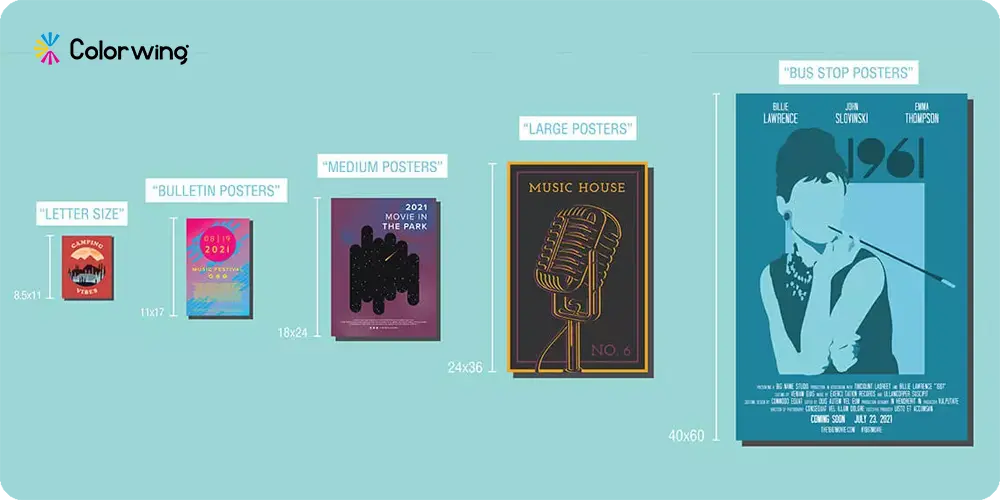
Standard poster sizes vary. The size of the poster is determined by its purpose. U.S average poster size measurements include:
Small: 11” × 17”
Photo Size: 16” × 20”
Medium: 18” × 24”
Large: 24” × 36”
Movie: 27” × 40”
Extra Large: 36” × 48”
The extra large size of the poster is designed to offer maximum visibility.
Why the Poster Printing Industry is Growing
Posters are visually engaging offline marketing tools for businesses that help attract local audiences and improve brand visibility. Despite the rise of digital advertising, physical posters are still highly effective.
“The global printing market size was estimated at USD 510.33 billion in 2025 and is predicted to reach USD 675.08 billion by 2033, increasing with a CAGR of 3.8%.”
In addition:
“According to research, the global poster custom printing market size was valued at USD 1377.0 million in 2024 and is predicted to reach USD 2430.3 million by 2030 with a CAGR of 10%.”
This growth shows how posters remain a reliable and affordable choice for maintaining your new marketing campaign. Therefore, even the largest businesses rely heavily on these well designed posters.
What is the Regular Size of a Poster?
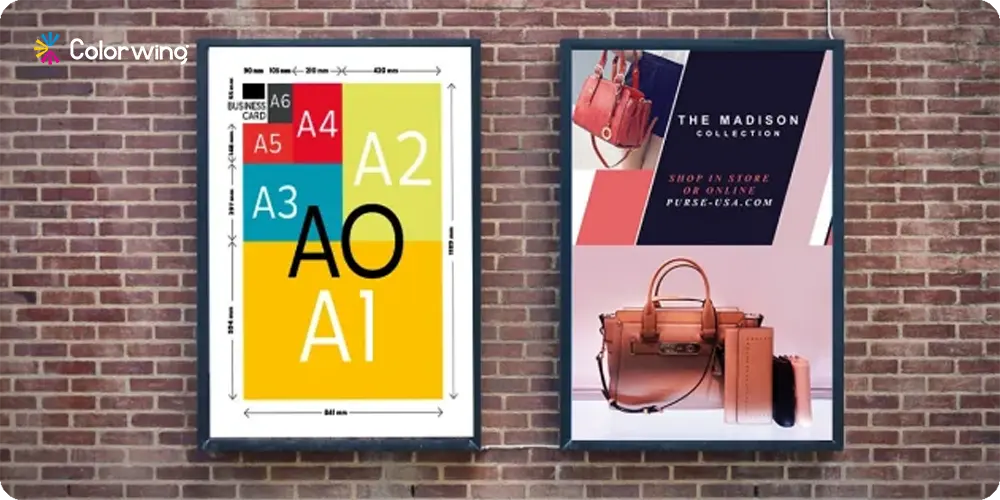
Poster dimensions are mostly measured in a width × height format. The first number describes the width; the second describes the height. This is a standard format for measuring poster dimensions, ensuring consistency during printing and design. Dimensions can be measured in:
Inches
Centimeters (cm)
Milimeters (mm)
This also depends on the region, e.g., in the U.S, poster dimensions are usually measured in inches. On the other hand, international formats rely on centimeters.
Another important factor when it comes to understanding poster dimensions is understanding DPI (dots per inch), which helps determine the printing quality of the posters. The higher the DPI, the sharper the image will look on the poster.
Printing and packaging suppliers like ColorWing know the optimal DPI and ensure your posters look immaculate, whether viewed up close or from afar. For professional prints, 300 DPI is considered perfect. A lower DPI of 150 is considered perfect for posters viewed from a distance.
When choosing the right dimensions and resolution for your poster, it is important to determine the viewing distance. Posters that need to be placed in larger spaces, like high traffic areas, are larger in size and should have a balanced resolution.
On the other hand, smaller posters are ideal for viewing the advertising campaigns up close. Let’s find out more about typical poster sizes. Choosing the right size for your project needs is essential, so it is important that you pay close attention to it.
What Are the Most Common Poster Sizes in the U.S?
When designing a high impact poster, the first question that comes up is: how big is a poster? Asking this question is important to find out the exact measurements you need. It will ensure how your digital graphics translate when it comes to physical prints. You should know the dimensions of a standard poster to set up your digital canvas from early on.
It is important to choose the right size for your poster to ensure your message is visible and impactful. Choosing the right standard poster dimensions offers significant benefits when it comes to printing and framing. It is important to understand that every poster dimension is specifically designed for a marketing purpose and viewing distances.
Understanding the most common poster dimensions makes it easier for you to pick the right format. When the time comes, it will be easier to print on the poster since most printers will already be set up for the poster size.
Let’s have a look at the standard poster sizes inches in the U.S. We’ll explain a poster sizes in inches to help you choose the best canvas for your future projects:
Size Category | Dimensions (Inches) | Best Use | Viewing Distance |
Letter Posters | 8.5 × 11 | Notices, menu boards | Very Close (1 to 3 feet) |
Small | 11 × 17 | Flyers, indoor promotions | Close (2 to 5 feet) |
Medium | 18 × 24 | Events, retail displays | Moderate (5 to 10 feet) |
Large | 24 × 36 | Storefronts, advertisements | Medium (10 to 15 feet) |
Movie | 27 × 40 | Cinema, entertainment | Medium to Far |
a) 8.5 × 11 Inches (Letter-Sized Posters)
.webp?alt=media&token=787b86fc-e6d3-4d29-9a8f-de89d7ae6a60 "8.5x11 Letter Size Poster")
Dimensions: 216 × 279 mm
Pixels (300 PPI): 2550 × 3300
International Size: A4 (210 × 297) mm (8.267 × 11.69) inches
Letter posters are the standard size for small posters, mostly used for flyers, community boards, reception areas, and menu boards. This size is ideal for close ranges. To make them visible and readable, it is advised to use bold headings, simple graphics, minimal text, and clear messaging. Sticking to average poster dimensions makes framing and displaying effortless.
b) 11 × 17 Inches (Small Poster Size)
.webp?alt=media&token=3d9240fe-7c71-46bf-90b8-f11a49272033 "11x17 Small Poster Size")
Dimensions: 279 × 432 mm
Pixels (300 PPI): 3300 × 5100
International Size: A3 (297 × 420) mm (11.69 × 16.53) inches
The small poster sizes are slightly larger than the letter posters. They are ideal for small posters, indoor events, local advertising, flyers, and local advertising. They are mostly used in cafes, waiting areas, and libraries. To make them easily readable, make your message concise and combine it with high contrast visuals. You can also choose 16 × 20 inches for poster picture sizes. This size provides ample space to print high quality images.
c) 18 × 24 Inches (Medium Posters)
.webp?alt=media&token=575de8bc-df2e-42e0-b8e9-0b44b904f3ed "18x24 Medium Poster Size")
Dimensions: 457 × 610 mm
Pixels (300 PPI): 5400 × 7200
International Size: B2 (500 × 707) mm (19.68 × 27.83) inches
If you are wondering what is the size of a poster used for event advertising is, this is it. You must know how big is 24 × 18 inch poster is. Well, they are medium-sized posters. These medium-sized posters are ideal for event advertising and promotional displays. These custom posters are designed to offer a strong presence on walls, bulletin boards, and windows.
For maximum impact, it is advised to use centered graphics and bold headers to draw attention. Understanding the 18x24 poster size comparison is important, as it shows how medium formats offer visibility and balance cost for event and retail displays.
If you are wondering how big is a poster board, know that a standard size of a poster board measures around 22 × 28 inches. This is a little larger than the medium poster size. They are perfect for school projects and basic displays. Other than that, they are easy to handle and transport.
d) 24 × 36 Inches (Large Size Posters)
.webp?alt=media&token=f39ac2cf-b8f0-4025-a916-d8fe9a7a223b "24x36 Large Poster Size")
Dimensions: 610 × 914 mm
Pixels (300 PPI): 7200 × 10800
International Size: A1 (594 × 841) mm (23.38 × 33.11) inches
If you are looking for ways to make a bold impression and attract attention, then a 24 × 36-inch poster size is a smart choice. It's a normal poster size in inches used for trade shows. They attract attention instantly, thus used for trade shows, gallery displays, and outdoor advertising. They can also be used for concert posters and high traffic areas for marketing and high impact campaigns. Large posters offer maximum visibility in these areas and draw attention.
e) 27 × 40 Inches (Movie Posters)
.webp?alt=media&token=667653b2-2a21-42c0-87ab-694182cff1f7 "27x40 Movie Poster Size")
Dimensions: 686 × 1016 mm
Pixels (300 PPI): 8100 × 12000
International Size: B1 (707 × 1000) mm (27.83 × 39.37) inches
Movie posters are mostly used for theaters and malls. Their extra large size makes them easily recognizable. They are designed to create cinematic excitement and draw maximum audiences even from a distance. To make them visually attractive, we recommend using large text with a strong focus on graphics.
Alongside these posters, brands also use perfectly sized printed boxes, such as ammo boxes. This helps businesses maintain consistency in branding and leave a memorable impression on customers. Regular poster size depends on the intended use. That’s why you must first determine what you’re going to use them for before deciding on a poster size dimensions.
We’ve added another poster sizes comparison table below to show how different dimensions of posters need different pixel dimensions for exclusive printing:
Size Type | Inches | CM | Pixels @300 DPI |
Small | 11 × 17 | 27.9 × 43.2 | 3300 × 5100 |
Medium | 18 × 24 | 45.7 × 61 | 5400 × 7200 |
Large | 24 × 36 | 61 × 91.4 | 7200 × 10800 |
Movie | 27 × 40 | 68.6 × 101.6 | 8100 × 12000 |
What is the Size of a Normal Poster Board?
Just like how you were wondering what size are posters usually, the next important question is what is the size of a normal poster board. A normal poster also does not have a fixed size. The size depends on how it is used. Let’s look a typical poster board size options available:
22” x 28”: Its the standard poster board size, which is widely used for science fairs, presentations, and display boards.
14” x 22”: Its a slightly smaller poster board size. It is used for smaller displays or personalized displays.
11” x 14”: It’s a mini size of a poster board, which is mostly used for handouts and mini displays.
It is also important to determine how big is a poster board alongside the poster itself.
International (ISO) Sizes for Posters
It is also necessary to fully understand international ISO to find out how big is a regular poster, as many countries use the ISO A-series sizing system for printing and poster formats. The normal size of a poster is measured in millimeters and scaled proportionally. This allows businesses to resize the design easily when needed while maintaining the same aspect ratio.
The most commonly used ISO posters sizes often range from A0 to A3. This A-series follows a consistent aspect ratio, which is:
Aspect Ratio: 1:1.414
Let’s have a look at these ISO poster sizes:
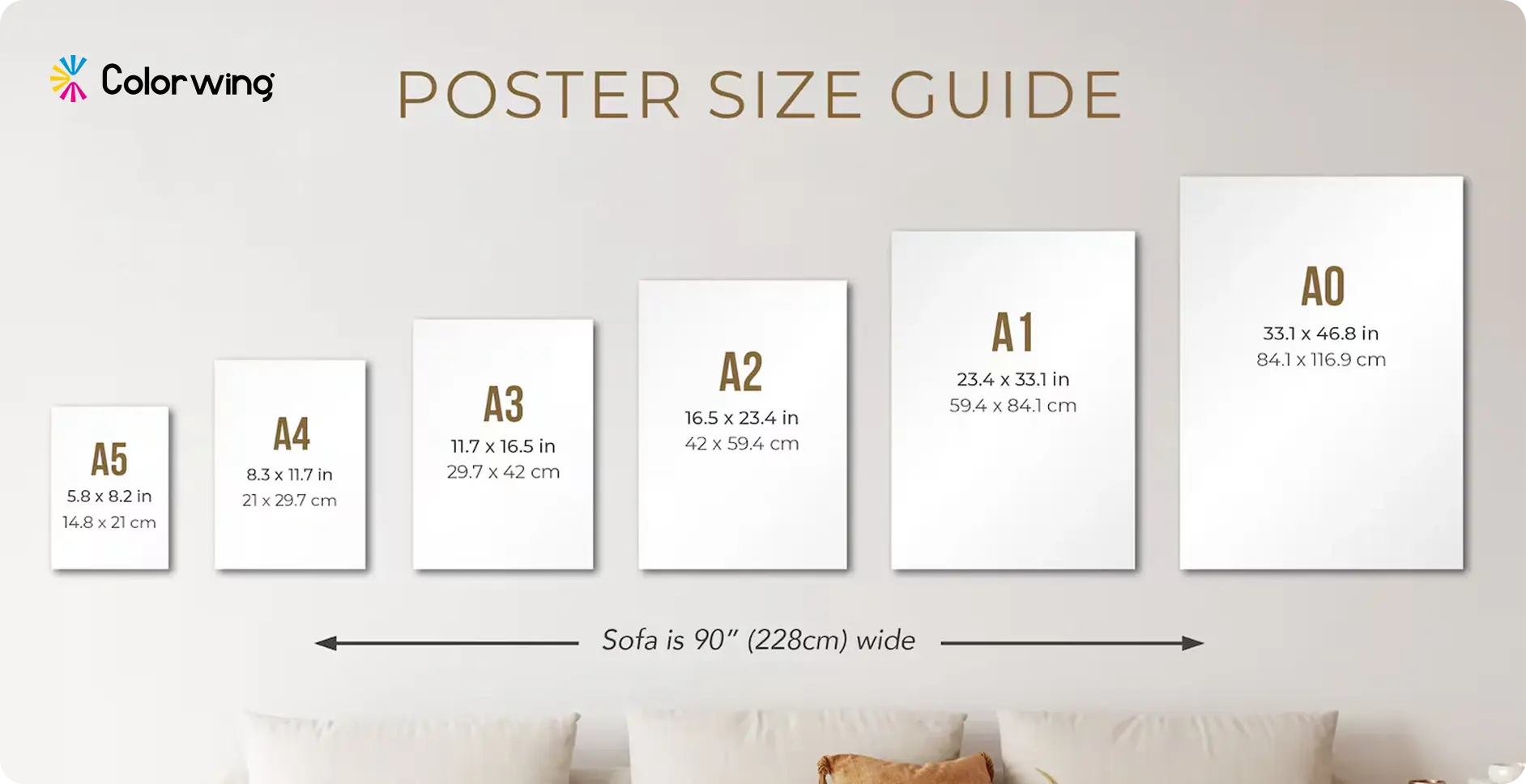
A0: (841 × 1189) mm (33.1 × 46.8 ) inches
A1: (594 × 841) mm (23.4 × 33.1) inches
A2: (420 × 594) mm (16.5 × 23.4) inches
A3: (297 × 420) mm (11.7 × 16.5 inches)
A0 is a large format poster size for printing high impact event advertising or marketing campaigns. They are mostly used in high traffic areas for campaigns that need maximum visibility. A1 is a popular choice for events and exhibition posters. A2 is an ideal choice for store signage. And last but not least, A3 is an ideal choice for small posters and handouts. This guide is for anyone who is wondering, “What is the normal poster size?”
What Are The Most Common Printing Aspect Ratios
Aspect ratio is used to define the proportional relationship between a poster’s width and height. It is used to avoid any design distortion by helping your design keep its original shape when resized. If the ratio of your poster is not maintained properly, it will affect the overall look of your poster. It might even make your poster look stretched.
The most common poster aspect ratios include:
2:3 ratio: Ideal for large or classic posters, e.g., 24 × 36 inches.
3:4 ratio: ideal for art prints or framing, e.g., 18 × 24 inches.
Use this formula to find the poster aspect ratio:
Aspect Ratio = Width ÷ Height
For example = 24 ÷ 36 = 2:3
These poster ratios help maintain balance and offer a visually appealing layout.
There are so many reasons that state why aspect ratios matter. Let’s discuss them in detail:
Scaling: Aspect ratios help resize the design and prevent distortion.
Cropping: It helps prevent important design elements from being cut off
Frame compatibility: Aspect ratios help determine the perfect frames.
Choosing the right poster aspect ratios and an ideal dimension for posters helps save time and avoid any costly printing errors. Take poster measurements seriously to ensure they look professional, clear, and consistent across different formats and dimensions. Cake sheet box measurement is just as important as the poster printing.
It is important to fully understand poster size comparison to help you visualize the physical impact your message will have.
The most important part of poster size comparison is to ensure aspect ratios remain consistent. If you try to stretch a medium poster with an aspect ratio of 3:4 to fit a large poster with a ratio of 2:3, you’ll risk making the graphics look squashed. Poster sizes standard use different aspect ratios.
How to Choose the Right Standard Size Poster
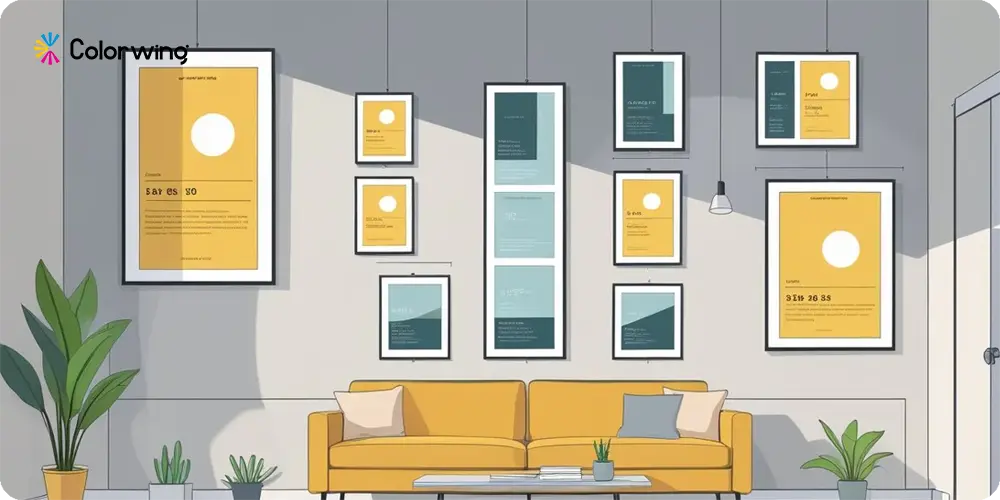
Choosing the good poster dimensions is very important. The size depends on viewing distance, location, budget, and purpose. The ideal dimensions of a poster depend heavily on how and where the poster will be displayed. The following are the key factors to consider before making any final decision:
Viewing Distance: Use large poster sizes if it’ll be viewed from a distance, such as across the street. For close viewing, e.g., in classrooms or hallways, use smaller posters.
Placement Environment: Small spaces, retail walls, and bulletin boards typically need small to medium-sized posters. At the same time, outdoor spaces benefit a lot from the poster default size, which is 24 × 36 inches.
Budget: Budget is a crucial factor when it comes to selecting the right poster size. Printing costs and material usage increase when you use large poster dimensions for your marketing purposes.
Choosing among the multiple sizes of posters can feel stressful, but it is not as difficult as it seems. The right decision depends heavily on how and where the posters will be used.
In a Nutshell
Choosing the ideal poster sizes is just as essential as the design itself. Choosing the right dimensions allows you to improve your poster’s readability and visibility. The size also influences the overall impact of the poster.
First, understand sizes, then aspect ratios, and then move on to print quality to ensure immaculate results. Create a well sized poster that instantly grabs attention and helps deliver your message clearly to your target audience. With ColorWing, businesses can go for custom sizing options to match their poster perfectly with their marketing goals. Get perfectly sized and high quality print posters with ColorWing and stand out with confidence.

Emily Chris Kieran
Meet Emily Chris Kieran, a seasoned packaging industry writer with 7+ years of experience in the printing and packaging sector based in Texas. With a keen eye for color and a passion for data-driven insights, Emily crafts compelling content strategies that explore the intricacies of packaging and printing. She possesses in-depth knowledge of the industry's dynamics, staying up-to-date on the latest trends and technologies. When she's not delving into industry trends, you can find her unwinding on the golf course, where she finds inspiration and clarity. With a love for polo and a knack for storytelling, Emily brings a unique perspective to the world of packaging, illuminating fascinating facts and trends that inform and engage.