

*2 mins read
What are Tea Box Dimensions? How to measure Tea Boxes Accurately
Publish Date
April 20, 2026
Written by
Emily Chris Kieran
Tea boxes in the United States do much more than hold a few bags of tea. They protect delicate products, communicate flavor and quality at a glance, and decide whether your brand fits cleanly into a retailer’s planogram or gets pushed off the shelf. When dimensions are measured accurately from the start, you avoid crushed sachets, wasted board, and freight penalties and you give your design team a precise canvas that prints cleanly and complies with U.S. labeling rules.
Like when we are looking for dimensions of a box length × width × height is the thumb rule that helps you to get through the girth of a box. Accurate sized boxes are integral for your brand. Likewise, the North American market is expected to grow at a CAGR of 4.85% which is a massive growth.
Why Tea Box Dimensions Matter in the U.S. Market
Tea boxes convert the massive audiences on the retail aisles if the packaging is remarkable. With vertical space and facings always under pressure. Buyers want to show as many flavors and brands as possible in a single run; that means they gravitate toward compact, vertical cartons that stand tall rather than wide. If your box is even a little oversized or poorly proportioned, you might pay more for shipping, lose space in master cartons, or see your PDP shrink as the designer struggles to fit branding and mandatory information.
Accurate measurements also shape the way a shopper experiences your brand in hand. A box that is too loose inside feels cheap, like empty real estate around the tea. A box that is too tight bulges, crushes corners, and signals that the brand cut corners on engineering. When you measure and define dimensions precisely, the structure, graphics and unboxing ritual all align. When the dimensions are optimized your tea feels considered, not improvised.
The U.S. Standard: Length × Width × Height
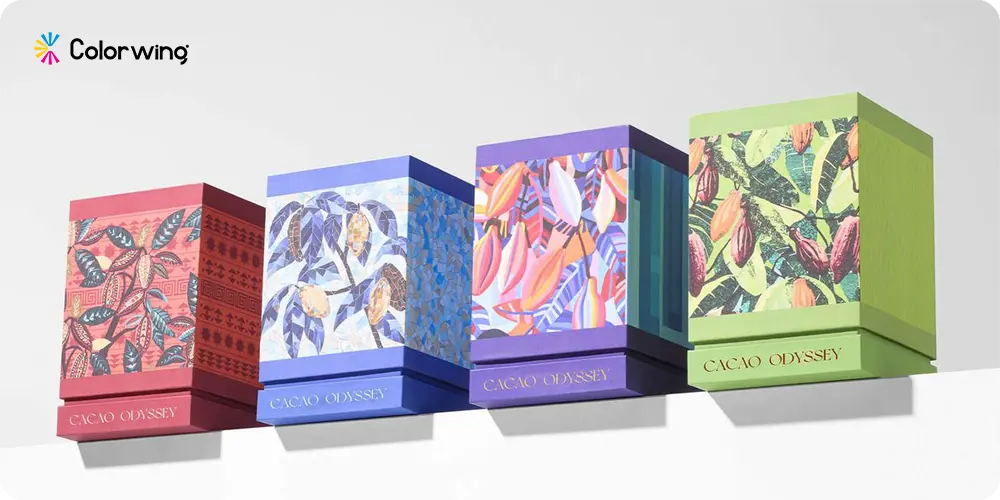
Every successful tea brand in America whether you are competing with Twinings, Bigelow, Celestial Seasonings, Stash, or Harney & Sons works from the same basic dimensional language: length × width × height. For tea boxes, these three numbers are only useful if everyone agrees on how to find them and how they relate to the shopper’s view on the shelf. ColorWing starts by defining all dimensions on the inside of the box, where your tea bags, sachets, or pouches actually reside. We also make sure flat bottom pouches are of the highest quality that contain your tea if you aren’t preferring boxes we’ve got the full range.
When a tea box is placed in its selling position, the front panel faces the shopper. The longer horizontal edge of this front panel is your length. The shorter horizontal edge is your width. The vertical edge, running from the base sitting on the shelf to the top closure, is your height. Treat these internal measurements as the true “capacity” values. External dimensions naturally end up larger, because paperboard thickness, glue flaps, and tuck designs add material around the cavity. By locking internal numbers first, you make sure your tea fits comfortably and that any later adjustments for material do not compromise the product.
Step‑by‑Step: How to Measure Tea Boxes Accurately
Accurate tea box dimensions begin with a simple but disciplined process. Even if you already have a sample carton in your hand, following a consistent sequence lets you brief ColorWing or any production partner with clarity and confidence.
Position It Upright Flat
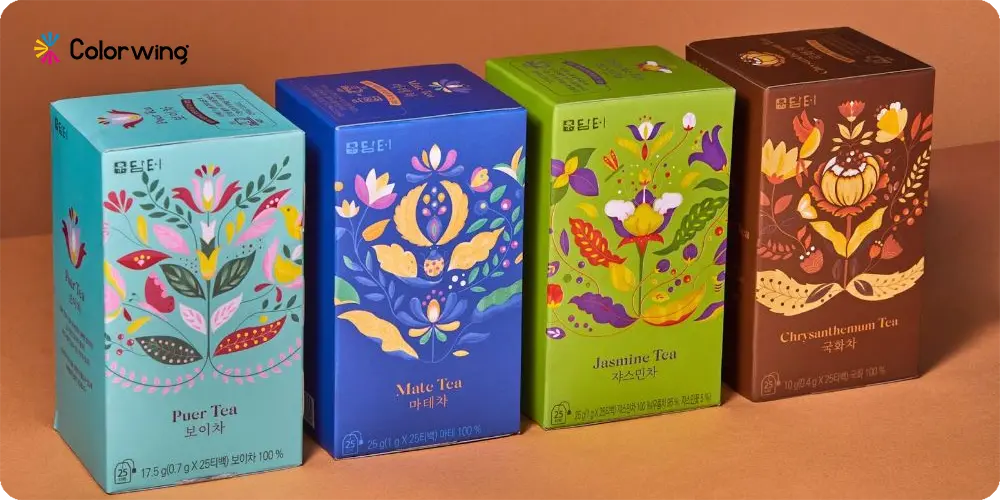
First, you have to place the product box in the condition it will be appearing on retail shelves. Set it upright on a flat surface, exactly as it will stand on a shelf. The front panel should face you, all flaps should be closed, and the structure must be fully formed. This avoids the common mistake of measuring a flattened or partially opened sample, which yields misleading results and leads to fit issues once you move into production.
Measuring Internal Length
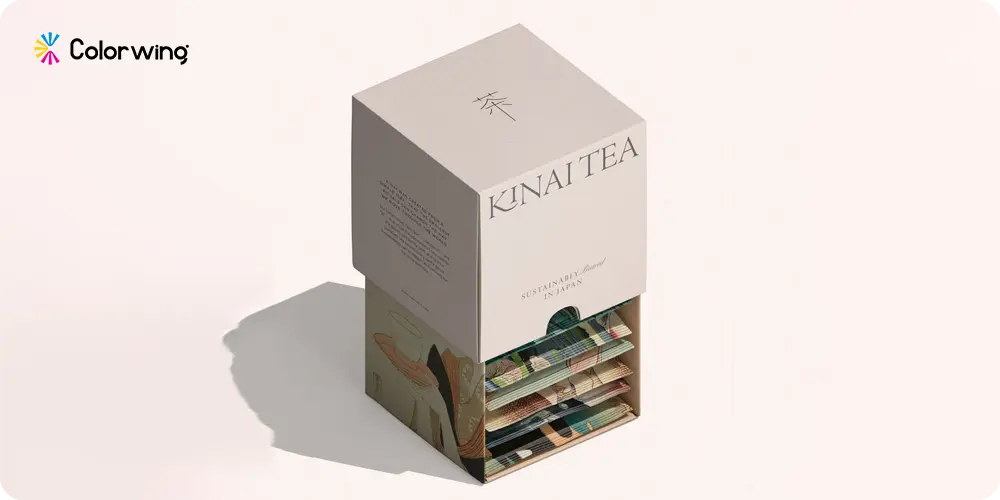
Next, open the top closure and measure the internal length. Slide a rigid ruler or caliper inside the box along the front panel from left to right, following the longer horizontal edge. That inside distance, without rounding, is your length in millimeters. Record it as the first number in your dimension set. Then measure the internal width. Staying inside the box, measure the shorter horizontal edge of the front panel from one side to the other. This is your width, and it tells you how narrow or broad the front face will appear on the shelf.
Measuring Internal Height
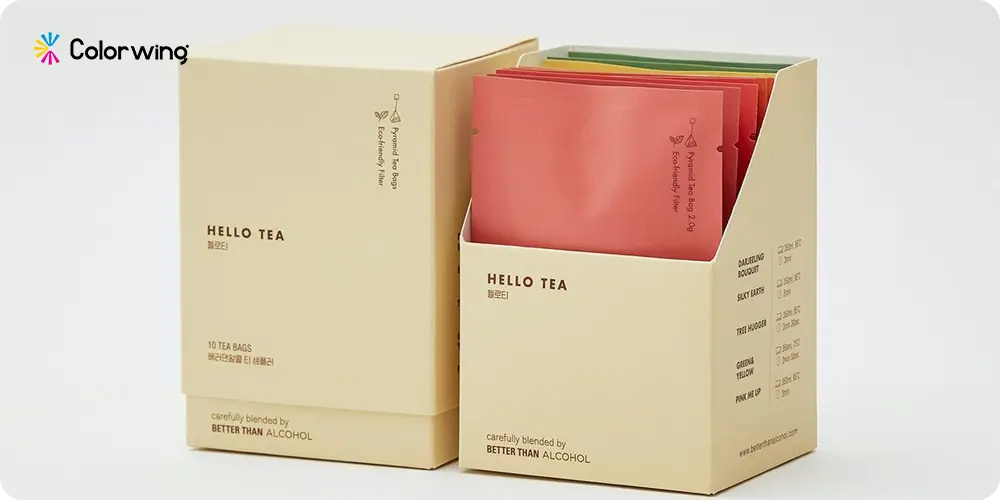
Place your ruler or caliper inside a vertical corner and measure from the inside base up to the inside of the closed top. That distance is your height. It controls how many layers of tea bags can stack and how generous the vertical billboard is for design. Always double‑check this dimension, because a few extra millimeters here can determine whether your box clears a shelf above or hits a display lip.
Convert Measurements into Inches

Once you have length, width, and height in millimeters, convert them to inches for U.S. specifications. Divide each value by 25.4 and round to two decimal places for external communication, while still keeping the exact millimeter values for die‑line engineering. When you send your measurements to ColorWing, specify orientation clearly for example, “L (front, long edge) × W (front, short edge) × H (vertical)”so everyone from structural design to printing and fulfillment understands how the box will stand, stack, and ship. Accurately measuring your tea box is crucial, similar to how we measure standard shoe box sizes as dimensions are important.
Common U.S. Tea Box Dimensions That Work
Precise measurement is the foundation, but certain dimensional clusters have proven themselves again and again in the U.S. tea aisle. They respect standard shelf depth, support clear labeling, and hold the right number of bags without wasted space. ColorWing uses these reference points as starting templates, then adjusts for your exact bag count, sachet thickness, and brand positioning.
Twenty Count Tea Boxes
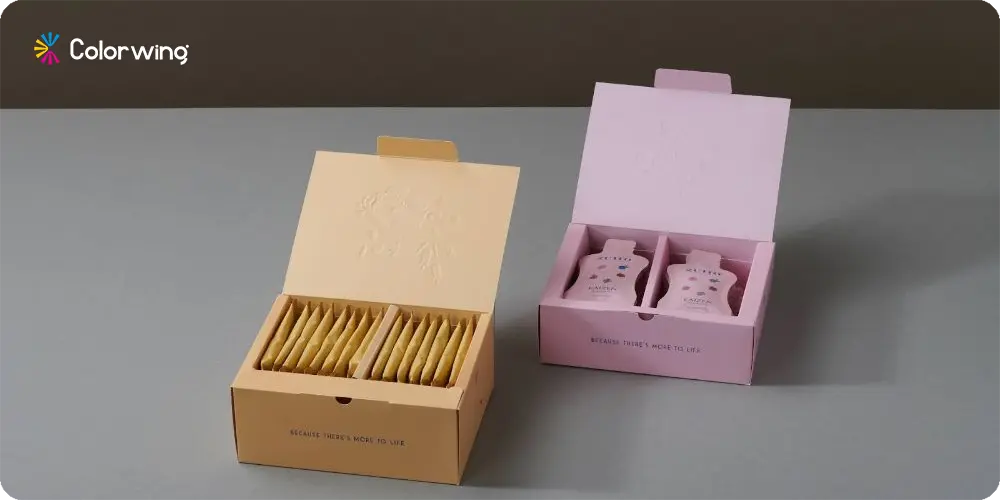
One widely used footprint for a 20‑count tea box sits around 75 × 50 × 125 mm internally. In inches, that is roughly 2.95 × 1.97 × 4.92. It gives you a narrow, tidy face under three inches wide and nearly five inches of height. That is enough room for branding, flavor naming, and net weight while still fitting gracefully into standard grocery and specialty store shelves. When ColorWing engineers a box in this class, it can sit comfortably beside everyday American names like Bigelow or Stash without looking undersized or oversized.
Wellness Tea Packs

For wellness lines and premium green teas, slimmer options around 71.5 × 30 × 107.5 mm work beautifully. Internally, that translates to something like 2.81 × 1.18 × 4.23 inches. A profile like this feels light and minimal, echoing the “clean” and “healthy” positioning many U.S. consumers expect from green or functional blends. Even with fewer bags, say 15 high‑value sachets the box still presents as intentionally compact rather than half empty.
Loose Leaf Tea Boxes
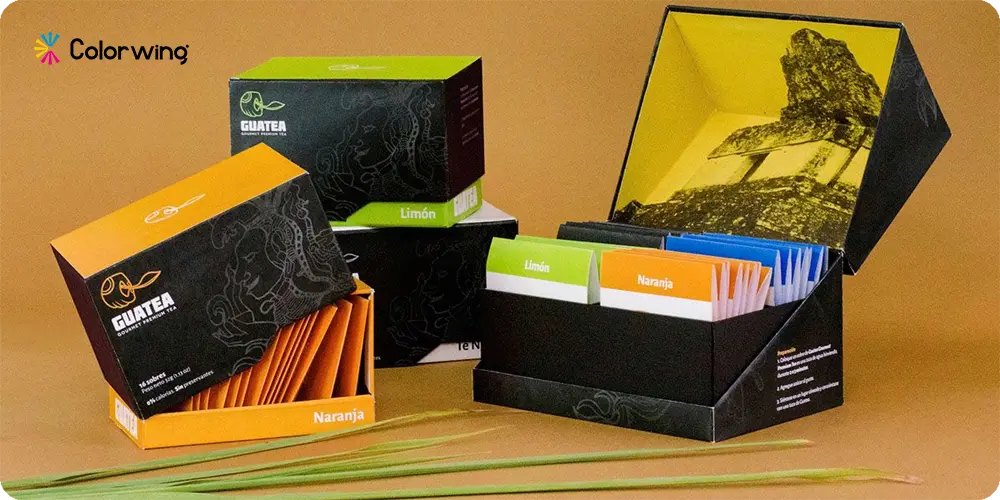
Loose‑leaf tea often finds its home in a cube‑style carton, such as 54 × 57 × 79 mm internally. Roughly 2.13 × 2.24 × 3.11 inches, this style is ideal when the tea is first sealed in a foil or film pouch and then boxed for branding. In hand, it feels giftable; on shelf, it stacks neatly and stands out among taller rectangles. ColorWing can easily tweak any side adding a few millimeters for a stiffer board, a gusseted inner pouch, or an insert without losing the cube impression that shoppers associate with premium or small‑batch tea.
Dispenser Tea Boxes
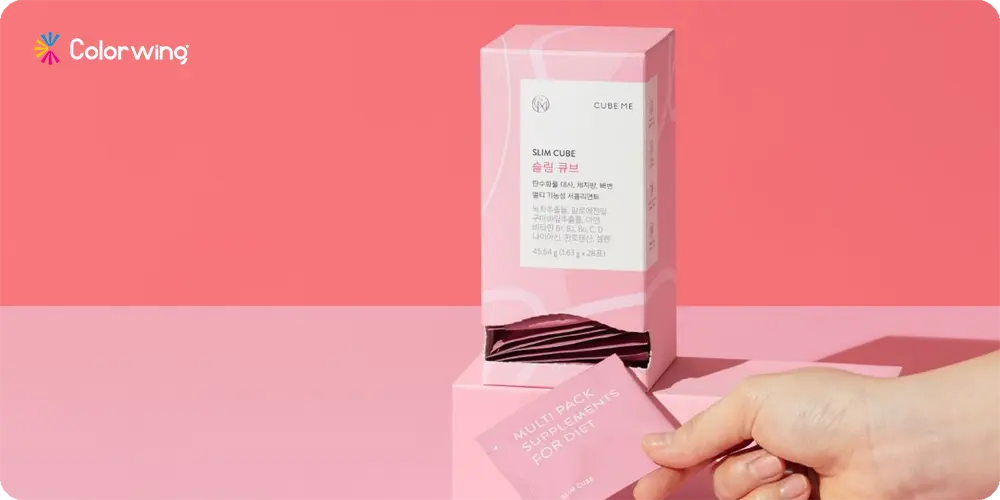
Dispenser tea boxes and samplers use taller, more specialized dimensions. The dispenser boxes are often known to be the display boxes with a convenient packaging style. A gravity‑fed dispenser, used in offices, hotels, or café counters, might sit around 135 × 50 × 170 mm internally. That gives a tall, slim frontal profile with enough vertical space to stack a full column of tea bags that feed down to a perforated opening.
A gift sampler or variety pack for retail and e‑commerce might push out to around 170 × 45.5 × 205 mm. The wider front allows multiple flavor blocks and storytelling, while the modest depth makes it efficient to ship and easy to wrap or place inside a gifting sleeve.
Linking Dimensions to Labeling, Display, and Shipping
Once your dimensions are accurate, they immediately touch three more areas: labeling compliance, shelf strategy, and logistics. ColorWing treats each box as a three‑dimensional canvas that must satisfy all three otherwise, the most precise measurement in the world still fails in the field. Likewise, the milk carton sizes dimensions also tell that a proper labelling for optimum size is crucial.
On the labeling side, your principal display panel is usually the front face formed by length and height. This panel must carry your statement of identity, brand name, and net quantity of contents in a way that is clear and conspicuous. The area of this panel dictates minimum type sizes for net weight under U.S. rules, so a box that is too small may force your designer into microscopic text or a layout that feels cramped. By defining length and height correctly at the beginning, ColorWing helps you lock a PDP large enough for both bold branding and compliant net quantity declarations.
Retail Pop Displaying Strategy
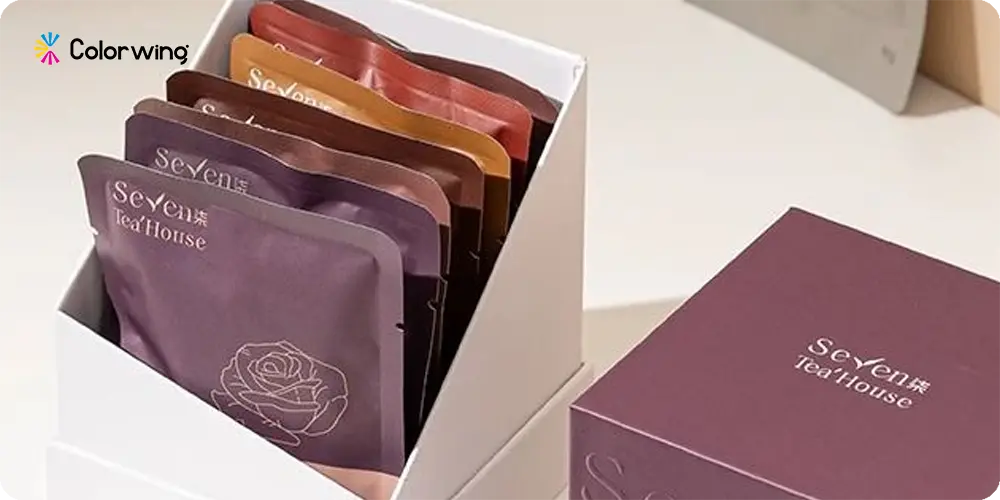
Display strategy depends on how many facings the retailer will grant you and how they set their shelves. In tea, U.S. buyers usually prefer to show the narrow side forward, which is why widths in the 50–80 mm range, or roughly 2–3 inches, work so well.
Taller heights provide the visual billboard and help your brand peek over neighboring SKUs without exceeding the physical shelf gap. Correct measurements let you model, before you ever go to press, exactly how many boxes fit per row, how many rows per shelf, and how your product will look lined up across flavors.
Smooth Shipping For No Frills
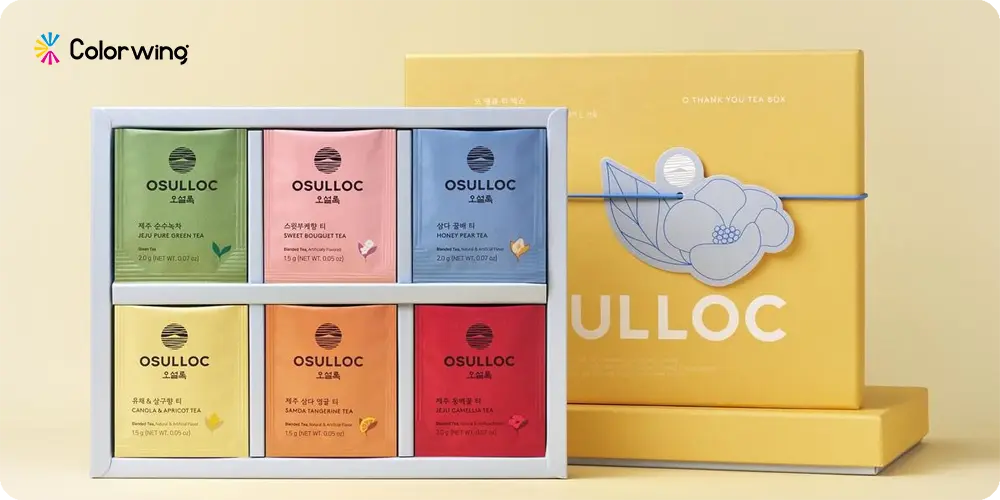
Shipping and palletization are driven by outer dimensions and volume. Once internal measurements are fixed, ColorWing calculates external size and then determines how many units nest inside a master carton with minimal void space.
Because dimensional weight is often more important than actual weight for light products like tea, shaving even a few millimeters off one side without harming the product can reduce freight costs across thousands of shipments. Accurate measuring on the front end creates predictable stacking patterns, safe pallet heights, and fewer surprises when you move from prototype to full‑scale distribution.
Competing on Shelf With Established U.S. Tea Brands
For ColorWing’s clients, tea box dimensions are also a competitive statement. Every millimeter signals whether you understand the visual language of the U.S. tea aisle and whether you belong next to the established names.
While Twinings brings a long heritage and refined graphics, its U.S.cartons still live within a familiar size band. If your dimensions echo those bandswithout copying them outrightyou position your brand as serious and shelf‑ready rather than experimental or amateur. You can get the custom die-cut stickers if you want to give a personalized vibe to your tea packaging.
Bigelow, Celestial Seasonings, Stash, Tazo, Harney & Sons, and The Republic of Tea all demonstrate how different design styles can coexist within similar dimensional ranges. Some lean into taller verticals, others into slightly squatter profiles, and some break the carton mold with tins or tubes. Arbor Teas shows how flexible, compostable pouches can still compete for attention, especially in organic and specialty products, by pairing sustainable structures with right‑sized digital and physical touchpoints.
Whatever combination you choose, a classic vertical box, a cube for loose‑leaf, or a tall dispenser. ColorWing makes sure your dimensions translate that brand story into a structure that fits, stacks, and sells in the American market.
Putting It All Together With ColorWing
When you view tea box dimensions through this U.S.‑centric lens, measurement is no longer a quick guess with a tape; it becomes a strategic decision. Define length, width, and height from the inside out, select a footprint that aligns with U.S. retailers' tea merchandising practices, and ensure your principal display panel can accommodate both storytelling and compliance. From there, you build into shipping efficiency and pallet stability so the same elegant box that wins a shopper’s eye also moves cleanly through warehouses and trucks.
ColorWing ties this entire process together. With precise internal measurements, dialed‑in footprints for everything from everyday 20‑count boxes to vertical dispensers and cube‑style loose‑leaf cartons, and a clear understanding of how American tea brands share the shelf, your packaging stops being a guess and starts being a competitive tool. Every dimension, from the first millimeter on the ruler to the final inch on the spec sheet, works in your favor protecting the tea, amplifying your brand, and earning its place in the U.S. tea aisle.

Emily Chris Kieran
Meet Emily Chris Kieran, a seasoned packaging industry writer with 7+ years of experience in the printing and packaging sector based in Texas. With a keen eye for color and a passion for data-driven insights, Emily crafts compelling content strategies that explore the intricacies of packaging and printing. She possesses in-depth knowledge of the industry's dynamics, staying up-to-date on the latest trends and technologies. When she's not delving into industry trends, you can find her unwinding on the golf course, where she finds inspiration and clarity. With a love for polo and a knack for storytelling, Emily brings a unique perspective to the world of packaging, illuminating fascinating facts and trends that inform and engage.