

*2 mins read
A Comprehensive Guide to Standard Greeting Card Sizes
Publish Date
March 26, 2026
Written by
Emily Chris Kieran
Have you ever put your heart on a handwritten note and then found out that your perfectly made card would not fit in a standard envelope? Or wasted hours just trying to find the right layout for holiday photos, only to get the news that it would result in the added postage charges? The size of your greeting card in 2026 is not a detail about design, but a strategic choice that will influence your costs, the efficiency of the mailing process, and the way your message is perceived.
Here, in Rosenberg, Texas, we print thousands of greeting cards annually for the brands, families, and creators of the Houston metro. And there is one truth that is permanent, which is that the right dimensions make your feelings purposeful, not accidental.
This is the guide that puts an end to the perplexity in the midst of greeting card sizing. We will take you through the most common sizes that are available in birthday cards, Christmas cards and everyday notes, both with the exact measurements in inches and centimetres, explain how the envelopes will work out in your selection, and tell you what really counts in 2026 when it comes to printing. You may be an owner of a small business who wants to send out branded thank-you cards, or a grandparent who is sending ten grandchildren a holiday greeting, but you can be certain that having this information will help your message get to the mark as intended.
What Is the Standard Greeting Card Size?
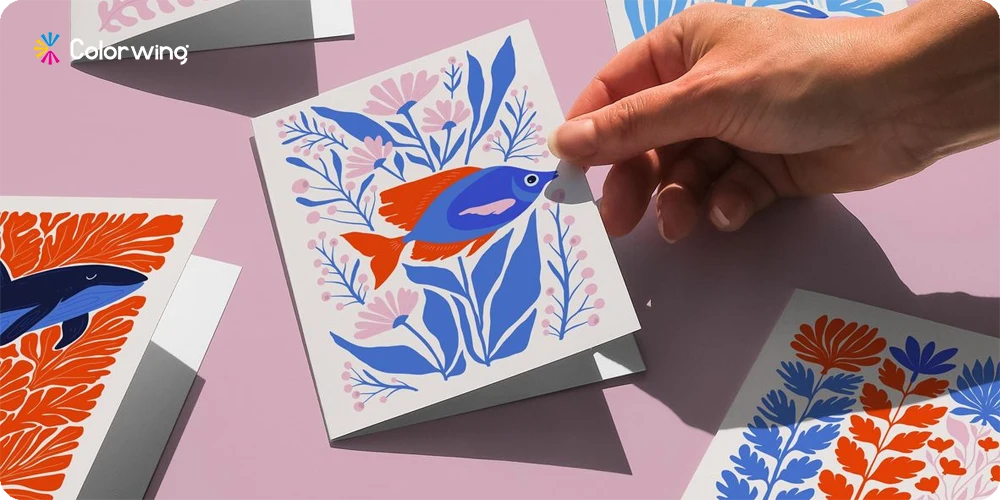
What is the normal size of a greeting card, then? Whenever the general population envisions a conventional folded card, whether it be a birthday, anniversary, or even a mere hello. When folded, it has a size of 5 inches in width and 7 inches in height, and when opened, it forms a sheet of 10 by 7 inches. There is no wonder it is the benchmark of the industry. It does not overwhelm the audience with graphics and intricate spelling in order to showcase expressive typography or illustrations, or family pictures. More to the point, it is exactly the size of an A7 or custom envelope, which has the dimensions of 5.25 by 7.25 inches, a size that is entirely in line with the U.S. Postal Service standards of normal size.
Rates of First-Class Mail letters
This proportion of visuality and postage functionality is what makes more than two-thirds of all commercially printed greeting cards in the United States continue to rely on this dimension in 2026. When you have purchased a card off the rack in a bookstore or pharmacy, most likely it was 5 by 7 inches.
This is also the common size of a greeting card that is used when designers or printers are talking about the standard size or average size of a card. That is 12.7 centimeters by 17.8 centimeters measurement that is internationally understood and critically so to U.S.-based businesses like yours in Texas who make local deliveries.
However, not all events require the same magnitude. An example being birthday cards, they usually use this 5 by 7 standard, but there is a trend to a smaller standard of 4.25 by 5.5 inch, also called the A2 size. This is a small, folded card, ideal in size, and appropriate when you mean to write a rather personalized message. Its size is 8.5by 5.5 inches when unfolded, and fits perfectly with conventional letter paper, which makes it easy to design.
The A2 size fits in a corresponding A2 envelope (4.375 by 5.75 inches) and qualifies for the lowest postage rate possible, which explains its growing popularity amongst small businesses and wedding planners, as well as indie stationery brands around the South, including several here in Fort Bend County. Though the 5 by 7 is the popular birthday card size in general, the A2 size gives a more intimate and cost-effective option, particularly where one needs to send dozens or hundreds of cards at the same time. It should be mentioned that both of those sizes are known as regular greeting card size, in the industry, but the 5 by 7 continues to dominate the retail shelves and corporate gift wrap programs.
Christmas Card Size: What’s Standard in 2026?
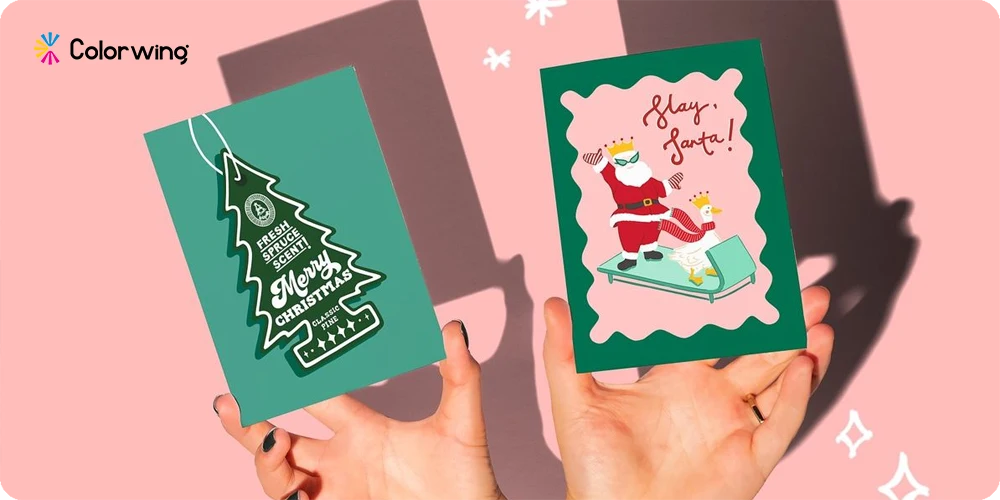
With the exceptional Christmas card size, which is more or less than regular greeting cards. 5 by 7 inches being the most popular sizer, with families exchanging photos of families or greetings at this time of the year. The 4.25x5.5 inch size is, however, rapidly growing in popularity amongst urban elites and minimalist brands because of the clean appearance and reduction of mailing expenses.
A similar quiet increase in square Christmas cards, often 5 by 5 inches in size, that provides a gallery-like display of high-quality photography, is also being realized in 2026. They use square envelopes and can cost a little more to post, but they are especially popular with luxury real estate agents and portrait photographers in the Houston market since they can be seen amidst the sea of mail. The important thing is consistency, though, no matter the shape: take an envelope precisely the size you need to fit into the ordeal without jamming, bending, or non-machinability at the post office.
Envelopes Upsurges Brand Recognition To The Core
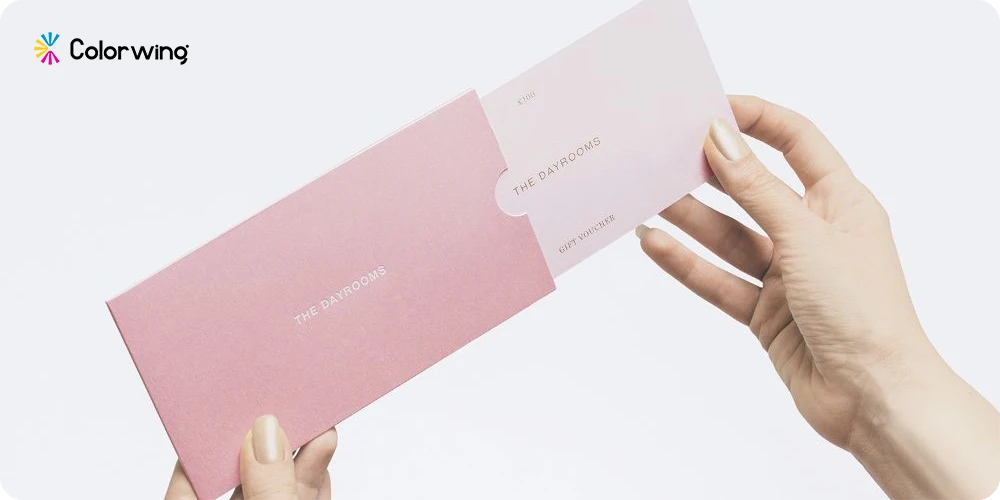
By the way, they have envelopes, and they are not an addition to the system. The success of a greeting card is solely based on its ability to fit into the regular envelope sizes. The universal match of 5 by 7 cards is the A7 envelope (5.25 by 7.25 inches). The A2 envelope (4.375 by 5.75 inches) is compatible with 4.25 by 5.5 cards. Draw the slightest side waysay, plan a 5.1 by 7.1 card and you are going to have packages that fell out, or ripped, or were rejected by the The U.S. Postal Service sets clear boundaries: anything with a thickness greater than a quarter-inch or bigger than 6.125 by 11.5 inches is considered to be non-machinable, resulting in an addition of $0.24 per piece in 2026. That is quick for high-volume purchases. Our print plant in Rosenberg has a check fit envelope to card before printing, since we are aware that your message must not get lost in transit.
In addition to the external dimension, the paper itself is a very important aspect. Grams of your card and finish in grams per square meter determine how your card feels. To have a durable and not too bulky finished card, a 200 to 250 GSM weight of a card is sufficient to be used in cases of regular birthday or thank-you cards.
Heavy photography Holiday cards and high-end business cards have a tendency to use a 300 to 350 GSM cover stock, which provides such a card with a luxurious feel that is difficult to ignore. And greener senders, the uncoated recycled papers of 180 to 220 GSM provide a warm feel, sustainable yet writable, touchable quality that is ideal for personal notes. Sustainability in 2026 is not a choice; it is a predetermined fact. More than three-fifths of our Texas clients request. for simple greeting cards, because their customers notice and care.
Greeting Card Envelope Dimensions: Why Compatibility Matters
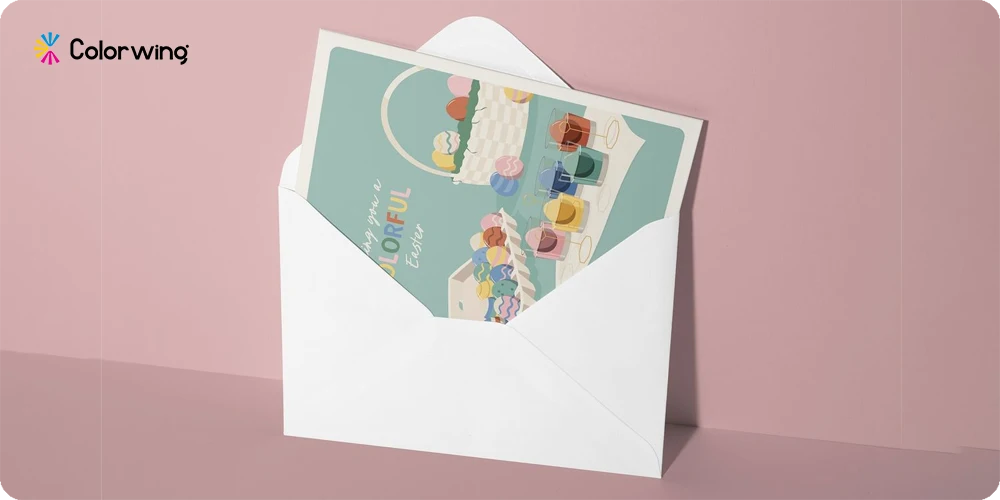
It is intrinsic to keep design essentials in mind, like you have to always include a 0,125 inch bleed on all sides. By this, you can print white edges after trimming, and keep critical text and logo sides to prevent white edges after trimming. with 0.25 inches inside the trim line to avoid accidental cropping. Work in CMYK color mode, not RGB, to ensure accurate on-press results. And never skip a physical proof, especially if you’re using speciality finishes like foil stamping, embossing, or soft-touch laminate. What looks perfect on screen can behave differently on paper, and catching a subtle alignment issue early saves time, money, and heartache later. At ColorWing, we’ve seen clients avoid costly reprints simply by reviewing a single proof before full production.
While standard sizes dominate for practicality, there are moments when custom dimensions make sense. A product launch might call for a 6-by-8-inch card that doubles as a mini lookbook. A wedding suite might use a unique square format to unify save-the-dates, invitations, and thank-yous. But even then, it’s wise to stick to even fractions like 4.5, 6, or 8 inches because they align with standard press sheet layouts, keeping waste low and pricing predictable. Custom doesn’t have to mean chaotic; it just needs thoughtful planning.
How Paper Weight and Finish Shape Perception
It is essential to look beyond the common sizes as they shape your reliability. Small retailers stock 5 by 7 cards because customers expect them. Churches and non-profits use A7 envelopes for bulk mailing efficiency. Real estate teams in Sugar Land favor the compact A2 for inclusion in listing packets. Yet when the moment is a deeply personal milestone birthday, a memorial tribute, a wedding thank-you, many choose to extend the experience with premium paper, refined finishes, and precise craftsmanship. Because in those cases, the card isn’t just a vessel for words; it’s a keepsake. These also shape the perception right away for a silent message like a surprise vibe before each single word is read.
A tiny note says, “I’m thinking of you quickly, warmly.” An oversized card declares, “This deserves celebration.” And a perfectly standard 5 by 7 card communicates respect for the recipient’s time, their mailbox, and the tradition of real, tangible connection. In a world of fleeting digital pings, that physical object carries extraordinary weight. At ColorWing, we believe printing is an act of care.
Final Thoughts
Every cut, fold, and ink drop should honor the intention behind your message. That’s why we adhere to exact dimensional tolerances, use only archival-quality materials, and treat every order from fifty heartfelt notes to five thousand holiday cards with the same precision. At ColorWing, we ensure we’re not just a printer; we’re your partner in making sure what you send reflects who you are.
If you’re ready to create greeting cards that arrive flawlessly and resonate deeply, we’re here in Rosenberg to help. Share your vision, and we’ll recommend the ideal size, paper weight, and finish so your message doesn’t just reach its destination, but lingers long after. After all, in 2026, the most powerful statements are still made by hand, on paper, in the right size.

Emily Chris Kieran
Meet Emily Chris Kieran, a seasoned packaging industry writer with 7+ years of experience in the printing and packaging sector based in Texas. With a keen eye for color and a passion for data-driven insights, Emily crafts compelling content strategies that explore the intricacies of packaging and printing. She possesses in-depth knowledge of the industry's dynamics, staying up-to-date on the latest trends and technologies. When she's not delving into industry trends, you can find her unwinding on the golf course, where she finds inspiration and clarity. With a love for polo and a knack for storytelling, Emily brings a unique perspective to the world of packaging, illuminating fascinating facts and trends that inform and engage.