

*2 mins read
Difference between Flat Bottom Pouches and Stand-up Pouches
Publish Date
April 27, 2026
Written by
Emily Chris Kieran
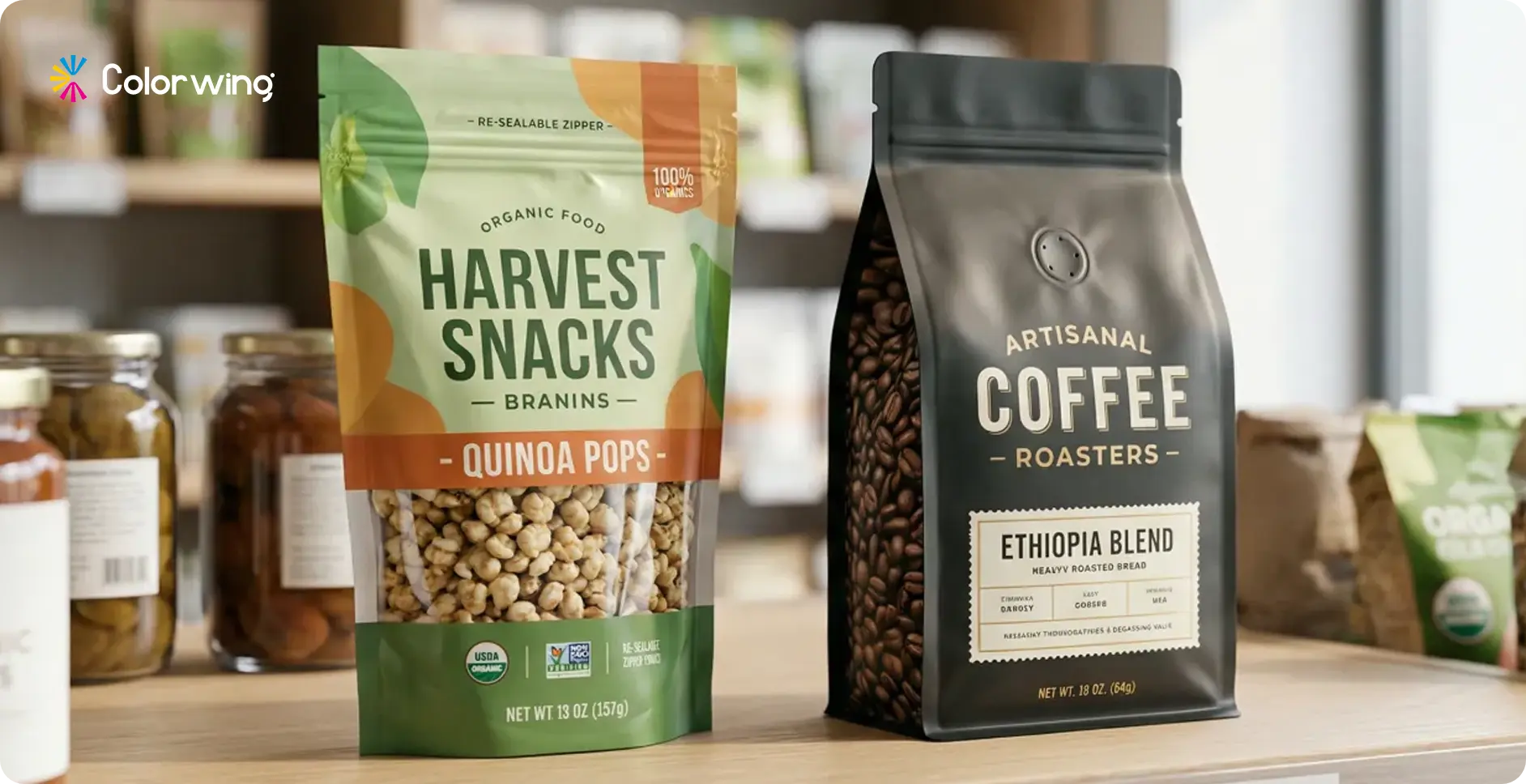
Have you ever thought about what they are when you're walking through a retail store and you keep coming across two pouches side-by-side? One lies flat. The other stands tall. Both look great on paper. But choose the wrong one and you've got a product that falls over, takes up too much room in transit or, subtly, sabotages your brand even before the consumer reaches for it.
This guide clears the air. We'll explain what the pouch actually does, where they're great and where they're awful, and how to pick the right pouch for the right product - whether you're running a new line of coffee, creating a new brand of snack or transitioning from a box to a flexible package.
A flat pouch says "efficient and clean." A stand up kraft pouch with a window says "real and authentic". A zip lock stand up bag with a degassing valve says "we care about freshness". Packaging speaks for your product. Make sure they are the right words.
What You'll Know by the End of This Guide
Flat bottom vs. stand up: the anatomy, and how it affects the aisle
How much more product fits in one pouch
The performance of both formats with zippers, kraft and machine filling The sustainability story most brands ignore
The sustainability factor brands overlook
How to get the right fit for your product
Flat Bottom Pouch vs Stand-Up Pouch: Side-by-Side Comparison
Structure | Flat Bottom Pouch | Standup Pouches |
Base structure | Flat, fully closed base | Gusseted bottom that opens under fill weight |
Shelf behavior | Lies flat or sits in a display | Stands upright independently |
Best for | Multi-packs, cases, e-commerce bundles | Open-faced shelving, end-caps, premium retail |
Reseal option | Yes, it has zipper along top | Yes, zipper, spout, or zip lock formats |
Branding space | Wide, flat front and back panels | Front, back, and gusset panels |
Fill volume | Maximum volume; the five-panel design holds significantly more product than a standard stand-up pouch. | High, gusset expands with product weight |
Machine compatibility | Requires specialized five-panel filling equipment; stand-up pouches are more compatible with standard stand up pouch machines. | Requires gusset-capable equipment |
Sustainability | Light material, easy to stack | Reduces rigid packaging, lowers shipping weight |
Typical cost | Lower per unit | Slightly higher — more material and forming |
Consumer feel | Clean, functional, structured | Confident, premium, carton-like |
Flat Bottom Pouches: The Best Known For Projection
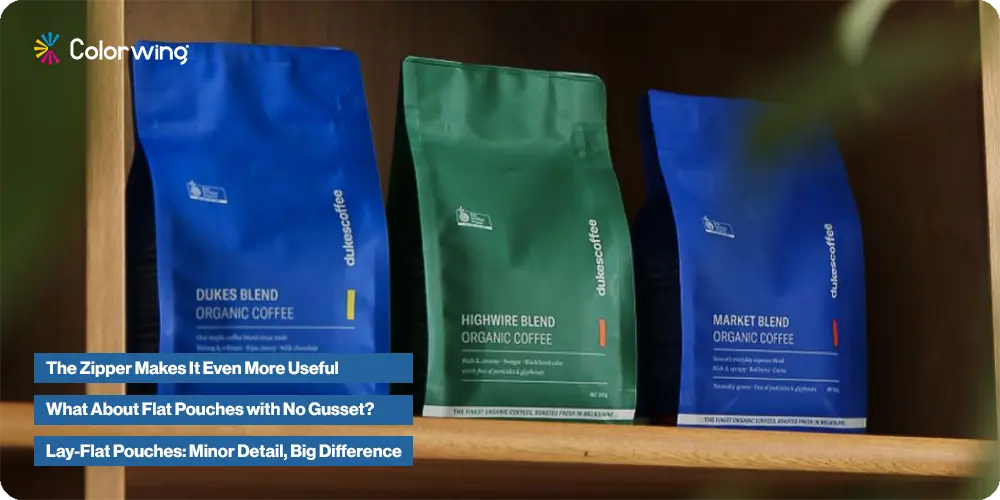
As the name implies, a flat bottom pouch is flat. These pouches have a fully formed, flat bottom so they sit upright on any surface relying on side gussets and a five-panel structure to create a stable, box-like shape. It's the flexible packaging equivalent of a square box.
“Moreover, The flat bottom bags market is valued at USD 1.6 billion in 2025, and projected to reach about USD 2.6 billion by 2035, growing at a 4-5% CAGR (Future Market Insights).”
This packaging type is favoured by companies looking for something lighter and less bulky than a carton but with the sleek look of a flat box on a shelf or display. Pouches with flat bottoms are easy to fill, fit nicely in cases, and can be printed on a large, flat area. You can find them in the snack aisle, online bundles, multi-packs and any other situation where a brand doesn't want its packaging standing up on a display, but does want it to look neat and organised.
They are commonly used in flat pouch bags, multi‑pack bundles, and shelf‑ready displays where the pouch is held or grouped rather than standing alone. Flat bottom packaging bags based on this style combine clean printing, light weight, and easy handling, which is why they appear often in food, snack, and e‑commerce formats. Because they keep the structure simple and their base flat, flat bottom pouches are relatively easy to fill and pack, making them a practical choice for brands that prioritize efficiency as much as appearance.
The Zipper Makes It Even More Useful
The types of pouch you select varies from one to the other as per the product packaging needs. Pair a flat bottom pouch with a resealable zipper and you have one of the most useful formats of flexible packaging. A flat bottom pouch with a zipper maintains the same compact rectangular appearance but gives the consumer the option of re-sealing it - especially useful when it comes to dried foods, snacks, coffee-like products and other things we consume in small amounts.
A flat bottom bag with zipper works the same way with a slightly more bag-like structure. Both are about convenience and care: two things that add value subtly without adding volume or thickness.
What About Flat Pouches with No Gusset?
Then there's a flat pouch. No gusset, no base, no structure. They're completely flat and work for lightweight formats - coffee-style bags, single-serve snacks, spices. Flat Pouch Bags are similar, typically with a small strip or seal to tear open.These pouches flat to showcase a good aesthetic appeal on the retail shelves.
They're quick to fill, minimal in material and stack easily. They're optimal for multi-pack displays, e-commerce bundles and retail lines where the need for stackability and low packaging costs outweighs the need for tall shelving.
Lay-Flat Pouches: Minor Detail, Big Difference
Lay-flat pouches are engineered to remain flat without curling, shifting or bulging. This may not sound like a big deal, but it's transformative in automated packaging lines, warehouses and distribution sites where flat pouches avoid jams and packaging debris.
Stand-Up Pouches: The Format With Authority
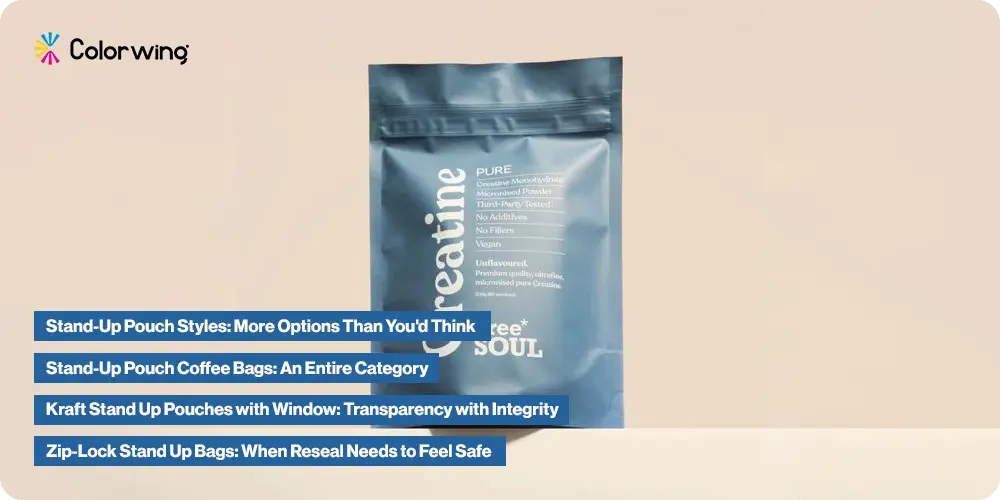
A stand-up pouch stands up and it has the gusseted bottom opens to form a rigid vertical structure that acts like a flexible carton. From afar, it looks proud. Up close, it feels substantial. And that's important when it comes to grocery stores. The standing pouch packaging has its own wins when it comes to convenience of routine products.
Stand-up pouches are the package of choice for coffee, tea, pet food, ready-to-eat snacks and anything that needs to stand out at eye level or on an end-cap display. They stand up, display printing on several sides, and allow consumers to easily check what they're purchasing.
A stand‑up pouch with spout includes a small pouring spout that makes it easy to empty the contents without a second container, which is useful for liquids or powders. A stand‑up pouch with a degassing valve is common in stand up pouch coffee bags. as it lets built‑up gases escape without letting oxygen in, preserving aroma and shelf life.
A stand‑up pouch with a window gives the customer a clear view of the product behind a transparent panel, which is helpful for snacks, grains, and other visually identifiable items. Each stand up pouch style changes how the pouch is used, but not its core identity as a flexible, self‑supporting package.
Stand-Up Pouch Styles: More Options Than You'd Think
Stand-up pouches are not all created equal. Here are the basic styles and their uses:
Stand-up pouch with flat bottom - gusseted bottom, top seal only, simple and straightforward. Best for products that don't need reseal.
Stand-up pouch with zipper - a resealable strip for pet food, snacks, coffee, and other products you use little by little.
Stand-up pouch with spout - for products that need a spout and not a separate container.
Stand-up pouch with degassing valve: a feature of all stand up pouch coffee bags to let the gases out and keep the oxygen away for best flavour and freshness.
Stand-up pouch with window - a clear viewing panel for the consumer, which inspires confidence for snacks, grain products, and attractive products.
Stand-Up Pouch Coffee Bags: An Entire Category
The stand up pouch coffee bag has become standard equipment in the specialty roasting industry for a reason. The format offers a degassing valve, a re-sealable zipper, and ample label space in a lightweight format that preserves aroma and taste, and looks good on the store shelf (and is flat when shipped prior to packaging). Eco-friendly stand-up pouches showcase your brewed coffee, artisan preserved remains safe while green-branding is tackled.
According to many industry forecasts, the global pouches market continues to expand its compound annual growth rate, in part because stand up pouches provide an effective means of reducing material and shipping costs relative to rigid containers like tins and boxes, without compromising the look of the product on the shelf.
Kraft Stand Up Pouches with Window: Transparency with Integrity
Kraft stand up pouches with window are well matched to organic, artisanal, and "natural" products. The kraft material feels good and organic. The window provides product sight for the consumer. It results in packaging that is transparent and responsible - a powerful message for consumers today. You can even get to know are mylar bags recyclable? And get to know the expert’s guide to your query. A kraft mylar bag tends to be the favorite choice for all those reducing environmental footprint.
As environmental regulations become more stringent and the expectations for green labeling grow, kraft-style laminates are an increasing possibility, especially for those brands seeking to marry their packaging to a recycling or refill strategy.
From a sustainability perspective, many packaging experts argue that mono‑material, recyclable kraft‑style options will be important as regulations tighten on flexible packaging in the coming years. That’s why some brands treat kraft stand up pouches with windows as a step toward a cleaner packaging story, not just a visual tweak.
Zip-Lock Stand Up Bags: When Reseal Needs to Feel Safe
A zip lock stand up bag offers a step up in reseal. There's a sense of precision in the zipper closure - the kind of "security" that assures a consumer the bag won't open up in the pantry or hiking pack. This is particularly good for trail mix, pet treats and any snack that spends some time out of its original package.
Machine Readiness: The Detail Most Brands Forget
Stand-up pouches are simple, but they do very unique things on filling and sealing machines. A stand up pouch machine is designed to handle the gusset at the bottom, zipper at the top, spouts and exit valves that many stand up pouches have. If the pouch sizes are not consistent or the gusset doesn't open as expected, the machine jams, underfills or the seals get damaged.
Flat bottom pouches and flat pouch bags are easier to run on existing fill-seal equipment because they behave more predictably. This can be a practical consideration if you're ramping up production rapidly, or producing on co-packing lines.
Pouch or Bag: It's a Positioning as Much as a Structural Issue
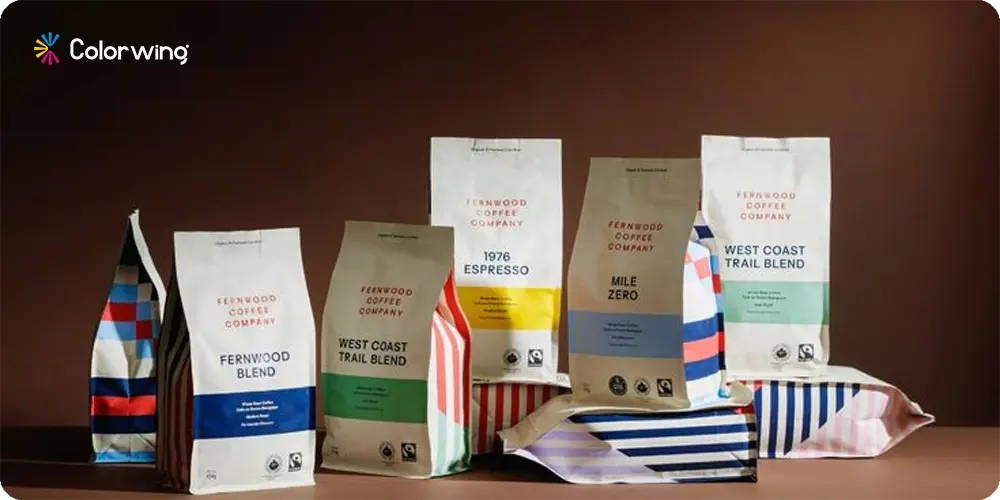
Structurally, there's not much difference between a pouch and a bag. The difference is mostly in positioning. Pouch can imply a sophisticated, reusable, or targeted function. A bag can suggest something more mundane or less costly.
One format could be referred to as a "premium resealable coffee pouch" for a gourmet coffee brand and a "snack bag" for a mass-market grocery product. The language you use defines how people think about it - and how search engines categorise the purpose of your website content. If you're selling a high-end product, go with "pouch." If you want to target convenience seekers, "bag" is right on point.
How to Pick the Right Pouch for You
The right format is really a question of four things about your product and your target shopper:
1. How do you store your product?
If your product is sold inside a display box, case or multi-pack, a flat bottom pouch or flat pouch bag will do fine. It doesn't need a stand (or a pouch). If it's on an open bin display or an end-cap and needs to stand on its own, a stand up pouch is necessary.
2. Does your product need to be re-sealable?
If people use it all after opening it, it's not an issue. If the shopper uses it over and over again (dog and cat food, coffee, trail mix, vitamins, etc.), a flat bottom zipper bag or a zip lock stand up bag means fresher product and longer life.
3. Does your product need to be light and take up less space?
Pouch bags and flat bottom packaging bags use a thinner material and stack flat. If you are selling or shipping in bulk or e-commerce, every ounce counts in shipping costs. Stand-up pouches are heavier but still much lighter than a box or a tin.
4. What's the difference between a flat pouch and flat bottom pouch?
A flat pouch is completely flat with no gusset at the bottom. While the flat bottom pouch tends to have a f;at bottom which seals properly giving a more boxy shape. When pouch gets laid flat the flat bottom pouches tend to be neater and appealing for display.The flat pouches tend to be economical and can get printing easily.
5. Will flat bottom pouches stand up?
Generally, no. They are meant to be laid flat or displayed on a support. For a pouch to stand, choose a stand-up pouch.
6. Are stand-up pouches more expensive than flat bottom pouches?
Usually slightly, yes. Stand-up pouches require more material for the gusset and have more sophisticated equipment to create and fill. For high-end products, the larger footprint and perceived quality would justify the extra cost. For bulk products and economies of scale, flat bottom or flat pouches might be best.
7. What's a degassing valve in a coffee pouch?
Freshly roasted coffee releases carbon dioxide gas. That gas will cause a sealed pouch to burst. The degassing valve allows the gas to exit, but not the air that would allow oxygen to damage the coffee's flavour and shorten its life in coffee stand up pouch bags.
How Formats Fit Many Industries
In foods and beverages, flat bottom pouches are found in snacks, cereals, and coffee, where the pouch must be printed, stacked and protected from moisture. Flat pouch packaging with seals or zippers is typical of single- and ready-to-eat snacks.
Stand-up pouches, such as stand up pouch coffee bags and kraft stand up pouches with window, are commonplace in ready-to-eat snacks and pet food, and in liquid formats where the pouch needs to stand up and look premium from the other side of the aisle.
For non-food products, flexible pouches are used in fertilizers, detergents and industrial chemicals, where the focus is on utility and chemical resistance. Flat and stand up formats can be coated in matte, gloss, metallic and soft-touch to affect the texture and perceived size of the package.
The Bottom Line: Pouch Up with Your Product's Needs
There's no one pouch to rule them all. Instead, choose the format that fits the way your product is merchandised, stored, opened and used by the end consumer. Flat bottom pouches and flat pouch bags win when efficiency, space and simplicity are key to the job.
Stand-up pouches earn their stripes when shelf impact, brand messaging, and consumer experience matter most. And most brands use both formats on their product lines, and find that each has a place when used for the right purpose. ColorWing manufacturers top notch pouches as per your branding and product preservation requirements.

Emily Chris Kieran
Meet Emily Chris Kieran, a seasoned packaging industry writer with 7+ years of experience in the printing and packaging sector based in Texas. With a keen eye for color and a passion for data-driven insights, Emily crafts compelling content strategies that explore the intricacies of packaging and printing. She possesses in-depth knowledge of the industry's dynamics, staying up-to-date on the latest trends and technologies. When she's not delving into industry trends, you can find her unwinding on the golf course, where she finds inspiration and clarity. With a love for polo and a knack for storytelling, Emily brings a unique perspective to the world of packaging, illuminating fascinating facts and trends that inform and engage.