

*2 mins read
The Complete Guide to Waterproof Cardboard: Techniques, Substrates, and Printing Methods
Publish Date
May 20, 2026
Written by
Emily Chris Kieran
Here is a number that should stop any operations manager cold: moisture damage accounts for roughly 11% of all packaging failures in US retail and warehouse supply chains each year. That number comes from industrial packaging audits across cold storage, grocery, and e-commerce fulfillment sectors. In a high-volume environment, that figure translates to crushed product, returned shipments, retailer chargebacks, and brand reputation damage that no reprint can fix.
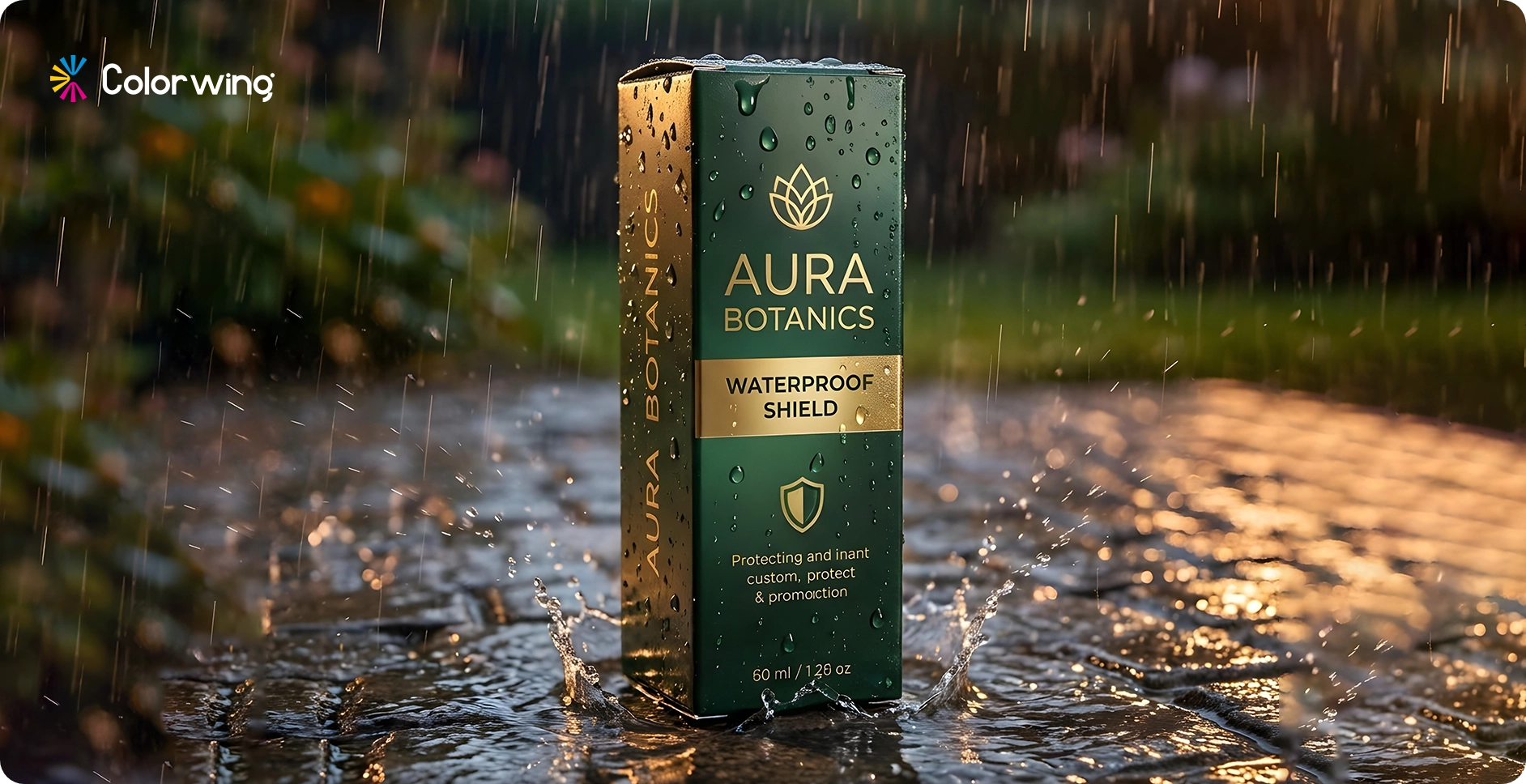
Our remarkable cardboard boxes can be waterproofed so your products remain safe when stored within.
Water Is Quietly Destroying Your Packaging Supply Chain
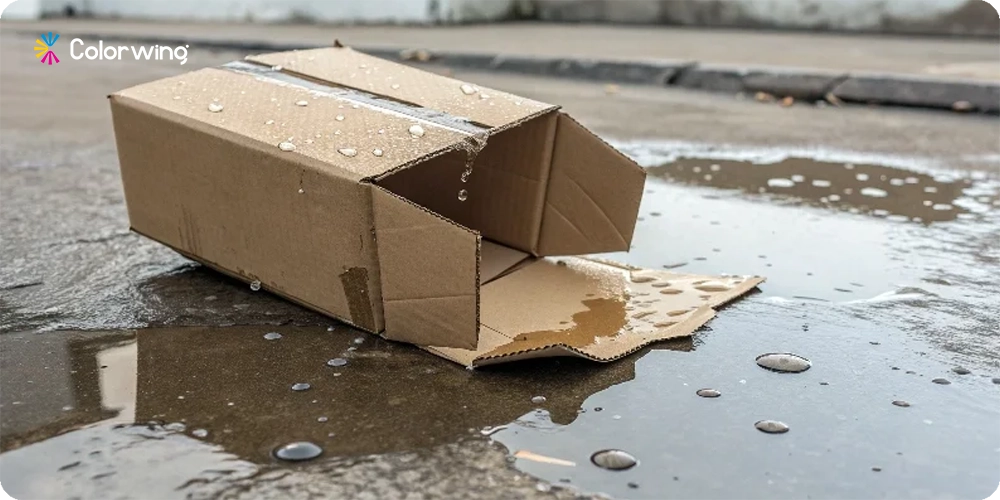
Most of that damage starts not with dramatic flooding but with something far more mundane. Humidity. Condensation on a warehouse floor. Overnight temperature swings in a delivery truck. A light rain that hits an outdoor retail display for forty minutes. Standard cardboard has a cellulose fiber structure that absorbs atmospheric moisture within hours. Once saturation begins, compressive strength can drop by 75% before the box visually deforms.
The solution is not exotic. It is precision manufacturing, the right substrate selection, and the right waterproofing technique applied before the product ever ships. This guide covers every professional method for making cardboard waterproof, the board grades that give you a headstart on moisture resistance, and the printing techniques that work with waterproof cardboard without sacrificing color fidelity or registration accuracy. If you source packaging as a business, this is the most useful document you will read on the subject this year.
Why Cardboard Fails in the First Place
Understanding cardboard protection starts with the material's basic physics.Standard corrugated and folding carton boards are made primarily from cellulose fibers. Known from very chemical nature, cellulose is hygroscopic. It means it actively attracts and retains moisture from surroundings, When these fibers absorb water, they swell. This scenario causes the internal bonding between the paperboard plies to weaken significantly.
In corrugated structures, this moisture absorption causes the internal flutes to soften and collapse under physical load. It elucidates primarily how a cardboard box resting on a damp concrete floor can lose half of its stacking strength by morning even if it never touches a single drop of water. The material doesn't need a puddle to fail; it just needs a little humidity to start pulling moisture from the air and surrendering its structural integrity.
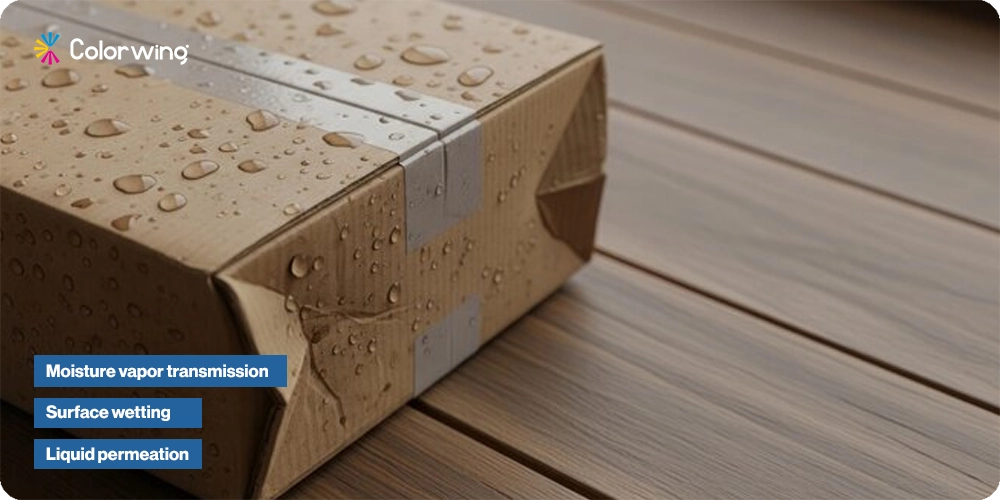
In the commercial packaging world, three primary failures dominate the scene: compression collapse, ply separation, and structural softening. These aren't just random incidents; they are direct results of environmental variables. The inclement conditions silently invade the box. If you don't take measures for these factors during the design phase, you’re essentially leaving your product’s safety to chance.
Moisture vapor transmission
It’s where humidity passes through the board wall gradually, softening the interior structure over time. This is the most common failure in cold storage and refrigerated distribution.
Surface wetting
This occurs when liquid contacts the exterior face of the board directly. Rain, condensation runoff, and accidental spills fall into this category. Waterproof cardboard boxes are engineered specifically to resist this.
Liquid permeation
This issue begins when moisture penetrates fully through the board, reaching the product inside. This requires the most aggressive barrier treatment and is the target specification for fresh produce, frozen food, and beverage packaging.
Each failure mode demands a different response. Getting the match right is what separates a packaging manufacturer from a box vendor.
Cardboard Substrate Types That Determine Waterproofing Performance
Before a single drop of coating is applied, the board grade you choose does a significant amount of waterproofing work on its own. Most competitor guides skip this section entirely. It is the most important one.
Coated Unbleached Kraft (CUK)
.webp?alt=media&token=d8d8f20b-4bca-45ff-b341-c3c0d2b656ec "CUK paperboard")
CUK stands as the definitive industry benchmark, It is best for high-moisture environments. These get commonly utilized for beverage carriers. Also for beer cartons, refrigerated food packaging. They are also known for heavy-duty multi-pack retail formats.It's composition is from virgin fibers, it thus accepts PE (polyethylene) and aqueous barrier coatings with far greater efficiency than recycled boards. This superior coating adhesion makes CUK the logical strategic starting point when engineering waterproofed cardboard containers destined for cold-chain logistics or high-humidity environments.
Solid Bleached Sulfate (SBS)
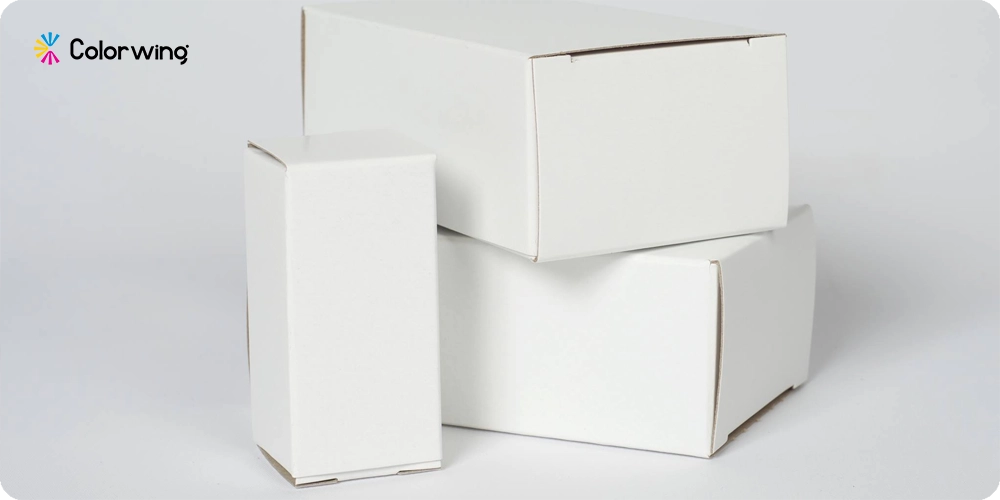
Solid Bleached Sulfate (SBS) is definitely representing the premium tier of folding carton grades. These get Manufactured from 100% bleached virgin wood pulp. These are SBS providing the brightest, most consistent white printing surface available in the packaging sector. Its high-density composition and smooth clay-coated finish.
These are high-fidelity graphics and complex brand colors are rendered with absolute clarity, making it the preferred substrate for luxury retail and high-end consumer goods where visual impact is paramount. SBS is the substrate choice when visual brand presentation on the sales floor is the priority and waterproofing is an applied specification rather than an inherent property.
Non-Sulfate Bleached Paperboard
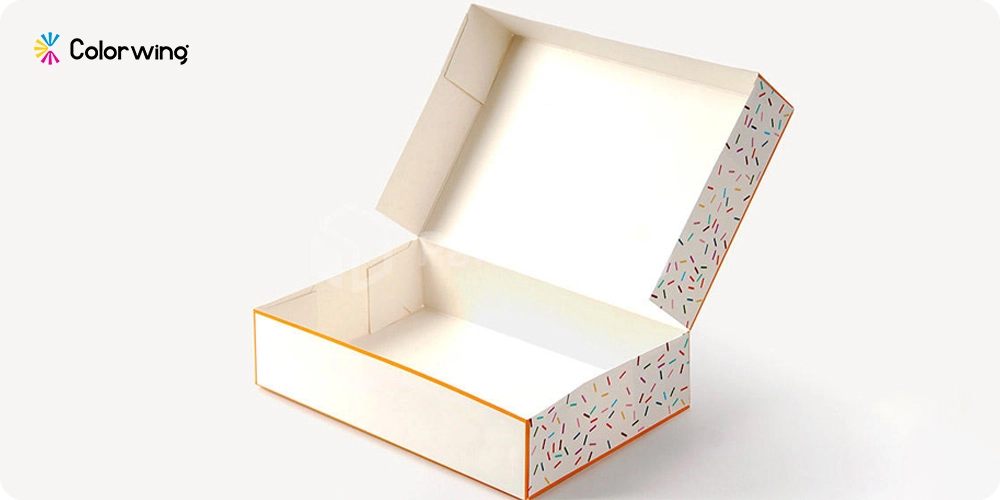
Non-sulfate bleached cardboard is produced using alternative chemical pulping processes, typically elemental chlorine-free (ECF) or totally chlorine-free (TCF) bleaching methods. These grades are gaining significant traction in food-safe and eco-focused retail packaging where FSC certification and chemical migration compliance are procurement requirements. Non-sulfate bleached board accepts aqueous and UV coatings effectively and is approved for direct food contact applications in several international markets.
Substrate Comparison Table
Board Grade | Wet Strength | Print Surface | Moisture Resistance | Best Application |
CUK (Coated Unbleached Kraft) | Excellent | Good (white-coated face) | Inherently high | Beverage, frozen food, cold storage |
SBS (Solid Bleached Sulfate) | Moderate | Excellent (bright white) | Applied treatment required | Cosmetics, pharma, high-end retail |
Non-Sulfate Bleached | Moderate | Good | Applied treatment required | Food-safe, FSC-certified retail |
Coated Recycled Board (CRB) | Low | Fair | Low without treatment | Light retail, non-food shelf stock |
Uncoated Corrugated Kraft | Low | Poor | Very low | Shipping-only, interior use |
Professional Methods to Make Cardboard Waterproof
This is where waterproofing cardboard becomes an engineering discipline rather than a craft project. The methods below are what a packaging manufacturer executes at the production level, not DIY approximations. Each has a specific performance profile, cost range, and application context.
1. Polyethylene (PE) Extrusion Coating
%20Extrusion%20Coating.webp?alt=media&token=437072c2-134a-431c-872a-e5e4618f826a "PE extrusion coating")
PE extrusion coating is the most widely used commercial waterproofing method for making cardboard water resistant at scale. A thin layer of polyethylene polymer is extruded directly onto the board surface at high temperature, creating a bonded barrier film. PE coating is applied at 10 to 30 gsm depending on the required barrier level.
Single-side PE coating handles most moderate moisture resistance requirements. Double-side PE coating is specified for fresh produce trays, protein packaging, and frozen food cartons where the product is in direct contact with the board. PE-coated waterproof cardboard boxes are used across food service, cold chain logistics, and outdoor retail display formats.
Performance rating: Outstanding liquid resistance, good vapor barrier, fully recyclable in most domestic programs when used as mono-material.
2. Aqueous Coating (AQ)
.webp?alt=media&token=662334c9-1162-4ffe-bb8e-24757547f6ad "water based coating")
Aqueous coating is a water-based polymer applied inline or offline as a flood coat across the board surface. It provides light to moderate waterproof protection suitable for retail shelf packaging, point-of-sale displays, and product cartons that face ambient humidity rather than direct liquid exposure.
AQ coating is the most cost-effective waterproofing upgrade for standard folding cartons. It is applied after printing in most offset production workflows and adds minimal weight to the finished board. For sealing cardboard against light weather exposure and handling moisture, AQ is the standard commercial specification.
Performance rating: Good light-moisture resistance, excellent gloss or matte finish options, ink-adhesion friendly, low cost.
3. UV Coating
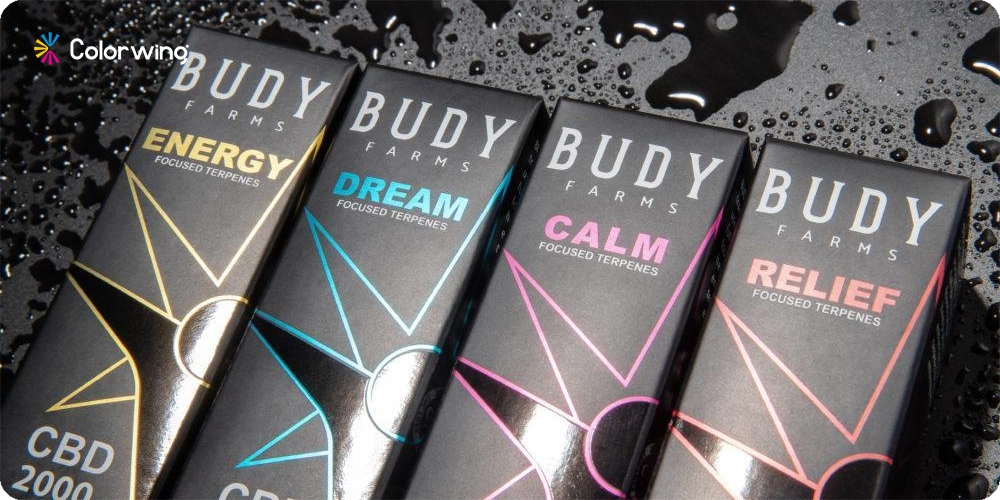
UV (ultraviolet-cured) coating delivers a harder, more durable surface film than aqueous coating by curing the polymer layer instantly under UV lamps. It provides strong resistance to scuffs, abrasion, and surface moisture, making it the preferred specification for retail shelf packaging that requires a premium tactile and visual finish alongside weatherproof cardboard performance.
UV coating is applied as either a flood coat or a spot treatment. Spot UV allows selective waterproofing of specific panel areas while leaving other areas uncoated for functional purposes. This is a technique ColorWing routinely applies to display boxes, outer packaging, and retail cartons.
Performance rating: Excellent surface durability, strong light-moisture resistance, premium aesthetics.
4. Wax Coating (Cardboard Wax)
.webp?alt=media&token=b47e9b06-b7fe-46e8-aad0-f7b5d2174d6b "cardboard wax coating")
Cardboard wax treatment is one of the oldest and most proven methods for waterproofing corrugated boxes in food distribution. Paraffin wax or a paraffin-polymer blend is either cascaded over the completed corrugated board or applied as a curtain coat. Wax-treated boxes are used extensively in produce, seafood, and poultry distribution where boxes are exposed to ice melt and direct liquid contact throughout the cold chain.
The one situation which wins with cardboard wax is recyclability.
Industrial Wax Treatments
Wax-treated containers are the go-to choice for moving produce, seafood, and poultry. They tend to be among boxes built specifically to survive the harsh factors. Like from the cold chain, where they are constantly exposed to melting ice and direct liquid contact.
The Sustainability Catch
While wax provides incredible protection. They are a downside for the planet. As wax remains deeply embedded in the fibers, these boxes can't go into your standard recycling bin; they usually have to be composted or sent to a landfill.
The Changing Market
As retailers are more and more inclined towards sustainable solutions, however, if you already have a system in place to handle the disposal, wax is still one of the most budget-friendly ways to keep a box from falling apart in the cold.
Performance Reality
You get world-class liquid resistance, but you lose the ability to recycle easily. This won't get the same crisp, high-quality printing you see on other boards.
5. Polyurethane Coating
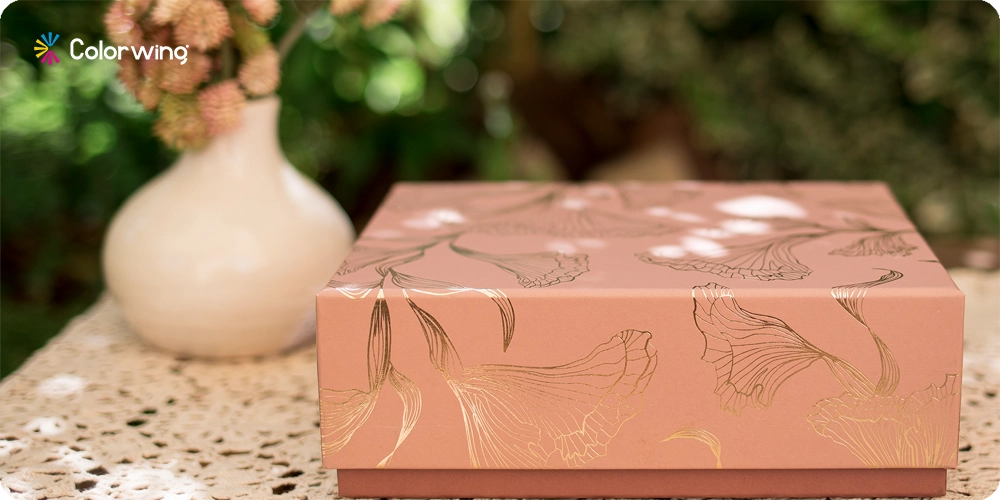
Polyurethane remains a tough flexible coating which gets designed to act as a shield against both soaking rain and invisible humidity. It doesn't just sit on the surface; it creates a durable layer that stays intact even when the box is handled roughly.
Polyurethane coating systems are more expensive than aqueous or PE alternatives but offer superior elasticity, which prevents the coating from cracking at score lines on folded cartons. This makes polyurethane a strong specification for packaging designs with complex die-cut or folded geometries.
Performance rating: Excellent all-round moisture resistance, good flexibility, higher cost.
6. Silicone and Shellac-Based Sealers
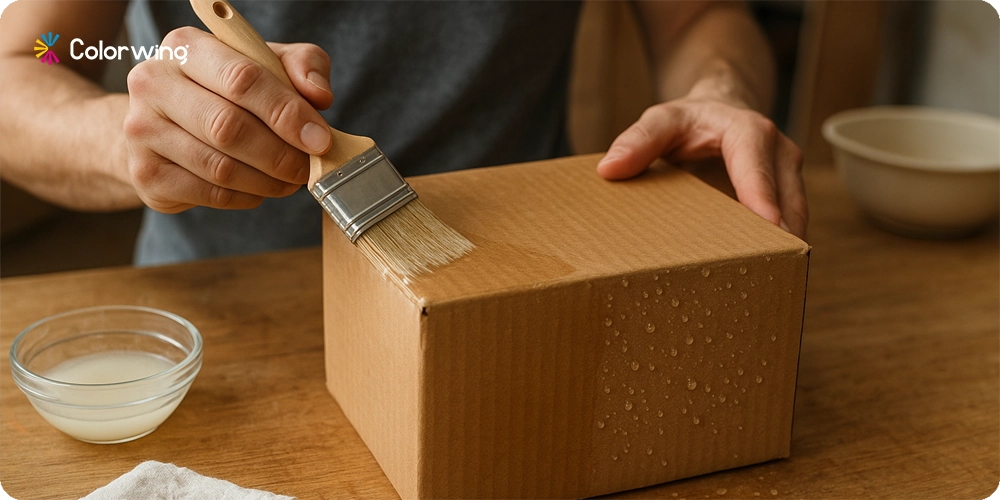
Shellac and silicone-based sealers are the preferred technical solutions for food-safe cardboard materials. Applied as a solution in ethanol, shellac creates a water-resistant film that can be built up in multiple coats.
It is the primary choice for high-end confectionery cartons and food packaging where a "natural" or "non-synthetic" brand proposition is required. While its waterproofing is moderate, it excels as a sealant in ambient conditions.
Silicone Coatings: These coatings deliver high surface energy and superior non-stick properties alongside reliable moisture resistance. They are strategically deployed in baking tray liners and release sheets applications where the ability of the product to release cleanly from the packaging is as critical as water resistance.
Performance Profile: These sealers offer reliable moisture resistance and full food-safe compliance, though they carry a premium cost relative to standard finishes.
7. Laminated Film (Plastic Film Lamination)
.webp?alt=media&token=9bc86869-678d-4de0-b344-5d40c3c52032 "plastic film lamination")
Plastic film lamination represents the apex of moisture protection in the commercial sector. This process involves bonding a continuous layer of BOPP (biaxially oriented polypropylene), PET, or PE directly to the board’s surface through thermal bonding or high-strength adhesives.
Commercial Grade: Laminated board produces the highest-grade waterproof cardboard sheets available. By creating a literal physical barrier between the cellulose fibers and the external environment, lamination ensures that the structural integrity of the carton remains uncompromised, even in saturated or high-impact shipping conditions.
Film lamination is specified for high-end retail packaging, luxury goods cartons, and applications where the package is a brand statement as well as a protective vessel. Matte and gloss film options are both available. ColorWing applies both formats across a range of retail and e-commerce packaging specifications.
Performance rating: Outstanding moisture barrier, premium aesthetics, good recyclability for mono-material structures.
Waterproofing Method Comparison
Method | Liquid Resistance | Vapor Resistance | Recyclability | Relative Cost | Best For |
PE Extrusion Coating | Outstanding | Good | Moderate | Low-Medium | Food, produce, cold chain |
Aqueous (AQ) Coating | Moderate | Light | Excellent | Low | Retail cartons, display |
UV Coating | Good | Moderate | Good | Medium | Premium retail, shelf packaging |
Wax (Cardboard Wax) | Excellent | Good | Poor | Low | Seafood, produce, ice contact |
Polyurethane | Excellent | Excellent | Moderate | High | Outdoor, industrial |
Shellac | Moderate | Moderate | Excellent | High | Food-safe, natural branding |
Film Lamination | Outstanding | Outstanding | Good | Medium-High | Luxury, premium retail |
How to Print on Waterproof Cardboard: The Section Every Competitor Skips
Waterproofing your cardboard is only half the equation. The more commercially critical question is how you maintain print quality on a surface that has been engineered to repel liquids. This is where understanding printing technology becomes part of the packaging specification, not just the design brief.
Offset Lithography on Waterproof Cardboard
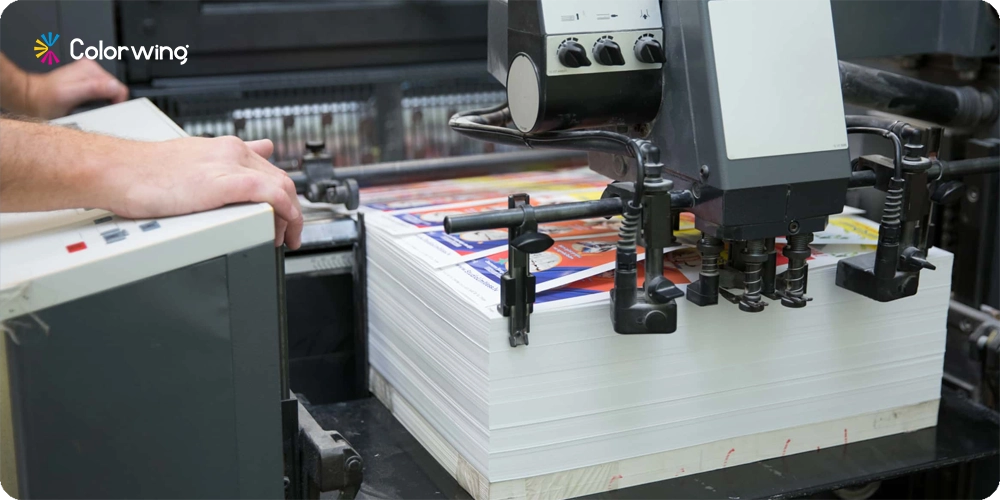
Offset lithography is the dominant printing process for high-volume folding carton production, including waterproof and coated board grades. In offset printing on cardboard, oil-based inks are transferred from a plate to a rubber blanket and then to the board surface. The key variable with waterproof cardboard is surface energy. PE-coated and film-laminated board requires corona treatment or primer application to raise surface energy enough for ink adhesion.
Offset lithography delivers the highest color fidelity and finest halftone resolution of any commercial cardboard printing process. It is the specification for SBS and CUK packaging where brand colors must match strict retail standards, and where print runs are in the thousands of units or more. As packaging experts we know that a paperboard has to be printed in a way so it lasts longer.
At ColorWing, offset printing on waterproof board grades is a standard production capability. We handle CUK, SBS, and non-sulfate bleached boards in both single-sided (C1S) and double-sided (C2S) configurations.
Digital Printing on Waterproof Cardboard
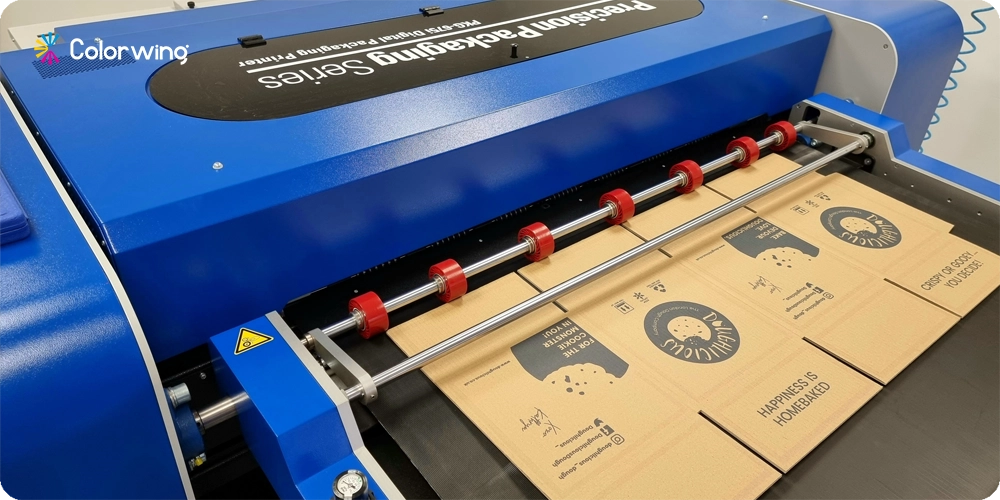
Digital printing on cardboard has expanded rapidly as a viable commercial production method. Unlike offset, digital printing applies ink directly from a digital file without plates, making it the right specification for short-run production, versioned packaging, and rapid prototyping.
The challenge with digital printing on waterproofed cardboard is ink chemistry. Aqueous inkjet systems require board surfaces with sufficient absorbency. For PE-coated or UV-coated waterproof cardboard, UV-curable or latex digital inks are the correct specification. These cure on the surface rather than absorbing into the fiber, producing excellent dot gain control and color depth on non-absorbent substrates.
Digital print quality on coated waterproof board has reached a level where it is indistinguishable from offset output in most retail contexts. For waterproof cardboard boxes produced in runs under 5,000 units, digital is frequently the most cost-effective and fastest-to-market option.
Rotogravure on Waterproof Cardboard
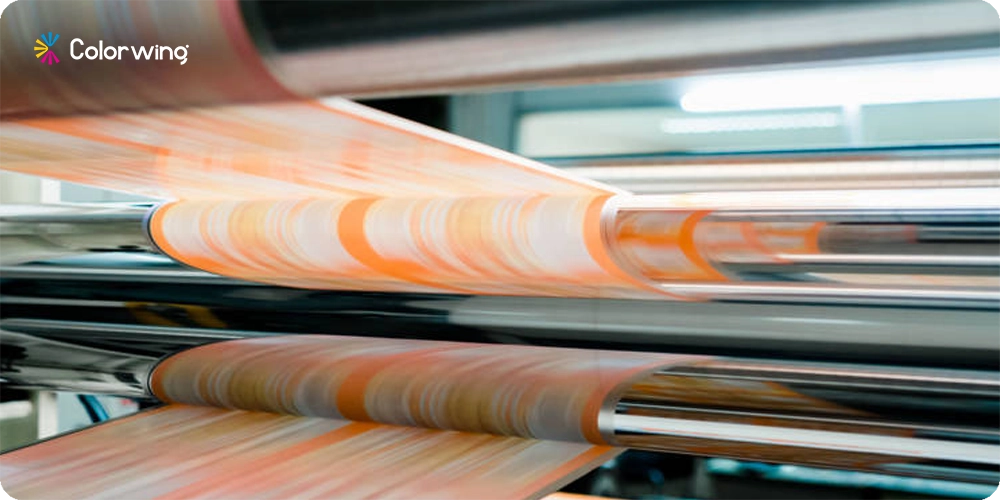
Rotogravure is a high-speed printing process used primarily for long-run, continuous-web packaging applications. In rotogravure, ink is transferred directly from engraved cylinders to the substrate, producing extraordinarily consistent color density across millions of impressions. It is the standard process for flexible packaging films, but it is also specified for high-volume cardboard carton production in food and beverage sectors.
For waterproof cardboard containers in beverage and refrigerated food applications, rotogravure printing delivers the color consistency across large production volumes that offset or digital cannot economically match at scale. CUK board with moisture barrier coatings is the standard substrate pairing for rotogravure production in these sectors.
The capital cost of rotogravure cylinder engraving makes it a specification for runs typically above 500,000 units. At ColorWing, we facilitate rotogravure production through our manufacturing network for clients whose volumes justify the specification.
Printing Method Selection Guide
Print Method | Minimum Run | Color Fidelity | Waterproof Board Compatibility | Best Application |
Offset Lithography | 1,000+ | Excellent | Good (with surface prep) | High-volume retail cartons |
Digital Inkjet (UV/Latex) | 1+ | Very Good | Excellent | Short-run, versioned, prototyping |
Rotogravure | 500,000+ | Outstanding | Excellent | Beverage, food, mass FMCG |
Flexography | 5,000+ | Good | Good | Corrugated, shipping boxes |
How to Seal Cardboard for Outdoor Use: Retail Displays and Transit Packaging
Retail point-of-sale displays, outdoor signage, and transit packaging for outdoor environments face the most aggressive waterproofing demands. How to seal cardboard for outdoor use differs from standard packaging specifications because outdoor exposure includes UV degradation, temperature cycling, and extended moisture contact alongside the standard liquid and vapor challenges.
The correct specification for weatherproof cardboard in outdoor applications combines substrate and treatment:
Use corrugated board with a minimum 200 gsm linerboard weight. Lightweight single-wall corrugated will not maintain structural integrity in outdoor conditions regardless of coating.
Specify double-side PE extrusion coating or polyurethane coating for maximum moisture barrier performance. Aqueous coating alone is insufficient for direct outdoor exposure.
Apply UV-stable ink systems and UV-protective overcoat to prevent graphic fading. Standard offset inks will bleach in direct sunlight within weeks without UV protection.
Reinforce bottom panels and stacking corners with additional board or structural insert panels. Wet compressive strength in outdoor-specified corrugated board is designed to the 75% retention standard, but structural reinforcement adds a practical safety margin.
For water resistant cardboard applications in indoor retail environments, AQ coating over SBS or CUK board with UV overprint delivers commercial waterproofing performance at standard production cost.
Cardboard Waterproofing for Cold Storage and Inventory: B2B Specifications
For B2B buyers managing warehousing and cold chain inventory, the waterproofing specifications that matter most are vapor transmission rate (MVTR) and wet compressive strength retention.
MVTR measures how much water vapor passes through the board per square meter per day. Lower MVTR indicates better barrier performance. PE extrusion coating at 20 gsm reduces MVTR from approximately 150 g/m²/day (uncoated kraft) to below 10 g/m²/day. Film lamination reduces MVTR further, to below 2 g/m²/day for BOPP and PET laminates.
Wet compressive strength retention is the measure of how much stacking strength the board retains after moisture exposure. A CUK board with PE coating typically retains 60 to 70% of its dry compressive strength after 24-hour humidity conditioning at 90% relative humidity. Uncoated corrugated board may retain as little as 25%.
For inventory managers specifying waterproof cardboard boxes for cold storage, the procurement specification should include:
Board grade specification (CUK preferred for inherent wet strength), coating type and weight, MVTR target value, wet compressive strength retention percentage, and any food-contact compliance certifications required.
ColorWing provides technical data sheets for all board and coating specifications across our production range. Procurement teams can request spec sheets for any active product configuration before committing to a production run.
Why ColorWing Is the Right B2B Packaging Partner for Waterproof Cardboard
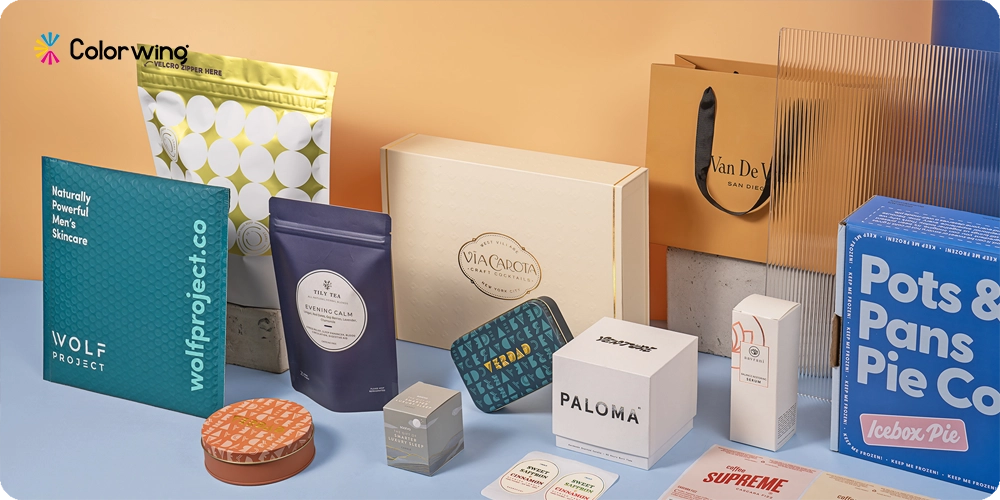
ColorWing is a B2B packaging manufacturer. We work with retailers, brand owners, contract packagers, and supply chain operators who need packaging that performs under real distribution conditions, not just in a design proof.
Our production capabilities span every substrate and waterproofing treatment discussed in this guide. CUK, SBS, and non-sulfate bleached board. PE extrusion coating, aqueous coating, UV coating, and film lamination. Offset, digital, and flexographic printing in configurations suited to your volume and timeline.
We engineer packaging specifications that protect your product, carry your brand, and perform throughout your supply chain. If you are sourcing waterproof cardboard boxes, waterproof cardboard sheets, or any cardboard container format for retail or inventory use, the right conversation starts with a specification discussion, not a price per unit. Contact ColorWing to request substrate samples, technical data sheets, and a production quotation for your waterproof packaging requirement.
Frequently Asked Questions
Can you waterproof cardboard completely?
Yes. Commercial PE extrusion coating, film lamination, and polyurethane coating systems create effective moisture barriers for most industrial and retail applications. No coating makes cardboard permanently impervious to total immersion, but for the conditions encountered in retail, cold storage, and transit packaging, waterproof cardboard performs reliably across defined service windows.
How to make cardboard water resistant for outdoor use?
For outdoor applications, specify CUK or heavy corrugated board with double-side PE coating or polyurethane treatment. Add UV-protective overcoat for outdoor graphic longevity. For temporary outdoor use under 30 days, AQ flood coat with UV overprint is often sufficient.
What is the difference between waterproof and water resistant cardboard?
Water resistant cardboard repels light moisture and surface wetness without compromising structure. Waterproof cardboard provides a complete barrier against liquid penetration. In packaging specifications, water resistant board handles ambient humidity and light rain; waterproof board is required for ice contact, direct liquid exposure, or extended outdoor service.
Is there a waterproof cardboard spray for commercial applications?
Waterproof cardboard spray products are available as field-applied treatments for small-scale or emergency applications. At commercial production scale, spray-applied silicone or polyurethane coatings are used for industrial applications. For consumer and small-business use, aerosol waterproofing sprays offer moderate moisture resistance on corrugated and folding carton board. They are not a substitute for production-applied PE coating or lamination in high-volume packaging.
Can you print on waterproofed cardboard?
Yes, with the correct ink and surface treatment specification. PE-coated and film-laminated board requires corona treatment or primer to achieve sufficient surface energy for ink adhesion. Offset lithography is the standard process for high-volume coated board. UV-curable digital inks print directly on non-absorbent waterproofed surfaces without surface preparation.
What is CUK cardboard and why does it matter for waterproofing?
CUK stands for Coated Unbleached Kraft. It is a board grade produced from virgin softwood fiber with a clay-coated white face for printing. Its long fiber structure provides higher tear strength and wet strength than bleached or recycled alternatives. CUK is the standard substrate for beverage carriers, refrigerated food packaging, and any application where moisture resistance must be built into the board rather than applied entirely as a coating.
How does cardboard wax work for packaging?
Cardboard wax treatment involves applying paraffin or paraffin-polymer wax to corrugated board either by cascade application or curtain coating. The wax penetrates the fiber structure and creates a hydrophobic barrier that prevents liquid absorption. Waxed board is used in produce, seafood, and poultry packaging where direct ice and liquid contact is routine. The primary limitation is that wax-treated board cannot enter standard paper recycling streams.
What is sealing cardboard and when is it specified?
Sealing cardboard refers to the application of an adhesive, coating, or closure treatment to the seams and openings of a cardboard container to prevent moisture ingress. In packaging production, sealing treatments are applied to tray end-folds, lid closures, and side seams on liquid-adjacent packaging. Sealing cardboard effectively requires both the correct closure adhesive and a board-level barrier coating.

Emily Chris Kieran
Meet Emily Chris Kieran, a seasoned packaging industry writer with 7+ years of experience in the printing and packaging sector based in Texas. With a keen eye for color and a passion for data-driven insights, Emily crafts compelling content strategies that explore the intricacies of packaging and printing. She possesses in-depth knowledge of the industry's dynamics, staying up-to-date on the latest trends and technologies. When she's not delving into industry trends, you can find her unwinding on the golf course, where she finds inspiration and clarity. With a love for polo and a knack for storytelling, Emily brings a unique perspective to the world of packaging, illuminating fascinating facts and trends that inform and engage.